
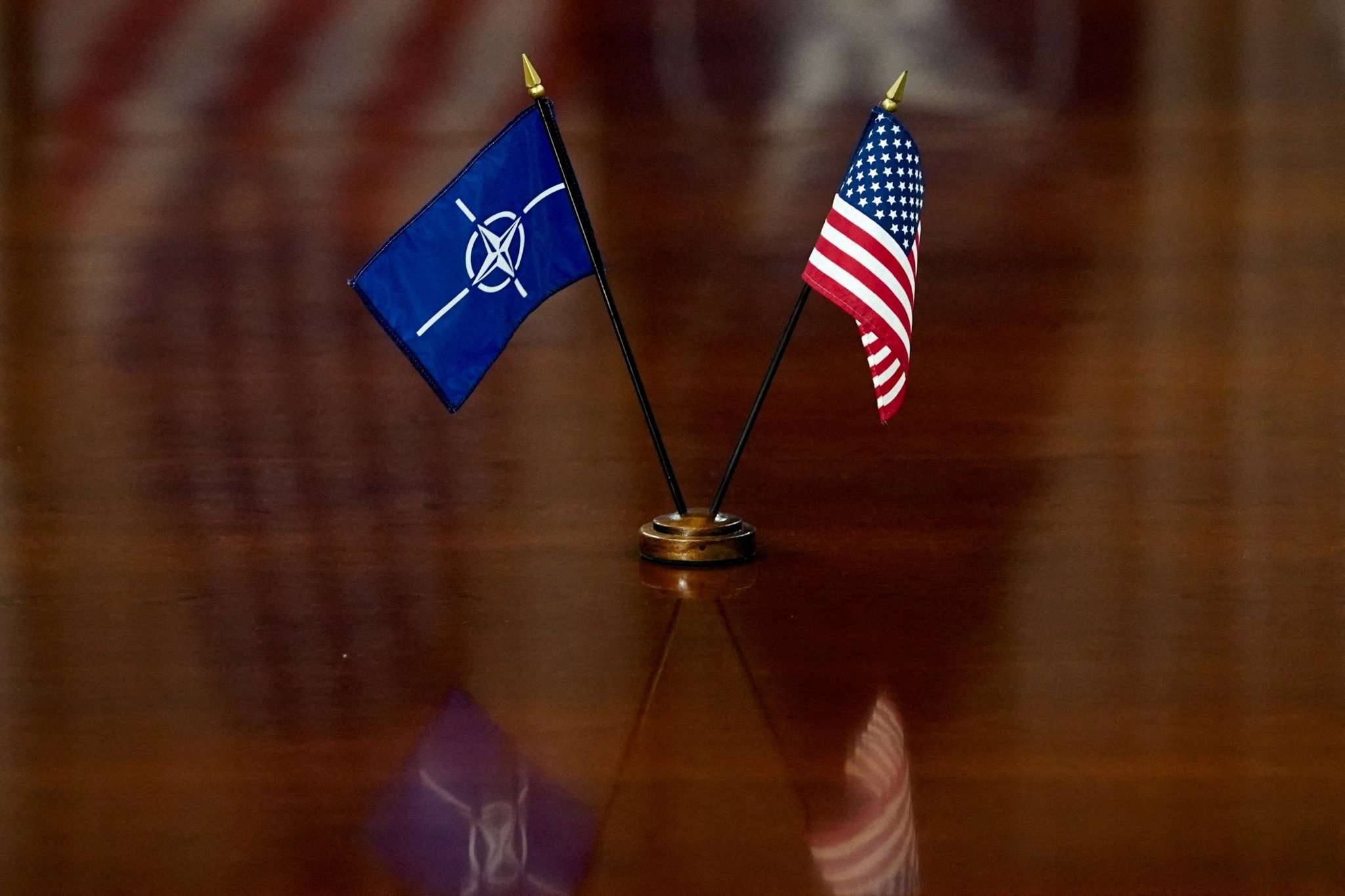
A rapid, uncoordinated U.S. military drawdown from Europe could push key NATO allies further away from American weapons over the long term, according to a new RAND study, a shift the authors say would hurt the U.S. defense industrial base. RAND released the report, “Anticipating Allies’ Responses to U.S. Retrenchment from Europe,” on Wednesday. It examines how France, Germany, Poland and the U.K. would likely respond to different versions of what RAND calls limited retrenchment: cuts to American commitments and forces in Europe that stop short of leaving NATO altogether. The study draws on Cold War precedents, allied government documents and public debate, and interviews with 51 officials and experts in the four countries, most conducted between April and November 2025. The authors caution that their findings apply only to those four allies. The report’s main finding is that how the U.S. withdraws will shape how allies respond. The four allies “see a stark difference between a coordinated, orderly U.S. withdrawal, which they feel they could handle, and a rapid, uncoordinated one, which they see as creating major capability gaps and potentially emboldening Russia to attack a NATO member,” the authors wrote. The authors recommend the U.S. follow through with larger force cuts on a long-term timeline worked out with allies, which they say may help keep allies’ defense spending on track even as it gets harder to sell at home. RAND weighs those choices against NATO 3.0, the alliance concept Under Secretary of Defense for Policy Elbridge Colby presented in February. It calls for Europe to take primary responsibility for its own non-nuclear defense while the U.S. shifts resources to the Western Hemisphere and the Pacific. The Pentagon has already begun reducing its footprint in Europe. About 80,000 U.S. troops were stationed there across roughly 30 bases as of 2025, according to congressional testimony from the head of U.S. European Command cited in the report. In May, the Pentagon announced it would pull about 5,000 troops out of Germany. Then in June, the U.S. cut the forces it would make available to NATO in a crisis. A review of U.S. forces in Europe is underway. Defense ministers from France, Germany, Italy, Poland and the U.K. said Monday in a joint statement that Europe “must assume greater responsibility for its own security.” They also called the U.S. “an indispensable Ally.” Arms sales at risk A sudden pullout would put allies in a bind, U.K. interviewees told RAND. In the short term, they would have little choice but to buy off-the-shelf equipment, often from U.S. suppliers, to fill gaps. Over the long term, broken trust would push allies toward European or homegrown alternatives, the authors concluded. In Britain’s case, a sudden withdrawal would “accelerate the UK’s reorientation away from U.S. defense equipment toward sovereign or European alternatives,” those interviewees said. The authors expect Germany, and possibly Poland, to reach a similar conclusion. Germany has bought U.S. arms partly to keep Washington committed to Europe. A rapid, uncoordinated withdrawal would suggest that approach had failed, and Berlin “may not see a benefit to continuing to privilege U.S. firms for arms sales or other deals,” the authors write. “Such a shift would be detrimental to the U.S. defense industrial base, which benefits from exports that help create economies of scale,” the report said. “The main cause of this shift would be perceptions of U.S. reliability as an ally rather than the loss of any specific U.S. military capabilities.” The U.S. supplied 58% of the major weapons European NATO members imported from 2021 to 2025, according to the Stockholm International Peace Research Institute, down from 64% in the institute’s previous five-year count. U.S. soldiers parachute during Iron Wolf military exercises with NATO forces and partners on May 16, 2025, at the Gaiziunai training area near Rukla, Lithuania. (Paulius Peleckis/Getty Images) In Monday’s statement, the five ministers also committed to “closer defence-industrial cooperation.” But British Defense Secretary Wes Streeting said Oct. 15 that buying European or American equipment “should not be an either/or choice.” British industry produces about 15% of each F-35, he told the Center for Strategic and International Studies in Washington. A sudden U.S. pullout would likely have little impact on how much France buys from U.S. defense companies, as Paris is already “the most committed of the four allies to reducing reliance on the United States,” the study said. During wartime, however, French officials told RAND their military would still count on U.S. forces for intelligence, surveillance and reconnaissance; long-range precision strike; fighter jets; air and missile defense; command and control, the systems used to direct forces in combat; and logistics. Until France can fill those gaps itself, Paris would see a sudden U.S. pullout as a sign Washington cares little about its allies’ security, the authors wrote. That could make the two countries less likely to agree on military plans or diplomatic initiatives. Intelligence sharing The authors also looked at what would happen if the U.S. moved to normalize relations with Russia while the war in Ukraine continued, without addressing Europe’s security concerns. In that case, allies might limit intelligence sharing and joint military planning, fearing leaks to Moscow. Some allies have already begun limiting intelligence sharing over other disagreements with Washington, albeit modestly, the report said. It cites U.K. concerns about U.S. military operations in the Caribbean, and Dutch concerns about U.S. policy toward Russia, which led both countries to reduce some intelligence sharing. U.S. President Donald Trump speaks with Russian President Vladimir Putin as they meet to negotiate for an end to the war in Ukraine, at Joint Base Elmendorf-Richardson, Alaska, Aug. 15, 2025. (Kevin Lamarque/Reuters) Still, none of the four allies would side with Russia or China on security under any scenario RAND examined, the authors concluded. “Some strategists’ fears about allies aligning with Russia as the United States draws down are overblown,” the authors wrote. The four countries and Italy called Russia “the most acute and long-term threat to Euro-Atlantic security and stability” in Monday’s statement. Spending gap A limited pullback is more likely to spur allies to spend more and work more closely together, the authors found. All four have committed to NATO’s target of at least 3.5% of gross domestic product, or GDP, for core defense spending by 2035, according to the alliance’s 2025 summit declaration. Poland has more than doubled defense spending as a share of GDP since 2014 and is aiming for 5% this year, the report said. Germany plans to spend €649 billion on its military over five years, raising spending from 2.4% of GDP in 2025 to 3.5% by 2029, Defense News reported. Members of the Polish Air Force watch the arrival of one of three Lockheed Martin F-35A “Husarz” fighter jets at the 32nd Air Base in Lask, Poland, on May 22, 2026. (Damian Lemanski/Bloomberg via Getty Images) France and the U.K. will struggle to meet NATO’s target because of high debt and slow growth, the report said. French public debt rose from 98% of GDP in 2019 to an average of 112% from 2020 to 2024. One interviewee called the budget problem France’s “Achilles’ heel” in rearming. The U.K. Ministry of Defence asked for an extra £28 billion to cover a shortfall through 2030 and received £15 billion, the report said. The British government said Oct. 28 it would fully fund its Defence Investment Plan, Reuters reported. Troops as leverage The authors also warn against using troop levels to reward or punish individual allies. Questionnaires the Pentagon sent allies as part of the review asked about their defense spending and support for U.S. foreign policy priorities. Some allies read that as a sign troop decisions would hinge on political alignment, the report said. Poland has already seen how quickly U.S. troop decisions can change. In May, the Pentagon abruptly canceled a planned deployment of about 4,000 soldiers to Poland. President Donald Trump later pledged to send 5,000 troops at an unspecified date. Warsaw credited the reversal partly to reminding Washington that Poland is a “model ally” that buys U.S. systems. The authors said the episode demonstrates both the payoff Poland expects and the weakness of its approach: U.S. troop levels and commitments rest on “abrupt, easily reversible decisions.” Call for a plan “NATO 3.0 is a vision for a reduced U.S. role and reallocation of resources. But there is no concrete, long-term plan,” the report said. The authors urge the administration to work with allies to set how many U.S. troops stay in Europe in peacetime and how many the U.S. would send in a war, along with a timeline to get there. It is unclear whether the Europe review will produce such a plan. Under a Pentagon document seen by Reuters in August, the review is due to give Defense Secretary Pete Hegseth at least four sets of troop options by Nov. 6. The full review is due in December. Predictable long-term plans that give allies a say “could sustain a continued, if reimagined, transatlantic partnership,” the authors wrote. Adding that treating troops and commitments as bargaining chips, by contrast, “could undercut regional cooperation and, in turn, NATO 3.0’s goal of European strength.”
Hasty US exit from Europe could drive allies away from American arms, RAND says
Full Article
Original Source
Read the full article at Militarytimes →KhanList aggregates and links to publicly available news content. We do not host full articles from third-party sources. Always verify important information with original sources.