
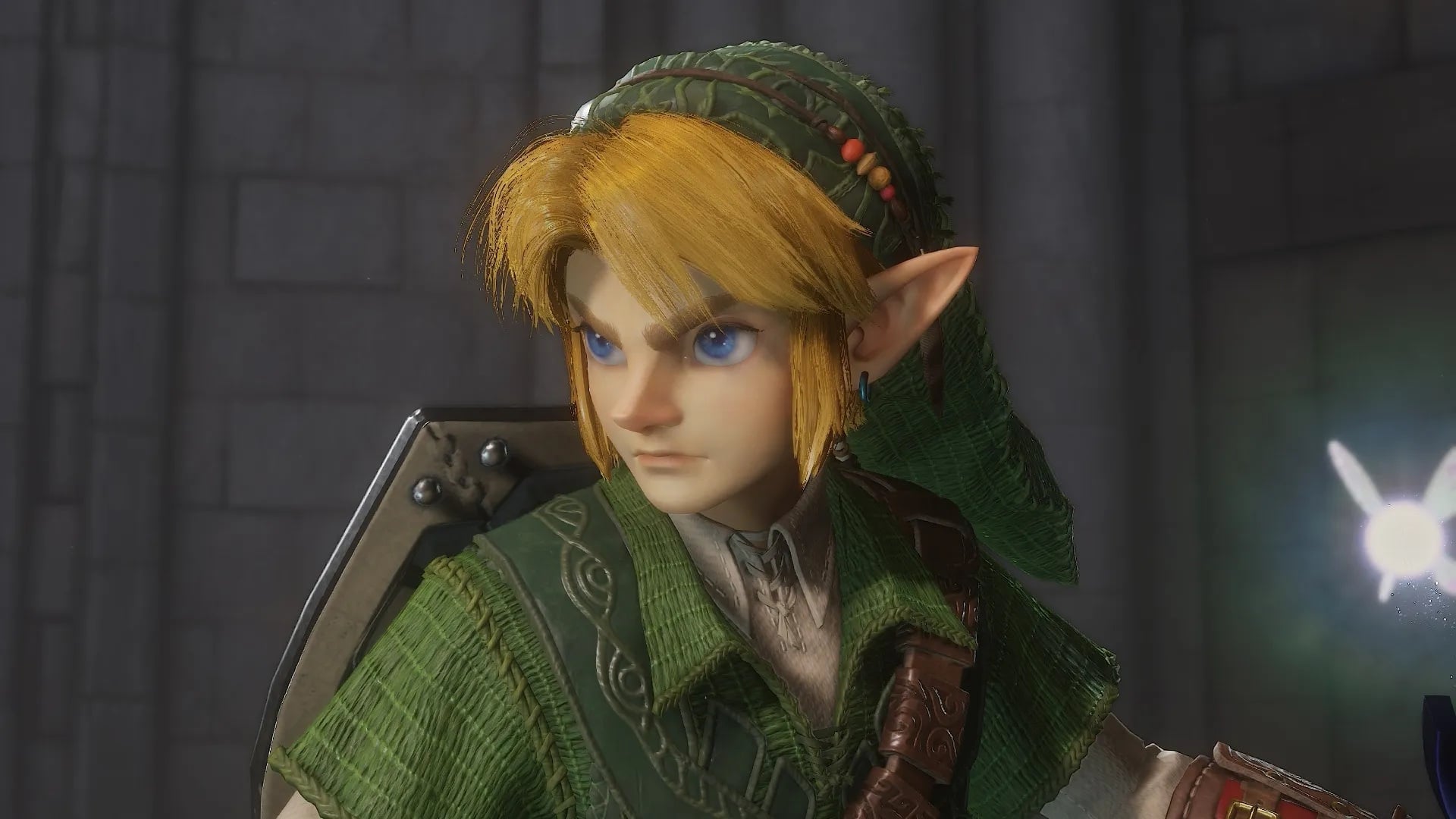
As is often the case when something is remade, the Switch 2 remake of The Legend of Zelda: Ocarina of Time is generating a lot of comparisons to the original. Purists will often deride any changes made to the thing they grew up with, so I was prepared for a lot of the discussion to come off like an old man yelling at cloud about how one of the most widely celebrated video games of all time was better “back in his day.” However, the Ocarina of Time remake isn’t just getting a lot of the usual remake criticism that tends to revolve around things like graphical fidelity and art style; there’s also a fair bit of discussion about how its modern game design sensibilities may have sanded off some edges and, in so doing, diminished certain things that made Ocarina of Time great. The game is much, much easier now This morning, I came across a 16-minute video in which Twitter user KloverKlub14 rattled off most of their complaints about the remake. Some of them can be dismissed as nitpicking small details that only the sickest of sickos would ever recognize, but there’s actually a fair bit here that stood out to me about how much easier Ocarina of Time is on Switch 2 than it ever was on the Nintendo 64. I compiled most of my complaints with the Ocarina remake into this video pic.twitter.com/tnnNx9Jslc — KloverKlub (@KloverKlub14) November 8, 2026 In the flood of complaints, a theme emerges. The difficulty nerf isn’t as easy to sum up as saying “Link does more damage than before,” but instead manifests in several little things that add up across the course of the game. Certain environmental hazards are gone, Link no longer lands on a lower floor if he plummets off certain platforms but instead just respawns where he fell from, some enemy behaviors like Stalfos being able to revive themselves if you don’t defeat an entire squad of them quickly enough have been removed, and some secrets in the environment are now signposted with elements like dedicated targets for Link to aim the Hookshot at, denying players the pleasure of figuring it out for themselves (or sparing them the effort, depending on how you feel about the change). “People keep pointing at better controls and ‘it was harder for you before because you were a child,’ conveniently ignoring that people continued to replay this game into their adulthood,” a redditor writes. “But it goes beyond that, for both the puzzle and navigation aspect and combat, there are factually things that make it easier. Some dungeon challenges are simplified, objects in the room are less hidden and easier to spot, there’s constant exposition for what you’re supposed to do, challenges that used to be timed now no longer have a timer. Some enemies are easier, some are actually harder, like the Redeads now being more aggressive and able to run. Those changes can be subjective, but there are also changes that objectively make it easier, like Stalfos dealing half the damage they used to. On the other hand, I’ve noticed heart drops are more scarce, and I’ve never seen enemies drop three hearts like they frequently did in the original. Other examples are King Dodongo now being less of a joke, since you can no longer just stand to the side as he rolls past you, and he now also summons baby dodongos. But then there’s bosses like Phantom Ganon who is significantly easier with the slow moving energy balls.” Finished Ocarina remake. Pretty conflicted overall. I think this is a death by a thousand cuts situation honestly. There are too many little things that I loved about the original game that have been lost here. — Caleb (@NessMudkip) November 9, 2026 Is the violence toned down? Something I’ve definitely noticed is that some parts of the Ocarina of Time remake feel like they’re shying away from the darkness of the original game. Yes, I am comparing the level of dread and fear I felt playing the game as a kid to what I feel now as an adult, but I’m specifically thinking of the original game’s more explicit references to the violent deaths of people who aren’t villains. One notable example that a lot of fans have pointed out is that at the end of the game’s first act, when Zelda has fled Castle Town and Ganondorf has gone after her, there’s a soldier who can be found in the back alleys of the town that was originally mortally wounded. The original Ocarina of Time made it pretty clear that he had died from his injuries trying to save Zelda, with the text after his dying words saying “he’s not moving anymore,” but that text no longer appears in the remake. Instead, you can talk to this man as many times as you want. Oot spoilers /// I found the solider! pic.twitter.com/Y0ZUFVlqBB — Steve (@StupidhanyEne) November 5, 2026 Another thing I’ve seen circulating is that some believed blood stains that appeared throughout the Shadow Temple had been removed, as you no longer see the blood-red puddles underneath what look like crucifixes. However, as others have pointed out, old, dried blood wouldn’t retain the same crimson color that fresh blood does, so the darker smears that appear in the remake are actually more accurate. I suspect the young development team wanted to bring back the bloodstains in the OoT well, but were probably told no. The result was probably this middle ground of very old stains, just not red. #Zelda pic.twitter.com/SKUsUshcMZ — Mighty (@MightyGazelle1) November 6, 2026 “It’s funny how the more realistic implementation of this with faded dry blood is easier to sneak into an E10 game because it can be passed off as dirt or rust,” a fan writes on Reddit. “The bright red blood of the OG is… bloodier, obviously, but arguably more cartoony.” These are smaller details, but there’s also a pretty major scene in the endgame that no longer includes a character coughing up blood. To avoid spoilers, we’ll just link the comparison here if you want to click on it. Given how much more detailed Ocarina of Time looks on the Switch 2, it’s possible Nintendo omitted this to avoid a T for Teen rating with the ESRB. Most Zelda games are either rated E or E10+, with the exception of Twilight Princess, which got a T rating back in 2006 and is widely considered the “darkest” game in the series. It’s still the same game, for better or worse While changes are a big part of the conversation, another is whether or not Nintendo played it too safe when remaking Ocarina of Time. One major point of contention is that Hyrule Field, the overworld players pass through as they head from one town to the next, feels just as empty as it did on the N64, though some don’t think it needed to get peppered with enemies and activities, “Back in 1998, Hyrule Field was a nice little tech demo that allowed Nintendo to show off how the N64 could render some really big triangles, just to make the poor old PlayStation look bad,” Moon Game Studios CEO Thomas Mahler says on Twitter. “But from a design perspective, it was already pretty lousy back then. And to simply copy that design 1:1 today? Nah. Every designer at Nintendo should be crying foul and know that this could be done so much better nowadays.” not to be a hater or maybe it’s a bad cIip, but there just being Iike a giant empty fieId with Iike nothing going on feeIs so sIoppish to me.why’s everything gotta be boring open worId slop https://t.co/RpX8VuzXdd — toby (@The_Bees_Sneeze) November 9, 2026 “I think Hyrule Field being largely empty allows the world to breathe and gives the game a sense of scale and immersion,” New Blood Interactive’s Mark Diaz argues. “Players don’t always need to be bombarded with activities, sometimes it’s nice to just exist in the game world and be alone with your thoughts. I grew up in the middle of nowhere in North Carolina. In real life, nature is like that sometimes, just a lot of trees and grass and rocks and leaves, with nothing particularly important or interesting going on, and that’s okay! Hyrule Field felt familiar to me in that way.” Overall, the Ocarina of Time remake is an interesting case study in both how much and how little game design has changed in the years since the original. Is it a solid way to experience one of the most beloved games of all time, or does it feel like a sanitized replica of something that didn’t need to be modernized in this way? Or is it just kind of a cool thing to exist that doesn’t have any bearing on your feelings on the original and brings a special game to a new audience? That’s in the eye of the beholder, I suppose. What this does make me very curious about is how Nintendo might handle a hypothetical Majora’s Mask remake. That game has a lot more friction and challenging systems than Ocarina of Time, and I wonder if Nintendo might excise some of those for a modern audience. There are hints that such a remake might be coming in the future, but there’s been no official announcement as of right now.
Has The Ocarina Of Time Remake Changed Too Much? Fans Debate Difficulty, Tone, And Handholding
Full Article
Original Source
Read the full article at Kotaku →KhanList aggregates and links to publicly available news content. We do not host full articles from third-party sources. Always verify important information with original sources.