
From a 1936 Map Room to the Antikythera Mechanism · Eight Questions How Well Do You Know Indiana Jones? “It belongs in a museum!” 🫀Raiders1981 · The Ark 🧡Temple of Doom1984 · Sankara 🍽️Last Crusade1989 · The Grail 👻Crystal Skull2008 · Akator ⏱️Dial of Destiny2023 · Mangold FORTUNE & GLORY → 01 The franchise opened on 12 June 1981 with a Steven Spielberg / George Lucas collaboration written by Lawrence Kasdan — the project Lucas pitched to Spielberg in 1977 on a Hawaii beach while waiting to see how Star Wars opened. Set in 1936, it follows Indy from a Peruvian booby-trapped temple to Nepal to Cairo, racing the Nazis for the Ark of the Covenant. Name the film. ARaiders of the Lost Ark BIndiana Jones and the Temple of Doom CIndiana Jones and the Last Crusade DRomancing the Stone ✓ Correct! Raiders of the Lost Ark (1981) — technically just “Raiders of the Lost Ark” until the 1999 VHS release retitled it Indiana Jones and the Raiders of the Lost Ark to align with the franchise branding. The opening Peruvian-idol sequence (with Alfred Molina’s memorable debut as the betraying guide Satipo) and the boulder set-piece are still arguably the most-recognised six minutes in adventure cinema. The film won five Oscars (Editing, Sound, Visual Effects, Art Direction, Special Achievement in Sound Effects Editing) and earned $389m worldwide on a $20m budget. Tom Selleck was Lucas’s first Indy — Magnum, P.I. forced the studio to release him, opening the door for Harrison Ford. Romancing the Stone (1984, Robert Zemeckis) is a deliberate Indy-style distractor. ✗ Wrong. The answer is Raiders of the Lost Ark (1981) — Spielberg/Lucas/Kasdan, $20m budget, $389m worldwide, five Oscars. The traps are real: Temple of Doom is the 1984 prequel (set 1935); Last Crusade is the 1989 third film; Romancing the Stone (Robert Zemeckis, 1984) is a deliberate Indy-style imitation. Tom Selleck was Lucas’s original Indy until Magnum, P.I. forced him to pass; Harrison Ford was the late substitute. NEXT → 02 In The Last Crusade (1989), Indy’s father reveals to Elsa that “Indiana” is not his real name — it’s a self-chosen nickname. George Lucas borrowed it from his own real-life beloved pet, who appeared on set during Star Wars production. What kind of animal was the original “Indiana”? AA horse BA dog (Alaskan Malamute) CA parrot DA cat ✓ Correct! An Alaskan Malamute — George Lucas’s real-life dog Indiana, who is often credited as the visual inspiration for Chewbacca and gave Indy his nickname. In The Last Crusade, when Elsa is surprised by the name, Sean Connery’s Henry Jones Sr. says “We named the dog Indiana” — deflating the legend with one line, which Spielberg always cited as his favourite moment in the film. Indy’s real legal name is Henry Walton Jones, Jr. The deliberate parallel with the Skywalker family’s mythic naming is Lucas’s habit: he liked to seed in personal references. Indy’s middle name “Walton” was added later in the expanded universe materials. ✗ Wrong. The answer is a dog — specifically George Lucas’s Alaskan Malamute named Indiana, who is also widely cited as visual inspiration for Chewbacca. Sean Connery delivers the reveal in The Last Crusade with the line “We named the dog Indiana” — Spielberg’s self-stated favourite moment in the film. Indy’s real name is Henry Walton Jones, Jr. NEXT → 03 Marion Ravenwood — the Nepali bar-owner whose father trained a young Indy, who out-drinks a Sherpa in her introduction scene, and who is the only love interest from Raiders to return as Indy’s wife by the 2008 Kingdom of the Crystal Skull — is played in three of the five films by which actress? AKate Capshaw BAlison Doody CKaren Allen DPhoebe Waller-Bridge ✓ Correct! Karen Allen — cast at 29, fresh off Animal House (1978) and Cruising (1980). Marion appears in Raiders of the Lost Ark (1981), reappears two films later as Indy’s long-lost wife in Kingdom of the Crystal Skull (2008), and returns in the final-act flashforward of Dial of Destiny (2023). Allen, in interviews, has said the 27-year gap between Raiders and Crystal Skull was the longest any actress has waited to reprise a love-interest role in a film franchise. The traps are all real franchise love interests: Kate Capshaw is Willie Scott in Temple of Doom (1984), and married Spielberg in 1991. Alison Doody is Dr. Elsa Schneider, the double-agent in Last Crusade (1989). Phoebe Waller-Bridge is Helena Shaw, Indy’s goddaughter in Dial of Destiny — not a love interest. ✗ Wrong. The answer is Karen Allen. Kate Capshaw is Willie Scott in Temple of Doom (1984) and later Mrs. Spielberg. Alison Doody is the duplicitous Dr. Elsa Schneider in Last Crusade (1989). Phoebe Waller-Bridge is Helena Shaw — Indy’s goddaughter in Dial of Destiny (2023), not a love interest. Marion Ravenwood is Allen, who waited 27 years between Raiders (1981) and Crystal Skull (2008) to reprise the role. NEXT → 04 A running franchise gag: Indy — tough, learned, professionally fearless — has one specific, pathological terror, the object of his most-quoted line (“_____. Why’d it have to be _____?”). The phobia is given an in-universe origin story in The Last Crusade (1989), when a young Indy (River Phoenix) falls into a circus train car full of them. What is Indy afraid of? ASpiders BHeights CSnakes DRats ✓ Correct! Snakes. The line “Snakes. Why’d it have to be snakes?” is uttered in Raiders when Indy looks down into the Well of Souls and sees the floor moving with Egyptian asps — a sequence that used roughly 7,000 live snakes (and a number of legless lizards) sourced from across the UK by Spielberg’s production. The Last Crusade flashback gives the origin: aboard the Coronado circus train, young Indy falls into a snake-filled car. In Temple of Doom (1984), there’s a parallel callback — the pilot says snakes will be on the plane and Indy is visibly disturbed. The traps are all real-franchise phobic moments: there are spider scenes in Temple of Doom and Crystal Skull, a rat-infested catacomb in Last Crusade, and several height-based set pieces — but the only canonical Indy phobia is snakes. ✗ Wrong. The answer is snakes — “Snakes. Why’d it have to be snakes?” (Raiders, the Well of Souls scene, ~7,000 live snakes). The Last Crusade gives the origin: young Indy falls into a snake-filled circus train car. The traps are real franchise gross-outs — spiders in Temple of Doom and Crystal Skull, rats in Last Crusade catacombs — but only snakes are an actual canonical phobia. NEXT → 05 Temple of Doom (1984) is a prequel set in 1935 — one year before Raiders. Indy, Willie Scott (Kate Capshaw) and the boy Short Round travel to a famine-stricken Indian village whose children and sacred stones have been stolen by a Thuggee-cult priest, Mola Ram, performing human sacrifices to Kali. What are these magical stones called, which the cult hoards and Indy must return? AThe Sankara Stones BThe Stones of Solomon CThe Sivalinga DThe Naga Stones ✓ Correct! The Sankara Stones — five sacred linga-like gemstones the film borrows loosely from the legend of the Hindu sage Shankara, who according to the script received them on Mount Kailash to fight evil. Three of the stones are stolen from the village of Mayapore; Indy retrieves them and returns them to the village shaman at the climax. Temple of Doom is famously darker than its predecessor (heart-ripping, child slavery, the bug banquet) and was a major catalyst, along with Joe Dante’s Gremlins (1984, also Spielberg-produced), for the MPAA creating the PG-13 rating in July 1984. Kate Capshaw met Spielberg on set; they married in 1991. Short Round actor Ke Huy Quan won Best Supporting Actor at the 2023 Oscars for Everything Everywhere All at Once — on his first nomination, 39 years after his Indy debut. ✗ Wrong. The answer is the Sankara Stones — five gemstones the film borrows from the Hindu sage Shankara’s legend, three of which Indy returns to Mayapore village at the climax. Temple of Doom’s heart-ripping and bug-banquet sequences directly led the MPAA to create the PG-13 rating in July 1984. Short Round is Ke Huy Quan, who won the 2023 Best Supporting Actor Oscar for Everything Everywhere All at Once. NEXT → 06 In Last Crusade (1989), Indy’s father — a medieval-literature professor named Henry Jones Sr., obsessed with the Holy Grail, who keeps a Grail diary that becomes the film’s map — is played by an actor only 12 years older than Harrison Ford. Spielberg specifically wanted him because of the actor’s previous defining role as a different international action hero. Name the actor. ASean Connery BMichael Caine CRoger Moore DPeter O’Toole ✓ Correct! Sean Connery — cast specifically because Spielberg wanted James Bond to play Indy’s father, a meta joke about action-hero genealogies. Connery (born 1930) is exactly 12 years older than Harrison Ford (born 1942), and was 58 when Last Crusade shot. He famously rewrote much of his dialogue on set to soften the script’s “Junior” nickname, and his improvised reactions to Alison Doody’s seduction reveal (“She talks in her sleep”) are among the film’s most quoted lines. Connery briefly came out of retirement to reprise Henry Sr. for a Crystal Skull cameo in 2008 before declining; he died in 2020. Last Crusade earned $474m worldwide. The traps are all real candidates for that generation of British leading-man elder statesman, but the casting was specifically a Bond joke — only Connery worked. ✗ Wrong. The answer is Sean Connery. Spielberg cast him specifically as a meta joke: James Bond playing Indy’s father. Connery is 12 years older than Ford; the “Junior” dynamic depends on Bond-vs.-Indy energy. Connery declined to return for the Crystal Skull cameo in 2008 (he’d retired from acting) and died in 2020. Michael Caine, Roger Moore (another Bond) and Peter O’Toole are all era-correct distractors — but the Bond joke only lands with Connery. NEXT → 07 Indiana Jones and the Kingdom of the Crystal Skull (2008) ended a 19-year hiatus, moved the timeline to 1957, made the Soviets (led by Cate Blanchett’s Irina Spalko) the villains in place of Nazis, and pivoted the franchise’s supernatural genre away from biblical relics for the first time. The MacGuffin’s ultimate origin — revealed at the lost city of Akator in the Amazon — is what? AAtlantean technology BInterdimensional aliens CMayan blood magic DA relic of King Solomon ✓ Correct! Interdimensional aliens — specifically described in the film as beings from “the space between spaces”; the crystal skulls are the skeletal remains of a small group of these visitors who lived in Akator and helped early Mesoamerican civilisation, with one skull stolen from the city and the film’s plot being its return. Lucas pushed the 1950s setting and pulp-sci-fi tone (Roswell, B-movie flying saucers, fridges-that-survive-nukes) deliberately, against Spielberg’s and Ford’s instincts. The film made $791m worldwide but is widely considered the franchise’s most divisive entry — not least because of the “nuke the fridge” sequence, which entered film criticism as a successor to the earlier idiom “jumping the shark.” The Akator reveal is the franchise’s first non-biblical/non-Hindu supernatural source. ✗ Wrong. The answer is interdimensional aliens — described as beings from “the space between spaces.” The crystal skulls are their remains, stored in the Amazonian lost city of Akator. Lucas pushed the 1950s pulp-sci-fi tone (saucers, Roswell, the nuked fridge) against Spielberg’s instincts. The film made $791m worldwide and gave film criticism the phrase “nuke the fridge.” Crystal Skull is the franchise’s first non-biblical, non-Hindu supernatural source. NEXT → 08 Indiana Jones and the Dial of Destiny (June 2023) marks the first film in the franchise not directed by Steven Spielberg — though he stayed on as producer with Lucas. The new director had previously made Walk the Line, Logan and Ford v Ferrari, and the script he co-wrote turns on Archimedes’s Antikythera Mechanism allowing time travel back to 212 BCE. Name him. AJ. J. Abrams BJames Mangold CFrank Darabont DRian Johnson ✓ Correct! James Mangold — whose previous credits include Walk the Line (2005, two Oscars), Logan (2017, Best Adapted Screenplay nomination) and Ford v Ferrari (2019, two Oscars). Mangold inherited the project after David Koepp’s several script drafts and Spielberg’s decision in 2020 to step back to producer; he rewrote the screenplay with Jez and John-Henry Butterworth. The film opens in 1944 with a digitally de-aged 81-year-old Harrison Ford playing his 1944 self — ILM’s most ambitious de-aging job to that point. It made $384m worldwide on a reported $295m budget, considered a financial disappointment. Phoebe Waller-Bridge plays Helena Shaw, Indy’s goddaughter; Mads Mikkelsen plays the Nazi astrophysicist Voller; Karen Allen reappears as Marion in the final scene. Mangold’s next move was the Star Wars: New Jedi Order film. ✗ Wrong. The answer is James Mangold (Walk the Line, Logan, Ford v Ferrari). He took over after David Koepp’s draft work and Spielberg’s 2020 decision to step back to producer. Dial of Destiny opens with a digitally de-aged 1944 Indy — ILM’s most ambitious de-aging job to that point. The film made $384m on a ~$295m budget, considered a financial disappointment despite the ambition. Phoebe Waller-Bridge plays Helena Shaw; Mads Mikkelsen the Nazi astrophysicist Voller; Karen Allen reappears as Marion. REVEAL MY RATING → Field Notes · Final Scorecard Your Indy Standing 🫀 / 8 A tenured archaeologist — or still buying the map? ⤴ ANOTHER EXPEDITION
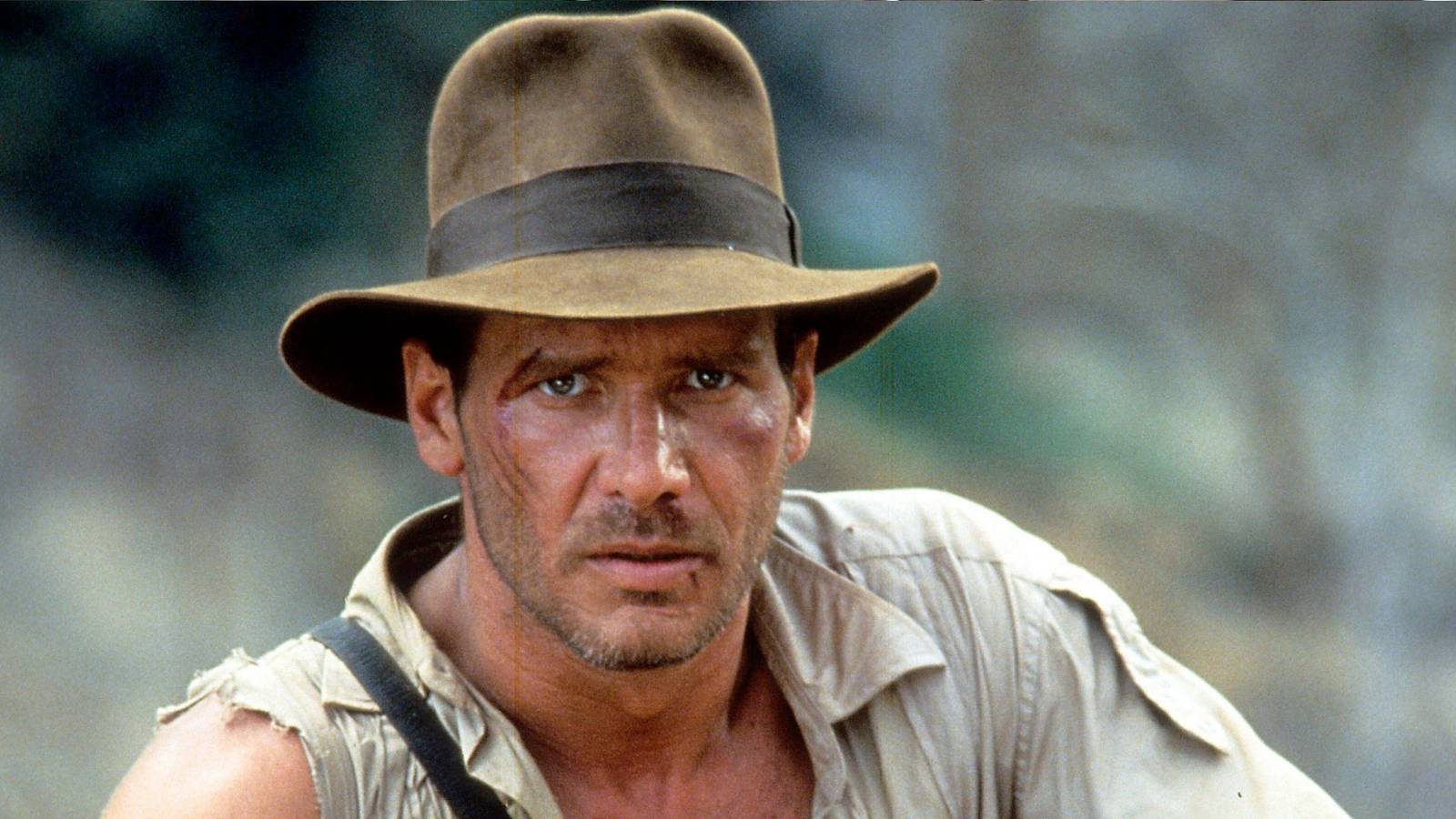
Harrison Ford Confirms Indiana Jones Return In The Most Unexpected Way
Full Article
Original Source
Read the full article at Screenrant →KhanList aggregates and links to publicly available news content. We do not host full articles from third-party sources. Always verify important information with original sources.