
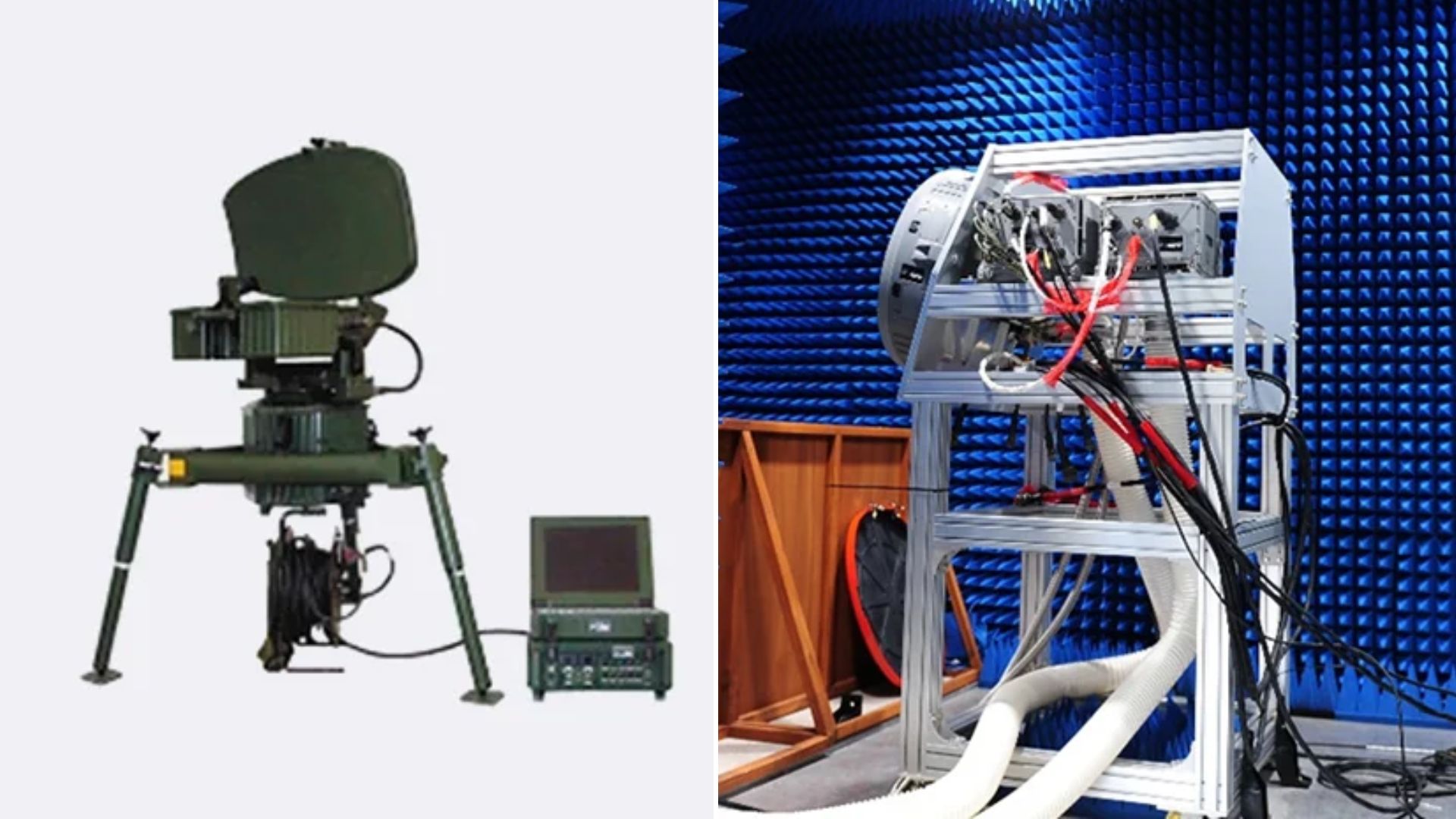
Key TakeawaysSouth Korea’s Hanwha Systems signed a pilot contract with New York-based Rebellion Industries to supply short-range AESA anti-drone radars, marking its first U.S. radar export.Featuring a 6.2-mile (10-kilometer) detection range and AI target recognition, the all-in-one radar unit integrates its antenna, main body, and power supply to separate drones from birds in poor weather.Deliveries are scheduled for early 2027, with initial units slated to protect U.S. oil refineries, data centers, logistics hubs, and stadiums ahead of potential larger follow-on orders. South Korea’s Hanwha Systems has secured its first radar export contract in the United States, signing a pilot agreement to supply compact, short-range active electronically scanned array (AESA) anti-drone radars to New York-based defense technology firm Rebellion Industries. Deliveries under the initial trial order are scheduled for completion by early 2027, marking a significant step in South Korea’s push to expand defense sensor sales into the world’s largest military and homeland security market. While South Korean defense contractors have previously exported medium- and long-range multifunction air-defense radars to customers across the Middle East and Europe, breaking into the U.S. radar market has long remained a high bar. The agreement builds on Hanwha Systems’ initial entry into the U.S. defense supply chain in December 2025, when it signed a contract with Boeing to supply large-area cockpit displays for F-15 fighter jets. How the compact AESA radar tracks small drones Announced by Hanwha Systems on November 18, 2026, and reported by The Korea Herald, the contract covers a specialized short-range AESA radar engineered specifically to detect and track low-altitude unmanned aerial vehicles (UAVs). Unlike conventional long-range air-defense radars optimized for high-altitude aircraft and ballistic missiles, this unit focuses on spotting small, slow-moving drones within a detection range of up to 6.2 miles (10 kilometers). To simplify installation across diverse platforms, Hanwha Systems integrated the antenna, main processing unit, and power supply into a single lightweight module. That all-in-one footprint allows the sensor to be mounted on armored vehicles, tanks, and small naval patrol vessels, as well as stationary rooftops and perimeter towers. On the software side, the radar pairs electronically steered beams with an artificial intelligence target-identification algorithm. According to the company, this AI processing helps operators distinguish hostile drones from birds and clutter even when operating through fog, dust, or heavy electromagnetic interference. Under the partnership, Hanwha’s hardware will be integrated with Rebellion Industries’ Sensor OS platform to create an end-to-end counter-drone detection and response suite. Protecting critical US infrastructure first Rather than heading straight to frontline military units, the initial batch of radars supplied to Rebellion Industries is slated for deployment at high-value civilian and industrial sites across the United States. Planned installation locations include oil refineries, corporate data centers, logistics hubs, and sports stadiums, facilities increasingly vulnerable to unauthorized drone incursions and surveillance. Neither company disclosed the financial value of the pilot order or the exact number of units involved, describing the contract as a trial shipment designed to evaluate market performance ahead of negotiations for larger follow-on orders. Expanding production for a broader sensor lineup To prepare for anticipated demand in both the U.S. and global counter-drone markets, Hanwha Systems plans to introduce automated production lines at its manufacturing plant in Gumi, South Korea, to boost volume capacity and lower unit costs. Alongside the 6.2-mile (10-kilometer) model heading to Rebellion Industries, the company aims to complete development of shorter-range variants, with detection radii of 3.1 miles (5 kilometers) and 0.6 miles (1 kilometer) by early 2027 to offer layered coverage for smaller perimeters and mobile units.Get the latest in engineering, tech, space & science - delivered daily to your inbox.Kaif Shaikh is a journalist and writer passionate about turning complex information into clear, impactful stories. His writing covers technology, sustainability, geopolitics, and occasionally fiction. A graduate in Journalism and Mass Communication, his work has appeared in the Times of India and beyond. After a near-fatal experience, Kaif began seeing both stories and silences differently. Outside work, he juggles far too many projects and passions, but always makes time to read, reflect, and hold onto the thread of wonder.
Hanwha Systems bags first US radar export order to supply anti-drone AESA sensors
Full Article
Original Source
Read the full article at Interestingengineering →KhanList aggregates and links to publicly available news content. We do not host full articles from third-party sources. Always verify important information with original sources.