
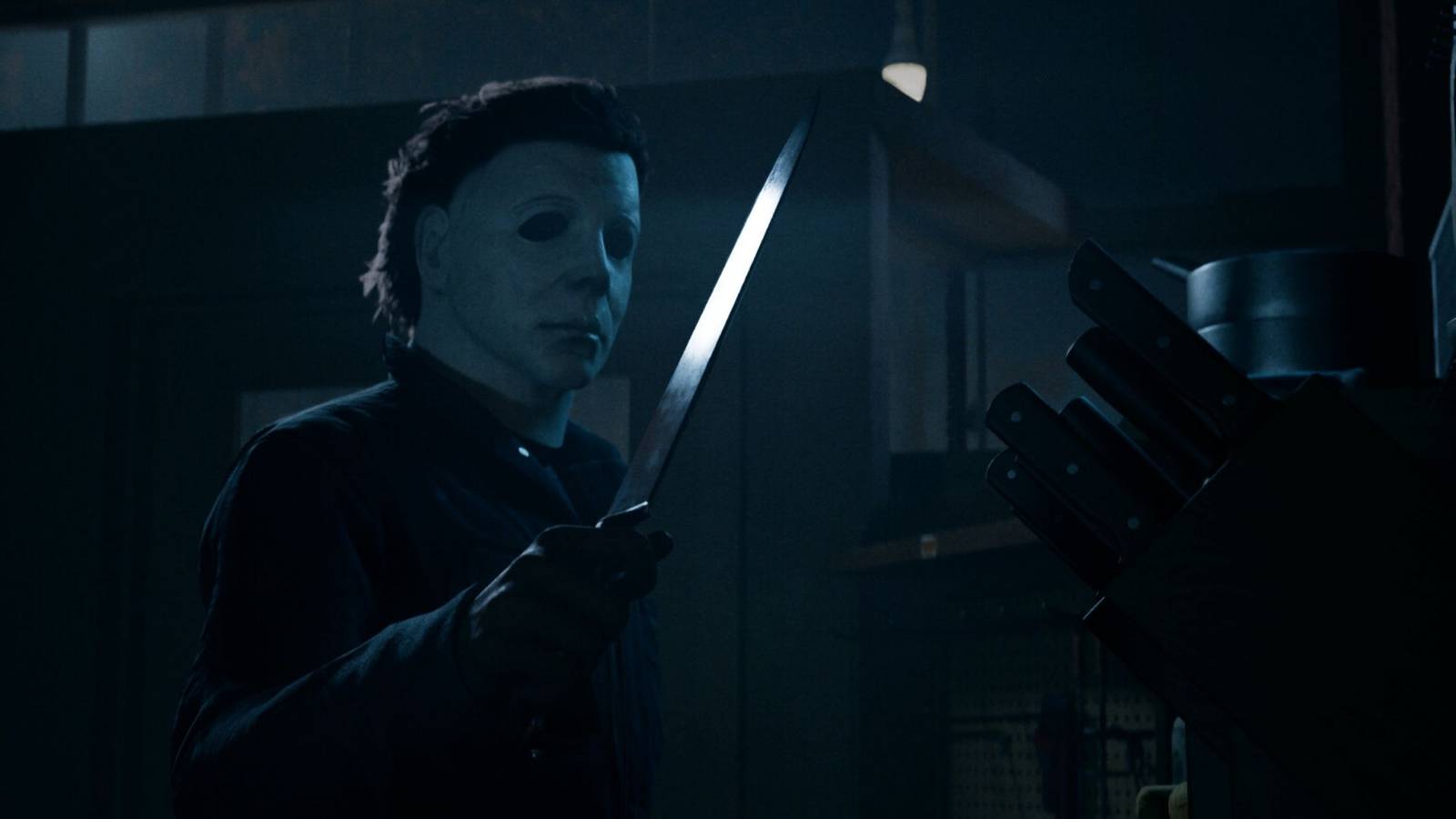
Published Sep 3, 2026, 9:00 AM EDT Michael Myers is back to lurking around corners in Halloween: The Game, a gorgeous, creepy, occasionally glitchy trip to Haddonfield. Halloween: The Game Review - Stepping Into The Boogeyman Makes For A Bloody Good Time Michael Myers is uniquely unsettling. He is not particularly complicated, nor even particularly fast, but he has mastered the art of simply being there. You turn a corner, and the man is standing exactly where you least want him to be. Halloween: The Game understands that kind of horror. It is a game built around anticipation: the waiting and the creeping suspicion that you are not as alone as you thought. Halloween: The Game is a one-versus-four asymmetrical horror game based on John Carpenter's genre-defining 1978 slasher. Its premise is familiar territory by now: one dude is the heavy-breathing guy in the William Shatner mask while everyone else plays as civilians scrambling around Haddonfield trying to escape before the night turns into a massacre. What makes it stand out is how thoroughly it recreates the feeling of Carpenter's Halloween. It wants you to feel like you have wandered into that movie, preferably before realizing Michael has wandered in after you. A Good Way To Meet Michael The single-player story mode is a good icebreaker to the game. Its opening prologue establishes the mood well. Rain falls across a darkened Haddonfield and streetlights bleed into wet pavement. The environment has the sort of gloom that makes even an ordinary street look like somewhere you should not be walking alone. The story begins with Michael's escape from Smith's Grove, and the short chapters that follow are an enjoyable excuse to step behind the mask. There is a pleasingly pulpy, distinctly '80s quality to the dialogue and presentation, and the campaign does a good job introducing mechanics that later become important in multiplayer. More importantly, it is just fun to play as Michael without three real people bullying you as you learn the moves. For anyone who isn't particularly interested in the social mess of asymmetrical multiplayer, the single-player mode is the game’s more approachable side. One of my favorite things about Halloween: The Game might be Haddonfield itself. The maps are large enough to create the feeling of a real town without feeling like a wilderness of identical suburban houses. They are dark and moody, but not lifeless. There are enough details, NPCs, interiors, lights, and little points of interest to make the town feel inhabited. This is good because nothing makes a horror game less frightening than realizing every house, NPC, and parked car looks like it was generated from the same five assets. The lighting and reflections are impressive, too. Wet streets gleam under lamps and interiors glow against the darkness. The result is a beautiful atmospheric game that knows that Halloween isn't really just about the darkness. It is about what might be hiding just beyond the light. That is particularly important in multiplayer. Michael Myers Is Terrifying Yet Again I enjoyed my time during the multiplayer. Playing as a civilian, particularly so. What I love is that I was not just completing one objective over and over. I was multitasking: find an item, locate a resident, convince them to come with you, find somewhere to hide, call for help, figure out an escape route, find a weapon, maybe reconsider that decision when you remember who is wandering around the neighborhood. There is always something to do, but never quite enough time to feel comfortable doing it. I have been surprised by how often Halloween managed to make Michael get a jump out of me from seemingly nowhere. The game's mechanics create some wonderfully unnerving encounters because Michael isn't only unsettlingly moseying across the map toward you. He can disappear to reposition himself and use the environment to approach from unexpected directions. This power, Shape Jump, is really effective. It turns Michael into a super terrifying fast-travel system. One of my favorite moments is finding a civilian, positioning myself just ahead, and jumping out of the shadows to scare the heebie-jeebies off them. The civilian roster helps, too. Different characters have unique stats and traits, which provide reasons to experiment rather than choosing whichever face you like most. There are lots of conventional ways to kill civilians, but the game clearly had a lot of fun coming up with increasingly elaborate kill animations. The toilet is, unfortunately, one of my favorite weapons. You can smash someone's head into it. Find a spiked fence, and well, you can probably imagine where this is going. There are clocks, gates, and other environmental objects that become instruments of murder when you position your victim correctly. You can slowly walk someone toward one of these objects while holding a civilian. The whole process is wonderfully stupid. I had so much fun looking around the environment thinking, oh, I wonder if I can kill them with that! The NPC targets are another good touch. Even when you are playing against a particularly competent group of real players, there are still other targets to hunt, which means Michael's match is not miserable if the survivors are exceptionally good at staying alive. It Is Also, On Occasion, A Bit Messy Unfortunately, Halloween: The Game has its fair share of glitches. For example, NPCs can behave strangely, and police officers appear in situations where you can't even interact with them after risking your life to call them. Plus, some systems aren't super intuitive. There is a screen that appears after you die with what looks like a little minigame. It left me briefly wondering what exactly I was supposed to be doing. Eventually, I discovered it gives you bonuses, a fact I would have appreciated knowing before staring at the screen and wondering whether I had accidentally launched a window from an entirely different video game. I was told some of these issues are known by the developers and will be addressed. These issues don't ruin the experience, but they do sometimes puncture the illusion. For a game so committed to atmosphere, those stand out. Still, the foundation is strong. Halloween: The Game is fun because it lets the horror emerge organically rather than simply throwing scripted scares at you. As a civilian, you are constantly trying to determine whether that movement in the distance was another player or Michael. As Michael, you're thinking about where everyone is looking, where they might run, and which piece of furniture you can weaponize. That makes the game feel close to the spirit of Carpenter's original film. It is absolutely about violence, but it is equally about anticipation. Halloween: The Game may not be the cleanest asymmetrical horror game I've played, but it is one of the more atmospheric. Its Haddonfield is gorgeous, and its multiplayer creates plenty of unpredictable encounters. Stepping into Michael Myers' boots is exactly the kind of absurd fun a Halloween game should offer. Released September 8, 2026 ESRB Rating Pending Developer(s) Illfonic Publisher(s) Illfonic, Gun Media Engine Unreal Engine 5 Multiplayer Online Co-Op, Online Multiplayer Franchise Halloween Number of Players 1-5 players (online) Steam Deck Compatibility Unknown PC Release Date September 8, 2026 Xbox Series X|S Release Date September 8, 2026 PS5 Release Date September 8, 2026 Genre(s) Horror, Survival, Action, Stealth, Multiplayer Platform(s) PlayStation 5, Xbox Series X, Xbox Series S, PC Pros & Cons Gorgeous, atmospheric Haddonfield Playing as Michael is creepy and fun Varied objectives and kills keep multiplayer feeling unpredictable NPCs and police can behave strangely Glitches occasionally break the otherwise excellent atmosphere
Halloween: The Game Understands What Makes Michael Myers So Unsettling
Full Article
Original Source
Read the full article at Thegamer →KhanList aggregates and links to publicly available news content. We do not host full articles from third-party sources. Always verify important information with original sources.