
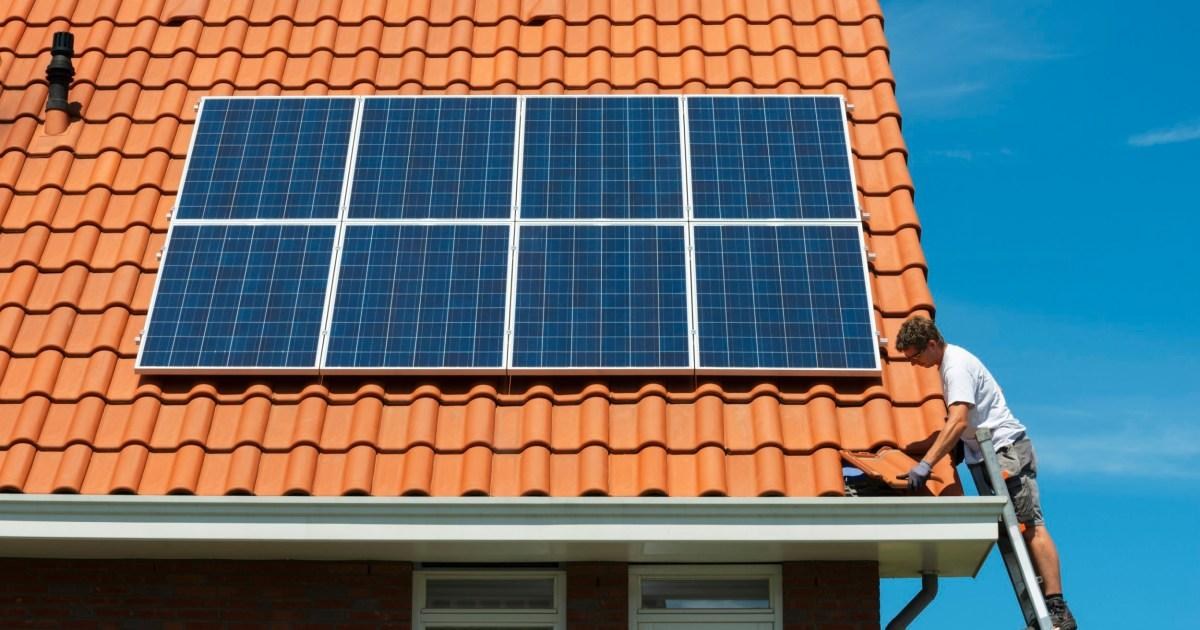
Are you considering getting solar panels? (Picture: Getty Images/Westend61) Solar panels are becoming hot property, after 53% of prospective buyers say they would actively seek out a home with panels already installed. In a fairly stagnant housing market they might just be the ticket to getting your house sold, or if you’re worried about global warming, installing solar panels could help you to feel you’re doing your bit. The thought might have crossed your mind given a Switch Together survey of 2,300 energy consumers across England and Wales found that 56% of households without solar would consider installing it. And from today August 27, plug-in solar panels can be sold widely across the UK. It’s expected they’ll become available in stores like Lidl and Iceland, as well through online stores like Amazon. Not to mention, nearly two million UK homes already run on solar power and it’s only going to get more popular. Either way it seems like a win, right? Well it turns out there’s a bit more to it than that. Roof solar panels vs plug-in solar panels Firstly, you need to choose which type of solar panels are going to work best. You can either have them installed on your roof, or have plug-in solar panels which can be mounted in gardens, on walls, or on certain balconies. Getting solar panels installed on your roof comes at a big upfront cost (Picture: Getty Images) Ready to start your homebuying journey? You can access completely fee-free mortgage advice with London & Country (L&C) Mortgages, a partner of Metro. Customers benefit from: – Award winning service from the UK’s leading mortgage broker – Expert advisors on hand 7 days a week – Access to 1000s of mortgage deals from across the market Unlike many mortgage brokers, L&C won’t charge you a fee for their advice. Find out how much you could borrow online Mortgage service provided by London & Country Mortgages (L&C), which is authorised and regulated by the Financial Conduct Authority (registered number: 143002). The FCA does not regulate most Buy to Let mortgages. Your home or property may be repossessed if you do not keep up repayments on your mortgage. Roof solar panels Getting standard 4.5 kilowatt-peak (the optimal energy production of the panels in ideal lab conditions, meaning actual output will be a bit lower) PV solar panels installed on your roof will cost you an average of £7,600, according to the Energy Saving Trust. It will take you about 10 years to break even but Charlotte Snelgrove, head of low carbon tech at Octopus Energy tells Metro the average homeowner could save around £500 per year on energy bills this way. Ask Metro Use AI to go deeper into the stories you care about – powered by Metro and trusted publications. ‘You’ll need to own your home, a pitched (non-flat) roof with enough clear space to fit at least two solar panels and a roof with concrete or clay tiles,’ she says. ‘It also requires safe access for scaffolding.’ South-facing roofs are best as they get the most sunlight, and according to Money Saving Expert, your roof should also be in direct light from 10am to 4pm. But east or west-facing roofs will also work. North-facing means solar may not be your best option. You’ll need to pay for a roof inspection to make sure it can hold the panels, which will set you back around £250, according to Checkatrade. The Government’s Planning Portal suggests you don’t typically need planning permission for solar panels, but if you have a listed property or you’re in a conservation area you’ll need approval, so just double check with your council. It’s also important to note these panels typically have a lifespan of 25 years or more, but their efficiency will begin to decline after around two decades. Plug-in solar panels The lower-cost option is plug-in solar panels which can be placed outdoors on balcony railings, garden fences, patios or shed roofs. You’ll buy them for about £400, and plug them in to your mains electricity, which means you can take them with you if you move home, and they’re great for people in flats. These are only just about to become available on August 27, with the UK previously barring them due to safety regulations. Before you plug them in you’ll need to jump through some hoops. It can be a potential fire-hazard, so an Electrical Installation Condition Report (EICR) from a qualified electrician is recommended to check your wiring can handle it. This will add between £100 and £250 to your total, according to Checkatrade. You’ll also need a weatherproof, dust-resistant outdoor socket which costs about £140 to £260 to get fitted. You absolutely cannot use a standard extension cable to connect your panels to the socket, instead get an MC4 extension cable if needed. If you’re renting, you’ll also need your landlord’s permission to get these solar panels, or you risk losing your deposit. Plug-in solar will be a more affordable option but you’ll need to make sure you set it up safely (Picture: Getty Images/iStockphoto) Then, anything in your home will automatically use this free solar power before using electricity from the National Grid, which you pay your energy supplier for. The Department for Energy Security & Net Zero estimates savings of £70 to £110 per year on energy bills, meaning you’ll break-even in four to six years. Use it or lose it If you’re not someone who is at home during the day, solar panels could be a bit of a waste. When it comes to roof panels, you’ll need to buy a battery, as well as the panels, to store the energy generated throughout the day so you can use it later. With a provider like Octopus Energy, installations start from £6,663 for a two-panel system without a battery and from £8,623 for eight panels with a 5kWh essential battery. The most popular system is a 12 panel installation with a 10kWh smart battery which costs £11,115. With plug-in solar you won’t be able to store the electricity. George Penny, solar panel installer and director at The Solar Co, says: ‘Homeworkers, retirees and families regularly using electricity during daylight hours benefit most. ‘This is because plug-in solar systems don’t currently include battery storage, meaning the electricity should be used as it’s generated to ensure maximum savings on energy bills. ‘Any surplus the household cannot use may flow into the grid, and consumers should not assume they will be paid for it.’ Basically if you use most of your electricity after sunset when you get home from work, it’s going to take you a lot longer to recoup your costs. Getting your solar panels installed A quarter of people who already have solar say they almost didn’t go through with installation because they weren’t sure who to trust. So, if there’s one thing you need to look for when choosing a provider, it’s the MCS certification. John Collett, director at Quantum Renewables tells Metro: ‘The Microgeneration Certification Scheme is the industry standard for solar installers in the UK and you cannot access government incentives such as the Smart Export Guarantee without using an MCS-certified installer. ‘Check the installer’s MCS number on the official MCS database at mcscertified.com before signing anything. ‘Beyond that, look for membership of trade bodies such as NAPIT or RECC, check Google and Trustpilot reviews independently.’ Homes with solar panels are in demand (Picture: Getty Images) Money Saving Expert warns that while some installers let you buy solar panels on credit, through finance agreements, just make sure the loan is interest-free (many are). Consumer champion Jane Hawkes, founder of the Lady Janey website tells Metro that you should never assume the headline price is the final price. ‘Ask for a written quotation that clearly sets out everything you will pay, including installation, scaffolding, electrical work, cabling, roof repairs, certification, monitoring equipment and any battery or inverter costs,’ she says. ‘It’s also worth asking whether there could be additional charges if the installation takes longer than expected or your property needs extra work. ‘Check whether maintenance, warranties and call-out costs are included, and understand the cancellation terms before signing. If a salesperson won’t provide a clear, itemised price, that should be a warning sign.’ Once you’ve chosen your provider, Charlotte says roof solar panels are installed in three stages. ‘First, the system is designed remotely using photos of the property and a consultation with a solar specialist,’ she says. ‘The provider should handle any required grid approvals and arranges scaffolding ahead of installation. ‘Then, engineers fit and connect the panels and any battery, test the full system, making sure everything is working properly.’ This solar and battery installation can take anywhere from two to four days, so it’s a fairly quick job. What if my panels aren't working properly? Jane Hawkes explains that if your panels aren’t working properly, you can start by going back to the installer and keep a written record of all correspondence, photographs, invoices and problems. ‘If the company is MCS certified, there are complaints and dispute-resolution routes available through the scheme. ‘Consumers can also contact the Citizens Advice consumer service for practical advice, and concerns about unfair or potentially illegal trading can be passed to Trading Standards.’ She adds that unfortunately getting your money back depends on the circumstances but you have rights if the goods are faulty. You’ll need to clean your panels every so often so they remain as effective as possible (Picture: Getty Images/iStockphoto) Selling your solar energy If your solar panels have an MCS certificate, you’ll be able to sell your electricity you generate to the National Grid via The Smart Export Guarantee (SEG). This doesn’t happen automatically, you need to sign up. Any energy supplier with more than 150,000 customers is required to offer a SEG tariff and these can be a fixed or variable rate. Deals of the Day A friend said I looked 'snatched' – I credit this new Charlotte Tilbury powder Shop MySweetSmile's biggest Bank Holiday offers before they end Back-to-school shopping just got a lot cheaper thanks to Primark The back-to-school essential parents forget every year – and it could cost them Simba's cooling mattresses are now up to 30% off ahead of the bank holiday You’ll be able to earn around 15p to 25p per kWh for each unit of electricity, but you’ll need to install a smart meter to monitor your exports. Do you have a story you’d like to share? Get in touch by emailing MetroLifestyleTeam@metro.co.uk Arrow MORE: Martin Lewis’ MSE shares advice to save 11% on bills before energy price cap hike Arrow MORE: The ‘lively’ London commuter hotspot first-time buyers are flocking to Arrow MORE: We ‘retired’ in our 30s and travel the world on £60 a day with our kids The Key Sign up for must-read property stories, DIY hacks and tips for buying a home.
Half of us want homes with solar panels — your no-nonsense guide to installing them
Full Article
Original Source
Read the full article at Metro →KhanList aggregates and links to publicly available news content. We do not host full articles from third-party sources. Always verify important information with original sources.