
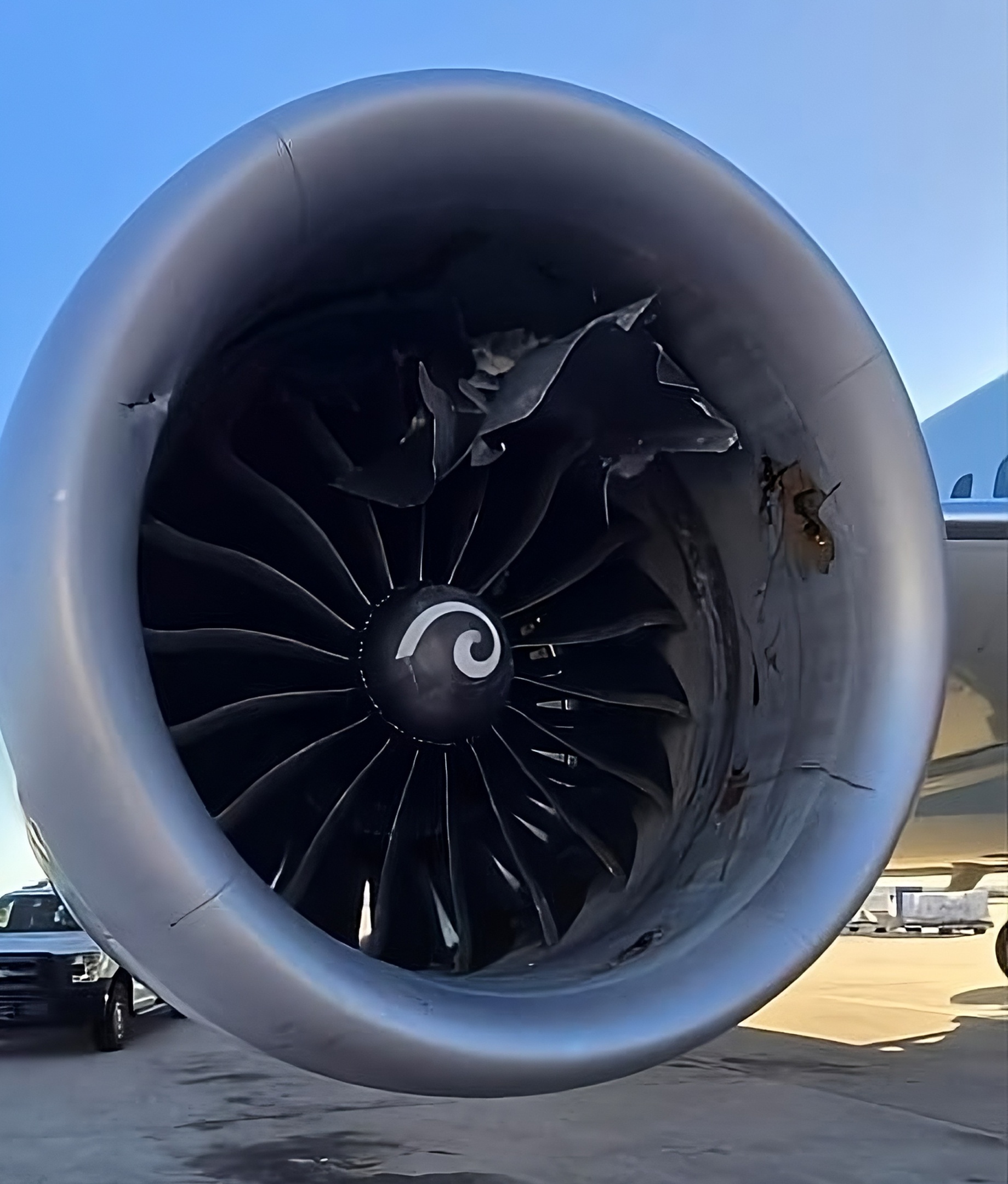
A passenger went through an emergency exit at Salt Lake City airport, crossed a mile of airfield, and climbed into a Delta jet’s engine. His family sued the city for… failing to stop him. A judge has now dismissed the suit with prejudice. I wrote about this case when the lawsuit was filed. I was skeptical of making the airport responsible for a passenger going out onto the airfield and entering an engine. The judge ultimately ruled that even if someone could have prevented it, and failed to do so, the family has no right for them to have done so that was violated. He Bought A Utah Jazz Jersey And Sprinted Naked For The Plane Kyler Efinger, 30, died on January 1, 2024. He had a ticket to Denver to visit his seriously ill grandfather. His family said he had bipolar disorder and was experiencing a manic episode. According to the lawsuit, he began behaving erratically inside the terminal around 9 p.m. He repeatedly traveled the moving walkways, bought a Utah Jazz jersey, left his bag behind, and returned barefoot with his shirt half unzipped demanding his belongings and a refund. He left before the refund on his jersey was complete, because the manager was calling in an emergency. Efinger headed down the concourse, tried locked gate doors, and struck a window with a shoe. Then he went through an emergency exit near Gate A4 and down the stairs to the airfield. He made it onto the runway, and removed his pants and underwear. It was below freezing outside, and he left on his jersey and socks. The aircraft was Delta flight 2348 to San Francisco, an Airbus A220-100 carrying 95 passengers and five crew members. Police found him partly inside the engine. They pulled him out and attempted to revive him, but he died at the scene. The San Francisco flight was canceled. The Family Argued Responders Took Too Long The family’s complaint targeted Salt Lake City, which owns and operates the airport, arguing that employees should have recognized his distress, that emergency exits needed additional safeguards to prevent being breached, and that the search for the man was undermined by bad communications when dispatchers repeatedly sent officers to the wrong location. Efinger exited near Gate A4, but officers were initially directed toward A31 and then toward A20 and A22. The family says eight minutes passed before officers received the correct exit location. They also alleged that the city failed to warn air traffic controllers and pilots quickly enough. The pilot reportedly said he shut down the engines after seeing Efinger himself. There’s air traffic control audio posted from the incident as well: The airport had defended its response saying that an alarm activated when Efinger used the exit, thermal cameras tracked him, and pilots reported sightings. And they can’t truly lock down emergency doors which need to be able to let people escape quickly… in an emergency. The Airport Had No Obligation To Save Him Under Utah’s public duty doctrine, the government’s general obligation to provide security and emergency response doesn’t create an individual right to compensation when those efforts fail. The city had no affirmative duty to undertake the additional precautions that might have prevented this, and isn’t liable for a rescue that didn’t arrive in time. The city didn’t “create the peril.” I’ve also covered Frontier passengers seeking more than $10 million from Denver after a man breached the airport perimeter and was struck by their departing aircraft. That claim also tried to turn an airport’s failure to prevent someone reaching a plane into liability for the resulting harm. Do we really need to tell someone they shouldn’t go through an emergency exit onto the airfield, strip naked, and crawl into an aircraft engine? And are we really saying it’s someone else’s fault when there are consequences for doing so? It’s like the instructions that say not to iron clothes while wearing them. In 1984 a California man was tossing his toddler up and down in his living room. The kid loved it, and the father went higher and higher. Until the kid’s head hit the ceiling fan. Which was on. And the man sued the ceiling fan manufacturer for failing to warn him that this might be dangerous. So I can almost understand warnings like “this motorcycle contains no edible parts” and cartons of eggs that warn “this product may contain eggs” (or jars of peanut butter that flag, “may contain nuts or nut products”). I have to think though that bureaucrats who insist that butane lighters warn “flame may cause fire” or people who need to be told “this electric drill is not intended for dental use” tell us that something is wrong with our society. Shouldn’t we really have some individual responsibility? Then again, when a U.S. Senator, former Governor and candidate for President of the United States actually does iron his shirts while wearing them what chance do the rest of us have? The narrative arc of societal decline was kept from becoming totally complete by a judge who wouldn’t hold the city liable, refusing to require taxpayers to pony up. Topics on this page
Half-Naked Passenger Climbed Into A Delta Engine And Died—Judge Throws Out Lawsuit Blaming The Airport
Full Article
Original Source
Read the full article at Viewfromthewing →KhanList aggregates and links to publicly available news content. We do not host full articles from third-party sources. Always verify important information with original sources.