
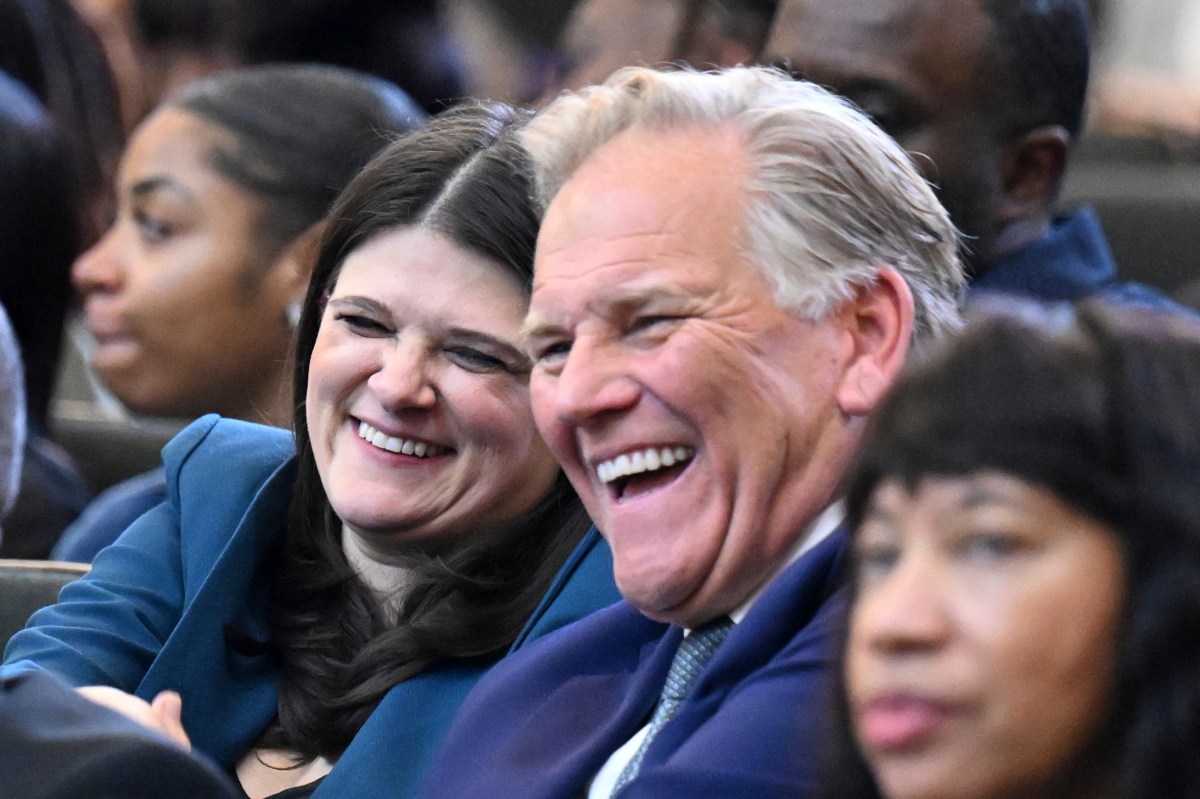
Rep. Haley Stevens, D-Mich., and Michigan Republican Senate candidate Mike Rogers attend a service at Perfecting Church, on Nov. 1, 2026, in Detroit. Photo: Jose Juarez/AP Photo Eoin Higgins is the author of “Owned: How Tech Billionaires on the Right Bought the Loudest Voice on the Left.” Abdul El-Sayed handily defeated Republican Mike Rogers for Senate in Michigan early Wednesday morning, retaining Democratic control of the seat and solidifying the party’s Senate majority. To become the first Muslim elected to the U.S. Senate, the former public health official overcame rampant, bipartisan Islamophobia and bigotry. For the country, and the Democrats, to move forward, we must cast it out of public life forever. The Michigan Democrat’s victory felt almost like an afterthought compared to the upset Senate victories won by Democrats in South Carolina and Texas. The 2026 midterms were a referendum on President Donald Trump and his control of the GOP, and voters delivered their verdict, turning control of both houses of Congress over to the opposition party. But we should neither forget nor forgive how we got here. El-Sayed faced an uphill battle from the beginning, which included a protracted, venomous primary, and the call was often coming from inside the house. No detractor was as vicious as his former primary opponent Rep. Haley Stevens, whose eleventh-hour betrayal of her party’s nominee — she formally switched her endorsement to Rogers on Sunday — was a transparent attempt to turn the seat red. Backlash was swift and harsh and came from all corners of the party. Sen. Chuck Schumer, the powerful leader of the Senate who has made little secret of his disagreements with El-Sayed on Israel, called Stevens’s actions “a despicable betrayal.” Michigan Democratic Rep. Debbie Dingell and state Sen. Mallory McMorrow, who finished third in the primary, went as far as to express personal concern for Stevens. And Rep. Nancy Pelosi, D-Calif., just days after implying El-Sayed and New York City Mayor Zohran Mamdani were antisemites for opposing ethno-supremacy in Israel, said Stevens chose “to dangerously betray Michigan families’ healthcare, freedoms, and future with her horrific endorsement of Mike Rogers.” In the 48 hours-plus since she threw in with Rogers — which increasingly seems like it was motivated primarily out of spite when she was boxed out of a Sunday campaign event with Rep. Jim Clyburn, D-S.C., in Detroit — Stevens embarked on a media tour of justification that got weirder and weirder. A 15-minute, rambling interview with Anderson Cooper on CNN Sunday night didn’t provide insight into her motivations, or much else; on Monday evening, Stevens followed up with a long statement posted on X owning the decision to destroy her political career with the Democratic Party. She also denied that her fiancé, political donor Jason Turkish, played any role in the endorsement: “I made this decision, and I am proud of it. Do not question my independence simply because you disagree with my conclusion.” Congressional staffers to Stevens resigned en masse on Sunday, and former campaign aides told the Washington Post that they had to run defense to keep Turkish — who had endorsed Rogers before Stevens did — out of the spotlight and marginalize his influence. “Any campaign staff being directly quoted in this article, I was made miserable by working with them,” Stevens told the Post in response, adding, “I have nothing else to say about the campaign at this time.” But a singular explanation of Stevens’s decision lets Democrats off the hook far too easily for the anti-El-Sayed campaign waged by leaders in the House and Senate. For the party to move forward after the midterms, the Democrats need to take a hard look in the mirror and purge institutionalized Islamophobia from their ranks. They can start with their friends in the media. The Atlantic’s Jonathan Chait, in a screed published Sunday, whined that “during the same period of time that El-Sayed has been winking at a political movement inflected with anti-Semitism, he has been targeted by a political message that is not merely inflected with racism but saturated with it.” We should get ready for a long overdue, but almost certainly painful, intraparty debate on how Democrats policed dissent in their own ranks. Political commentator Van Jones noted on X ahead of Election Day that “the Republicans are conducting a campaign of blatant anti-Muslim fear mongering.” But in the same post, he also argued El-Sayed’s “refusal to outright denounce” a little-seen ad produced by an outside PAC — an ad which El-Sayed distanced himself and his campaign from — tying the rise of grocery costs to U.S. support for Israel was comparable. “Something is going horribly wrong in the Senate race in Michigan,” Jones added huffily. “And I am going to keep calling it out.” After last night’s massive blue wave, it should be undeniable that the left was a major factor in flipping the House and Senate. That means the party’s progressive wing can now credibly claim a seat at the governing table without compromising on domestic or foreign policy. We should get ready for a long overdue, but almost certainly painful, intraparty debate on how Democrats policed dissent in their own ranks in this election, and how to disentangle leadership from unconditional support for Israel. There’s always the possibility that the party’s centrist wing comes together with the left and repairs the damage. A good first step would be for leadership to make clear that Stevens, and anyone else who indulged in anti-Muslim arguments to score political points, has torched any possible future in the Democratic Party. Any advocacy or lobbying group that offer Stevens or her ilk safe political harbor should also be blacklisted. Party discipline applied to the treacherous center doesn’t appear to be the top priority for House Minority Leader Hakeem Jeffries, the presumptive next speaker, who devoted his first remarks after the election to downplaying partisanship in this “patriotic moment.” But without backup from party leadership, El-Sayed will continue to be met with hostility. On Wednesday morning, CNN asked fellow incoming Texas Sen. James Talarico if he would “stand up” to El-Sayed and other, unnamed left-wing members of his caucus. To his credit, Talarico demurred from directly challenging his fellow future senator. Still, it’s a sign of a long battle to come. The question for “unity”-caping Democrats remains: Who will they rally around — and who will be left out in the cold?
Haley Stevens Destroyed Her Political Career for Absolutely Nothing
Full Article
Original Source
Read the full article at Theintercept →KhanList aggregates and links to publicly available news content. We do not host full articles from third-party sources. Always verify important information with original sources.