
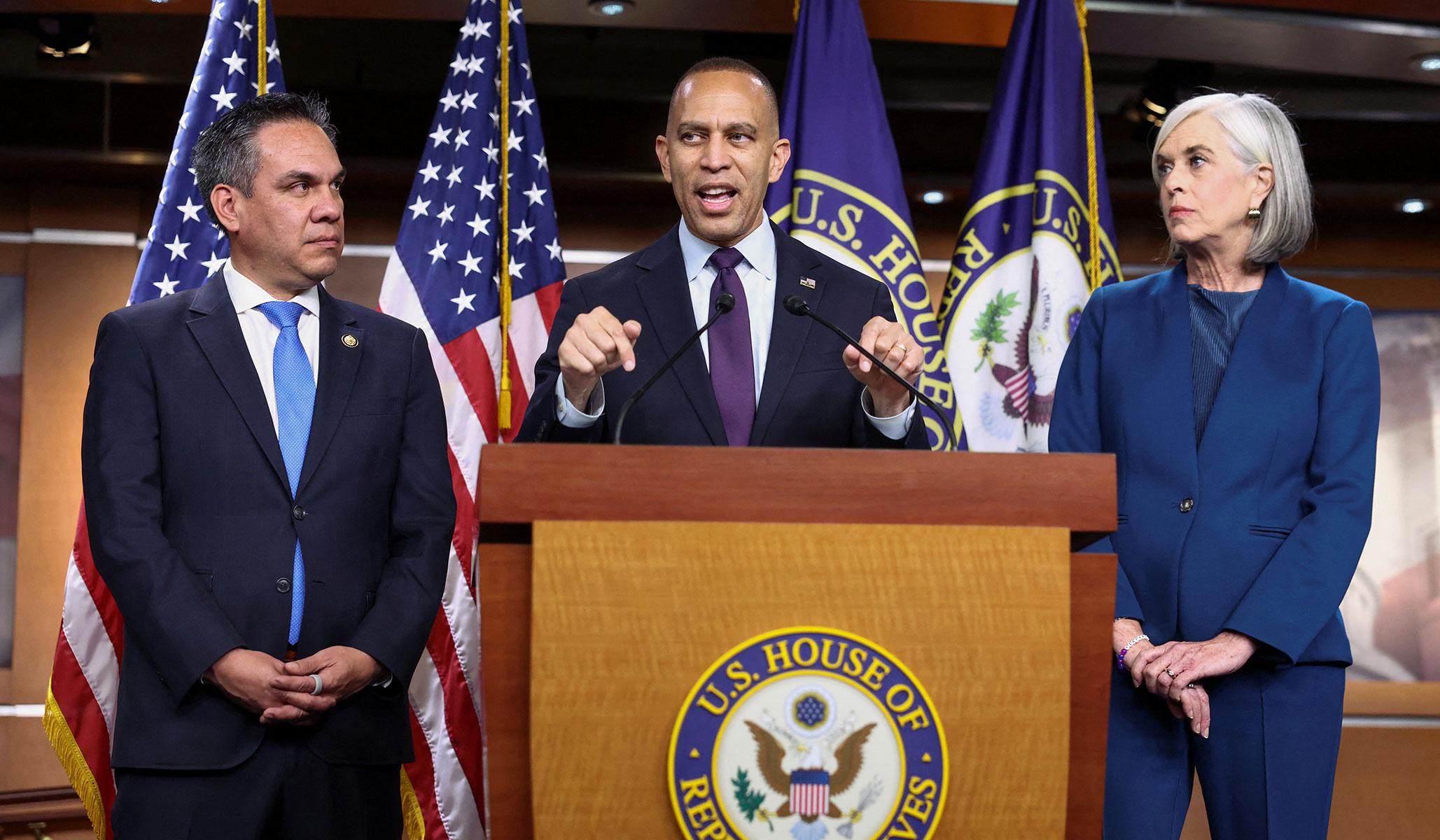
Key TakeawaysExpanding Medicare would deepen its financial troubles while adding potentially trillions in federal spending.Trump’s openness to compromise makes Republican resistance crucial to blocking another costly expansion of government-run health care.We have long warned that if Republicans did not get serious about advancing their own vision for health care, Democrats would use their next opportunity to further expand the role of government. And here we are.Fresh off a sweeping victory in the midterm elections, made a radical proposal. He endorsed lowering the retirement age of Medicare and adding vision, hearing, and dental coverage to the program. Additionally, he said that the government should provide coverage for all children.No doubt, with a stampede of new socialists joining his caucus, Jeffries is trying to get ahead of the left-wing push for a fully government-run system branded as “.” When last nationally debated in 2019, it was estimated to add $34 trillion to existing federal spending with no plausible financing mechanism.At this point, Jeffries’s proposal is theoretical. There’s a big budgetary difference between lowering the Medicare eligibility age from its current 65 to 60, and lowering it to 50 — as Senator Kirsten Gillibrand and other senators are proposing. There are also questions about what sort of premiums, if any, would be required for near-retirees to “buy in” to the program or how generous the theoretical vision, hearing, and dental benefits would be. Filling in those blanks is the difference between a proposal that costs a few hundred billion dollars and one that costs trillions of dollars.But it’s preposterous at this stage to start any discussion of Medicare with a suggestion that spending on the program needs to be increased rather than reined in — especially to cover a population without a high uninsured rate. Over the next decade, the federal government is projected to spend $18.5 trillion on Medicare, making it the largest expenditure apart from that other federal entitlement, Social Security. Medicare no longer collects enough money in payroll taxes to cover current benefits, let alone added benefits that cover more people. Even a more modest lowering of the retirement age to 60 would add over 7 million beneficiaries. On its current trajectory, Medicare’s trust fund (the money it is “owed” by the rest of the government from the days when it was running surpluses) would be exhausted by 2033.Related ArticlesMedicare is a major driver of the nation’s broader fiscal problem. Already, debt held by the public has eclipsed 100 percent of gross domestic product. By the end of the decade, it is projected to reach 120 percent. By comparison, debt peaked at 106 percent during World War II. Now we are on track to exceed that number, not during a global crisis, but during an ordinary period of relative peace and prosperity. And that’s before Jeffries grabs the gavel with a massive majority behind him.Perhaps more concerning, President Trump indicated last week that he may be game for some compromise proposal. “There is a real possibility that we get a lot of great things done, especially on health care,” he said.If Trump is serious and actually considers cutting a deal with Democrats to expand Medicare, congressional Republicans should fight it at all costs.
Hakeem Jeffries’s Reckless Medicare Expansion
Full Article
Original Source
Read the full article at Nationalreview →KhanList aggregates and links to publicly available news content. We do not host full articles from third-party sources. Always verify important information with original sources.