
The overwhelming blue wave of the 2026 United States midterm elections should have simply been seen as a crowning achievement for House Minority Leader Hakeem Jeffries that propelled him into the position of next speaker of the House of Representatives. And while that outcome appears all but guaranteed now that he has secured more than enough support from the incoming House Democratic Caucus, Jeffries’ ascent to the top House leadership position has been significantly rockier than anticipated.The blue wave was, in part, a progressive and anti-establishment phenomenon. And while we in the media have likely exaggerated the impact of the Democratic Socialists of America (DSA) in this year’s election cycle, DSA-affiliated and other newly elected far-left lawmakers have already asserted themselves as a vocal minority amongst the incoming House Democratic Caucus. They’ve done so by calling on the party to move left on issues such as healthcare, campaign finance and America’s relationship with Israel. And these newly elected progressives have also targeted congressional leaders, namely Jeffries and Senate Minority Leader Chuck Schumer, who they see as embodying the party’s status quo.Jeffries has reached the pinnacle of power within his party by being a shrewd political operator who has deftly managed the leverage of the Democratic minority in the closely divided House. His handling of the recent challenge to his leadership shows that he remains a step ahead of his opponents within the party. Jeffries declined the opportunity to be chosen by acclamation, an option that could have allowed him to gloss over the opposition to his speakership. Instead, Jeffries insisted on a formal secret ballot. The choice was strategic. Much like a prime minister calling for early elections, he organised the vote to happen before progressive opposition had coalesced around a single candidate (unlike in the Senate, where Maryland’s Chris Van Hollen is amassing support to challenge Schumer). The move represented a tactic Jeffries observed while under the wing of Nancy Pelosi, who called a similar vote in 2018 after her leadership was challenged by vocal incoming members of Congress. In the end, potential challengers for the role of speaker, such as Representatives Ayanna Pressley of Massachusetts and Jamie Raskin of Maryland, declined to throw their hats in the ring to run against Jeffries. The vast majority of the caucus fell in line behind the New York congressman, with 251 votes in favour and only 11 against, the latter largely from incoming DSA-aligned representatives-elect.For Jeffries, the progressive revolt against his leadership has been, in the short term, a mere speed bump on his path to becoming speaker. In the longer term, those 11 “no” votes represent a more significant progressive challenge to Jeffries’ record and agenda that will not easily disappear. However, the presumptive next speaker of the House is poised to overcome this challenge, as his skill as a political operative, the relatively weak position of his progressive opposition, and the historic nature of Jeffries’ leadership all work in his favour.Over the course of the 2026 election cycle, Jeffries secured the support of important progressive figures, including fellow New Yorkers such as New York City Mayor Zohran Mamdani and Representative Alexandria Ocasio-Cortez. During the brief post-election speculation over his leadership, the New York congressman also won over progressives including Texas Representative Greg Casar, chair of the Congressional Progressive Caucus. Jeffries’ predecessor as Democratic leader, Pelosi, was able to manage dissent from the progressive Squad through a combination of personal relationships and strategic committee assignments that channelled their energies toward oversight of the executive branch. Jeffries may likewise seek to manage the “Bloc”, as the new progressives are being called by some, in similar fashion.Meanwhile, Jeffries’ primary message since the midterm elections has been one of affordability, a potent message that has resonated with voters across the political spectrum and thus can unite centrists and progressives within the Democratic Party. The speaker-designate has also signalled that he is willing to move in the direction of progressives’ concerns on substantive issues. Most notably, on November 17, the eve of the speaker nomination vote, Jeffries endorsed a plan to expand Medicare by lowering the age of eligibility for older Americans, covering children under 18, and including dental, vision and hearing coverage. This new “Medicare for more” plan, coupled with rolling back Trump-era cuts to Medicaid and restoring Affordable Care Act tax credits, has been gaining steam among both centrists and progressives. The latter have framed it as a quickly achievable first step towards Medicare for All. Both progressive elder statesman Senator Bernie Sanders and members of the Congressional Progressive Caucus have adopted this rhetoric.Whether this “first step” framing is accurate is unknowable. The Affordable Care Act was presented in similar terms, but the progressive aim to use Obamacare as a foundation to build a universal healthcare system did not materialise over the subsequent decade. However, the willingness of major progressive forces to adopt the narrative seems to be opening space for Jeffries to navigate. This undercuts the power that the incoming progressives have to make healthcare a major dividing issue within the Democratic caucus.Jeffries also has the power of history on his side. The congressman from Brooklyn is poised to take control of the top House spot as the chamber’s first Black speaker. He will be backed by an unprecedented slate of diverse leaders within the Democratic House Caucus, with historic firsts for Black, Hispanic and Asian legislators, among others. Even President Donald Trump acknowledged Jeffries’ personal acumen and the historic nature of becoming the first Black speaker, calling it “a big deal”, and referring to Jeffries as “a very smart guy”. Jeffries has in turn signalled a willingness to work with members of the Trump administration, though not with new White House Chief of Staff Stephen Miller, who Jeffries calls a “stone-cold racist”.Black candidates and Black voters played huge roles in Democrats’ 2026 surge in ways that have not neatly mapped onto the “centrist insiders v. progressive outsiders” narrative that has defined the party’s main internal division. Though Black Democrats and progressives are by no means mutually exclusive wings of the party, the far left has sometimes had difficulties appealing to Black voters. As such, progressives face potential backlash if they are perceived as attempting to prevent or hamstring the leadership of the first Black speaker of the House. Already, some of the attacks against Jeffries have been condemned for racist language and undertones. Progressives run the risk of being tone-deaf and appearing on the wrong side of history, meaning that they will have to tread lightly if they continue to question Jeffries’ leadership.In the short run, Jeffries has made the right moves politically and leaned into the importance of the moment, all while solidifying his coalition and moving leftward in a way that balances progressive priorities with legislative practicality. Whether he can temper progressive demands and maintain a unified caucus may depend on forces outside of his control. In terms of Democrats’ domestic agenda, incoming Senate sensation and Michigan senator-elect Abdul El-Sayed is becoming the face of the Medicare for All movement, even pushing for a long-shot deal with President Trump on the issue. Growing momentum within the Senate could push the issue beyond Jeffries’ ability to manage. Similarly, in a recent New York Times interview, Jeffries signalled a willingness to walk a tightrope between holding the Trump administration accountable and working with the White House and other Republicans. But this balancing act may prove untenable if the continued lawlessness of Trump and his cabinet leads to intensified demands for investigations and even impeachments.And foreign affairs may be an even larger stumbling block for Jeffries, who has come under fire for his support for Israel as sentiment grows in both parties to re-evaluate the US relationship with its longtime Middle East ally. For now, Jeffries has gotten some cover by gaining the support of figures like Mamdani, a vocal and credible critic of the genocidal war in Gaza and of Israel’s treatment of Palestinians. But in that same New York Times interview, Jeffries prevaricated when asked about accepting AIPAC funding in the future or pushing for legislation that would cut weapons sales to Israel and impose sanctions on entities tied to illegal Israeli settlements in the occupied West Bank.Again, Jeffries appears to be offering a compromise, promoting the less forceful West Bank Settler Violence Protection and Prevention Act, which targets the sponsors of settler pogroms but not the underlying scheme of settlement itself in Palestinian territory. It’s less clear that such a stance will be enough to satisfy Jeffries’ left flank. However, the growing controversy over AIPAC led the pro-Israel lobbying group, even prior to November’s election results, to shift its strategy of supporting candidates to a model that emphasises individual donors rather than direct political action committee funding for campaigns. The electoral shellacking that AIPAC-backed candidates experienced in the midterm elections may further lead the lobbying organisation to take a less high-profile approach going forward, which could help to slightly tone down Israel’s prominence in US politics.For the time being, the Iran war is the more pressing foreign policy concern, and this will be one of Jeffries’ first major tests. He has pledged to prioritise ending the war, a popular stance that could be another unifying position for centrists, progressives and even some Republican lawmakers. But the speaker-designate has already been criticised for indicating that he might be willing to cut a temporary budget deal with Republicans that keeps money flowing to the war rather than using the leverage of a government shutdown to insist on cutting funds for the conflict. Even Trump and Vice President JD Vance have acknowledged the Iran war as a major reason behind Republicans’ 2026 defeats. Failure by Jeffries to take bold action against the conflict now will be seen as a missed opportunity and create a new opening for progressives to question his fitness to lead in this moment.After securing the nomination for speaker, Jeffries surprised the incoming Democratic House caucus with a visit by former President Barack Obama, to whom Jeffries has been compared before. Obama was a unique leader who combined a principled pragmatism with an unmatched ability to inspire, and he urged the new Democratic representatives to stick to their principles while learning how to “get s*** done” with colleagues who had different points of view. Jeffries leans more toward Obama’s pragmatism than his idealism, and his penchant for practicality at the expense of vision may be the presumptive speaker’s greatest strength and biggest liability. Even if he is willing to compromise with the left wing of his party, Jeffries will not be the bold visionary that progressives want leading the House. But with domestic and foreign concerns to address such as healthcare and the war with Iran, Jeffries has the chance to be the leader who gets things done. Jeffries will have the next two years to accomplish these and other goals for the party and its supporters. Whether or not he delivers results on these issues, and how voters assess the party’s performance come 2028, will make or break Jeffries’ speakership.
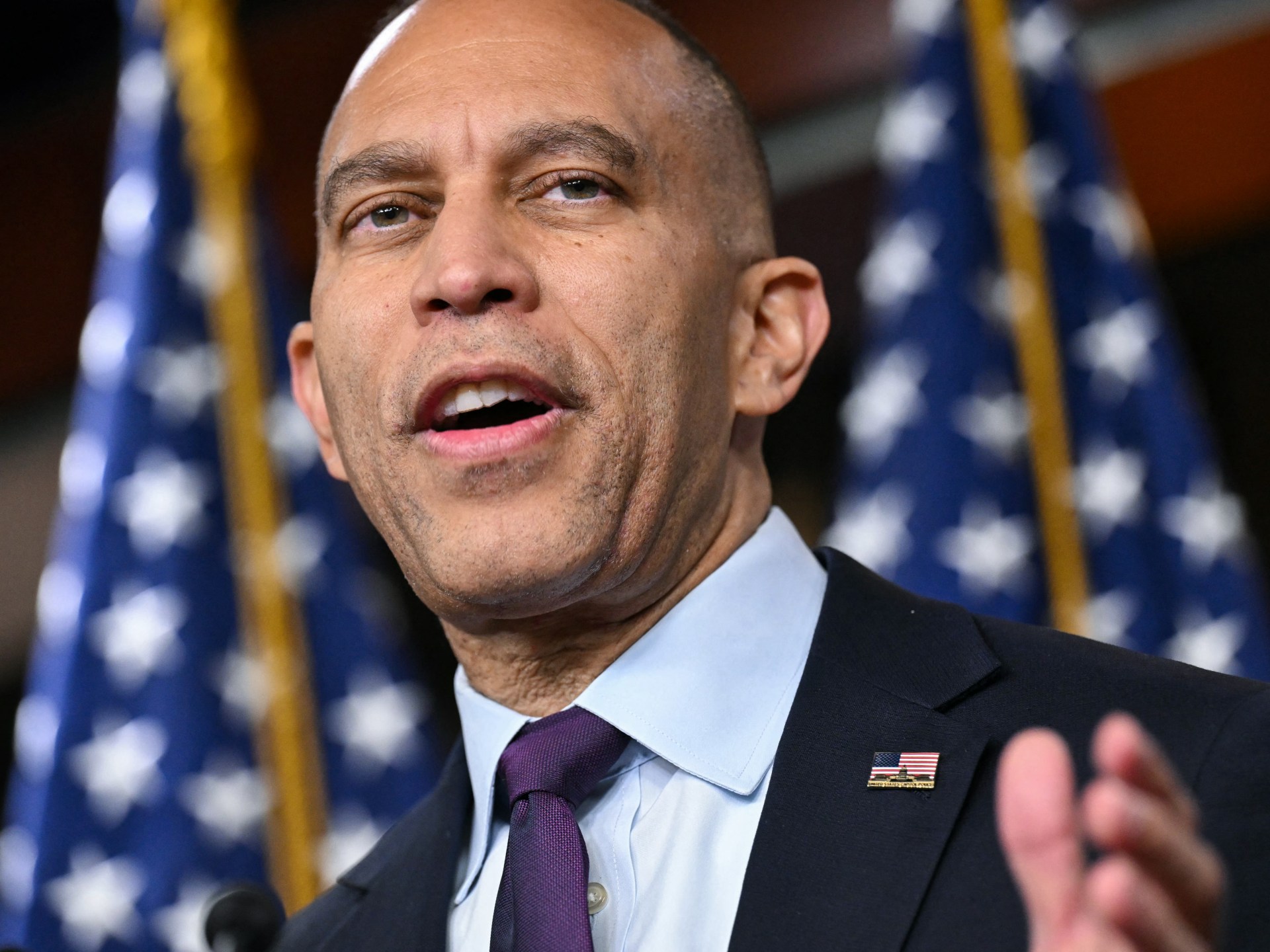
Hakeem Jeffries has disarmed a progressive revolt, but can he deliver?
Full Article
Original Source
Read the full article at Aljazeera →KhanList aggregates and links to publicly available news content. We do not host full articles from third-party sources. Always verify important information with original sources.