
Nicole Reindorf’s American Airlines flight was ready for takeoff in Phoenix when the pilot came on the intercom and announced what was to become the longest nationwide aviation shutdown since 9/11.Reindorf, 70, had seen the headlines hours before about a global Microsoft outage. She immediately suspected the two were linked in some way by AI-related threats – and that she would not get to the wedding of her best friend’s son in California.“I presumed there had been a hack of the aviation system and that it would be down for days,” she said.Instead, flights resumed later that day and Reindorf was able to make the wedding even if she missed that night’s rehearsal dinner. But passengers appeared to be convinced of two things, she said: “That it was a cyber-attack and that we were not going to be told the truth about it.”This was not an isolated view. What happened in the days after the incident, which began on Thursday 12 November, left many wondering if the US, and the western world, was under a coordinated assault. By Tuesday big US banks, Apple, and the National Security Agency had also been affected by technical glitches. Researchers also flagged a cyber-attack that targeted 178 organisations worldwide, although the financial losses appeared to be small.The truth is more prosaic. The chaos of the previous weeks – grounded planes, frozen email servers, iPhone outages – appears, on closer examination, to be more a string of coincidences than anything else, in part driven by fears over advancing artificial intelligence.But the narratives that have sprung up around it are a measure of an unstable and frenetic global mood, which is dealing with two powerful trends: the rot of decades-old infrastructure from chronic underinvestment and the genesis of some of the most powerful technology humanity has made – AI.Travellers wait at a United Airlines terminal after flights were delayed due to outages at Los Angeles international airport on 13 November. Photograph: Ethan Swope/APThe failure that delayed Reindorf’s takeoff originated with a faulty router in the city of El Dorado, Arkansas, population 16,609.That router was installed in the midst of a maintenance procedure that has been under way for more than two decades. In 2002, the US government contracted a small company, now known as L3Harris, to modernise the communications system of the Federal Aviation Authority (FAA), in charge of America’s airports. As a part of it, L3Harris has been tearing up communication lines made of copper wire across the country, and replacing them with fibre optic cables.This glacial undertaking sparked a sudden and unprecedented catastrophe – the router, newly replaced, misfired and caused air traffic communications across the US to crash, bringing all departing flights nationwide to a grinding halt. More than 18,000 flights were cancelled.L3Harris’s contracts, which have now run into the billions of dollars, are one emblem of where the world is today: mired in ageing infrastructure that is slowly failing, yet immensely costly to replace.There is a broad sense that governments everywhere are not equipped to deal with this. In the US, oversight reports have been urgently calling for upgrades to the FAA for years. The FAA only announced that it would phase out the use of decades-old floppy discs containing vital weather and other critical information just last year.Meanwhile, there are more subtle issues around other incidents, such as the Microsoft outage. An upgrade in July left in place a software bug that lurked quietly for months before a string of coincidences triggered it – overwhelming the company’s servers and halting the use of most of Microsoft’s systems worldwide. The outage halted everyday procedures such as the release of detainees in American jails and access to some patients records at UK hospitals.A software bug prompted by an upgrade overwhelmed Microsoft’s servers and halted the use of most of its systems worldwide. Photograph: DPA Picture Alliance/AlamyIt was accompanied by more chaos. A software bug at JP Morgan Chase, the largest bank in the US, delayed transactions, a disruption that rippled throughout the country’s banks and their customers. An internal update at Apple caused outages of some of its iPhone apps. Routine maintenance went awry at the US Department of Defense’s National Security Agency (NSA), temporarily disrupting the internal network the agency uses to send and receive classified information.Microsoft, JP Morgan Chase, and Apple might have moved far beyond copper wire and floppy discs, mostly, but they – and software companies everywhere – have been forced to run at double the pace in recent months, because of a deluge of bugs being discovered by AI. This might not be the specific reason for those upgrades; some maintenance is routine.But AI-driven hacking has ushered in a new reality for IT professionals. The NSA told Congress that its communication outage was a result of quick fixes to systems identified as vulnerable by AI.To recap: this spring, Anthropic and OpenAI both released powerful AI models capable of finding bugs in lines of code. They immediately spun this to the media, suggesting that all software, everywhere, is extraordinarily vulnerable to AI-driven hacking – and offering their tools to banks and spying agencies.Some have argued that this hype is not entirely justified, suggesting that many vulnerabilities these models discover are not particularly useful to hackers. But the threat of AI-driven hacking has changed the game.One senior cybersecurity professional told the Guardian the relentless exposure of IT flaws had left their team “exhausted”.The NSA said its outage was a result of quick fixes to systems identified as vulnerable by AI. Photograph: Paul J Richards/AFP/Getty ImagesAI helped to uncover a bug in the PHP programming language in October. This was followed by the discovery of a vulnerability in the Java programming language on Tuesday, followed by another bug in NGINX, a web server.“When NGINX happened I thought, ‘Oh come on – another one?’,” said the professional.Java and PHP are both part of the essential backbone of the internet, vital infrastructure that keeps most of the world online.“AI is accelerating vulnerability discovery so rapidly that organisations are applying patches at a volume and pace their systems were never built to absorb,” said Jamieson O’Reilly, a cybersecurity specialist.Tech companies are constantly finding potential bugs and fixing them. Now they have to do it a lot faster, said O’Reilly: “The volume and speed of AI-driven discovery makes their problems far more acute.”The backdrop to all this was a cybersecurity narrative already running at a fraught pitch due to the hacks of supermarket fridges across Europe, global scares such as the discovery of the flaw in PHP and the multibillion-dollar hack of the Binance cryptocurrency exchange.Social media filled the gaps where organisations could not immediately supply information. Laura Loomer, a prominent conspiracy peddler, posted on X that “we are clearly being attacked by foreign adversaries via cyber-attacks”, adding “go get cash”. On TikTok, there are posts about a #90daypoweroutage, a conspiracy theory sparked by a nationwide test of the US emergency alert system – and a Simpsons clip.There has been a rise in emergency prep sales at Costco as conspiratorial thinking has spread. Photograph: Damian Dovarganes/APThe consequences of conspiratorial thinking can be seen at Costco, a bulk-buying retailer, where there has been a rise in emergency prep sales including purchases of generators, and general “pantry-loading” in the UK. Analysts at Mizuho Bank said this was a result of “consumer anxiety” following the outages and “apocalyptic concerns flaring up across social media”.These concerns have not been confined to the fringes. The UK government recently told its citizens to stock up on three days’ worth of cash, among other basic items, as part of a readiness-for-crisis campaign.Stephan Lewandowsky, a professor of cognitive psychology at the University of Bristol, whose research centres on the spread of myths and misinformation, said the “clustering” of events such as multiple outages “can be perceived as being indicative of purposeful coordination rather than chance”.Feeding into the anxiety, there have also been examples of state and criminal actors causing disruption, from Russia targeting undersea internet cables to last year’s crippling of Britain’s biggest carmaker, Jaguar Land Rover, which give credence to public concerns. A solution, said Lewandowsky, was “for responsible governments to be transparent and accurate in their communications” in order to suppress wilder explanations.Taken together, experts say that the string of outages highlights the stunning fragility of US and global infrastructure, where a single mistake or malfunction can bring entire transportation, communication, and security systems to a standstill.“We’ve built a world in which essential systems are so interconnected that a failure in one can just cascade through those systems really quickly,” said Aarathi Krishnan, the founder of Raksha Intelligence Futures, a global intelligence firm. “All of our systems, whether it’s comms, finance, capital, all of it, are so interconnected and concentrated, it creates a dependence. And that dependence creates fragility.”What can be done? It is unclear. AI-driven bug discovery is not going to slow down and the legacy systems the world is grappling with are what they are. Infrastructure is the often overlooked backbone of society and those who decades ago built networks of road and air traffic systems and electrical grids could not have anticipated these modern threats.Laura Loomer, a prominent conspiracy peddler, posted on X that ‘we are clearly being attacked by foreign adversaries via cyber-attacks’. Photograph: Tom Williams/CQ-Roll Call via Getty ImagesMike Chapple, the faculty director of Notre Dame University’s business computer science programme, said it was “unfortunate” that one faulty router could have such an effect on a nation’s aviation communication system.“That just points to a design that isn’t resilient – it shouldn’t be designed in a way that one failure at one location can cause the whole nationwide system to come tumbling down.”More troubling hacks, and more conspiracy theories, are probably on the horizon. The senior cybersecurity professional said heightened public awareness of cyber disruption had led to hypersensitivity about any incident.“It’s like the tide has gone out on cybersecurity in terms of public perception, and there’s the same amount of wrecks out there as there have been for years. Any time you change a complex system, stuff happens.”However, the professional is concerned that AI, with its capacity to identify flaws, help plan attacks and execute them, will be harnessed by “already very competent” adversaries. Referring to the general state of IT security around the world, the source added: “Thank goodness we haven’t had an AI-sourced vulnerability that is easy to exploit. Because that would be carnage.”For many, though, recent events have been bad enough.AI could be harnessed by ‘already very competent’ adversaries to conduct hacks, an expert warns. Photograph: solarseven/Getty Images/iStockphotoWhen Josephine’s* prescription request for lithium for her bipolar disorder was lost “in the ether” during the global Microsoft outage, she admits she was “freaking out”.“My medication is life-changing and keeps me stable,” said the 26-year-old, a student living in the east of England. After an agonising wait, she was finally able to collect her prescription, but the experience has left her deeply troubled.“For myself and many others, we struggled to access life-saving medication,” she said. “It is alarming there was no contingency plan.”* Name has been changedAdditional reporting by Jane Clinton
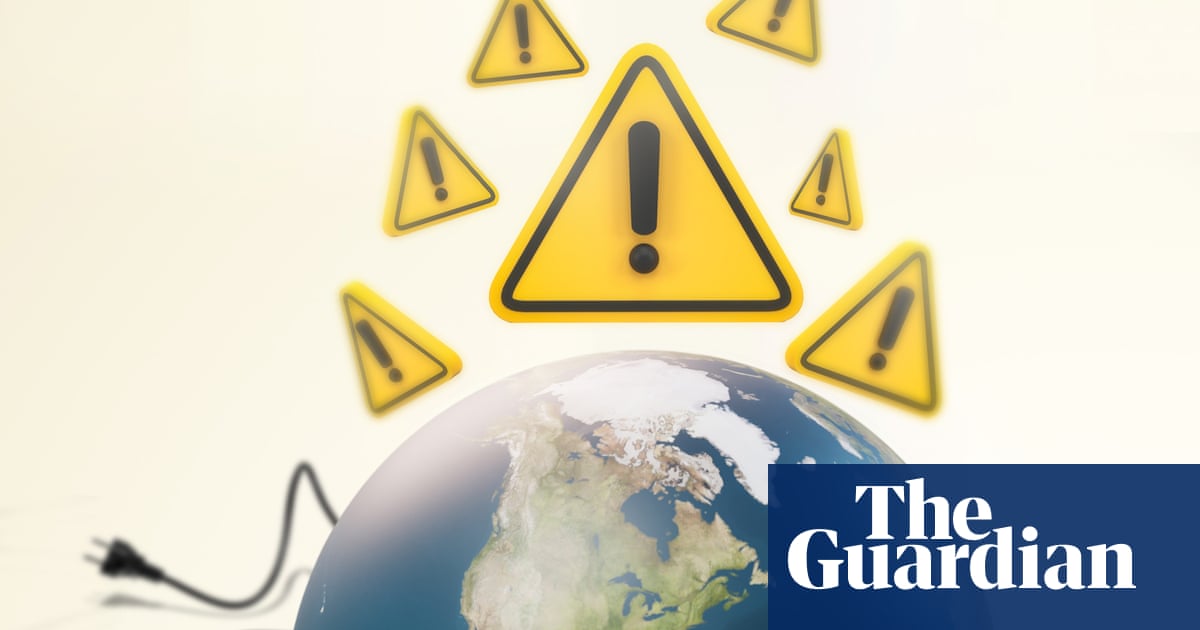
Hacks, AI and conspiracy theories: why are we having so many outages?
Full Article
Original Source
Read the full article at Theguardian →KhanList aggregates and links to publicly available news content. We do not host full articles from third-party sources. Always verify important information with original sources.