
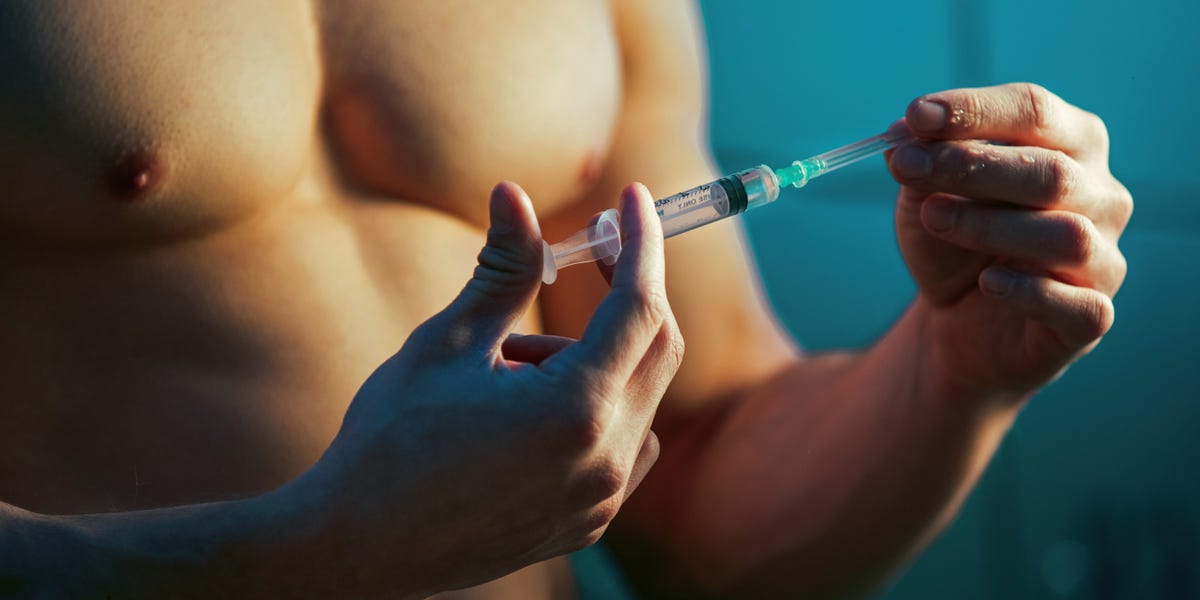
Gym bros love BPC-157, the peptide in the 'Wolverine shot.' Now it could go mainstream. BPC-157 is a popular peptide used in the buzzy "Wolverine" stack (BPC-157 + TB-500), touted as speeding up injury healing. Drazen Zigic/Getty Images Dustin Nelson had been dealing with persistent knee pain for more than a month when he decided to give a TikTok treatment a shot.Literally. He injected BPC-157, a peptide that makes up one half of the so-called "Wolverine shot" — a popular stack promoted as a shortcut to healing, speedily repairing damaged tendons and ligaments.In recent months, BPC-157 has become the buzzy peptide du jour in fitness and biohacking scenes. Its rise has opened a gateway to a wider world of speculative treatments and human self-experimentation supplied by gray markets and, increasingly, some pharmacies as the US government has begun to loosen regulation.This week, the Trump administration gave BPC-157 a boost, along with five other peptides that have huge fans in the gym space but dubious evidence to prove they work. Robert F. Kennedy Jr.'s Department of Health and Human Services, which has previously promoted biohacking therapies like testosterone, said it would not come after pharmacies that compound and sell BPC-157 to patients, provided they meet certain conditions.For people like Nelson, the enforcement policy could offer a path away from unregulated sellers and toward a clinician-mediated prescription. But it won't settle the central question that drove him to BPC-157 in the first place: Does it work, and is it safe?Nelson, a 37-year-old accountant and recreational athlete from Houston, had followed peptide chatter in bodybuilding and biohacking communities in 2020. Frustrated by knee pain and reluctant to rest for weeks, as his doctor recommended, he bought a $65 vial and injected two doses of BPC-157 into his knee within a week.He told Business Insider that the pain disappeared within days and never came back."It was crazy to see the results overnight," Nelson said.Regardless of sourcing, rigorous human evidence on BPC-157 remains scant, even as a planned clinical trial and the unprecedented federal attention could reshape how BPC-157 is studied and supplied. Short for "body protection compound," BPC is a peptide first isolated from human gastric juice in the 1990s by Croatian scientist Predrag Sikiric.Sikiric was seeking a substance that could help the body recover from the damaging effects of stress, according to an interview with Stat. Animal studies suggest it may accelerate tissue repair and that it can be tolerated at high doses. It's unusual in that it can be taken orally, in pill form, or injected, sometimes combined or "stacked" with other peptides (like TB-500, the other component of the Wolverine shot).Dr. Jesse Morse, a board-certified family and sports medicine physician in Florida, calls BPC a "beautiful peptide" for injuries and pain. He said he's been using BPC for himself and his patients since around 2020.Morse said he sees BPC-157 as distinct from GLP drugs, which are engineered to be more potent than their natural counterparts. BPC-157 more closely mimics a molecule that is naturally occurring in the body and helps signal-boost the body's own healing processes, such as reducing inflammation and creating new blood vessels to deliver resources to the affected area."BPC can be utilized throughout the body, anywhere from the brain to the ligaments, the tendons, the heart, the joints, literally everywhere," he said. "It's like the jack of all trades."As commercially available peptides like Ozempic and Mounjaro have skyrocketed in popularity, researchers are still learning the wide-ranging effects they can have on the body beyond blood sugar control or weight loss: to lower the risk of heart attacks and stroke, prevent kidney and liver disease, and treat sleep apnea.What are the risks of injecting peptides like BPC-157?A first-of-its-kind clinical trial, scheduled for summer 2027, will follow 20 patients after shoulder surgery to test whether BPC can speed healing and if there are any side effects. The trial is randomized, double-blind, and placebo-controlled: the gold standard of research.The principal investigator is Dr. Shiloah Kviatkovsky, an assistant professor of orthopedic surgery at the University of Arkansas for Medical Sciences. She told Business Insider that the trial will be an early step toward assessing whether BPC-157 is safe and effective for human use.It's a unique situation where evidence is working to catch up with how people are already using the compound, made trickier by the fact that peptides sold on the gray market can be contaminated, inconsistently dosed, or entirely counterfeit."The market is ahead of the research, which is a little frightening," Kviatkovsky said. "Not only do you not know what the actual effects are of what they're taking and whether it's safe or effective, but depending on where they're purchasing it from, is it the compound that they think it is? Is it clean and free of contaminants?"Dr. J. Ryan Hill, an orthopedic surgeon at the University of Arkansas for Medical Sciences and co-investigator on the study, said his patients are already asking whether BPC-157 might be helpful and if it's safe. The topic is typically raised by physically active patients on the younger side (between 20 and 40), trying to manage anything from minor muscle pain to recovery from procedures like tendon repair surgeries.For now, the short answer is, we don't know.Hill said the trial will compare blood-test and MRI data with objective measures of patients' pain and function, offering a more rigorous alternative to social media anecdotes.Trialing BPC-157 under rigorously controlled conditions could also help flag any safety concerns. The peptide itself seems to have few adverse effects so far, beyond the risks of any injectable medication.Doctors have raised a theoretical concern that BPC-157's ability to promote blood-vessel growth could also fuel tumors. No research has found a link between BPC and cancer in practice.The peptide Wild WestFor now, one of the biggest safety concerns about peptides, including BPC, is sourcing. Because the compounds aren't FDA-approved, most users obtain them through online gray markets. As peptides have gotten more popular over the past three years, safety and quality concerns have become more urgent as new vendors have rushed to cash in.Randy Cole, a 43-year-old Denver resident who now sells peptides, told Business Insider that his first foray into the trend was through a gray market site seemingly vetted by many other users through extensive reviews and forums.Cole tried BPC-157 for a nagging injury in 2021, injecting it into his shoulder twice a day for three weeks, at a cost of around $100. The pain disappeared, he said, prompting him to explore other peptides despite the lack of large-scale human research. Now, his stack of peptides includes retatrutide (not yet FDA-approved) and tirzepatide, a GLP-1 best known as the active ingredient in Eli Lilly's Mounjaro.He said he's aware of the lack of regulation and clinical data, and the resulting risk, but feels comfortable experimenting on himself because there are so many anecdotal success stories among peptide enthusiasts."I don't need to see a 2000-person randomized controlled trial if people say it works, I use it, and it works the way they said it did," Cole said.But as interest in peptides has skyrocketed and the market has drastically expanded, so have the risks. Regulatory crackdowns on some of the largest vendors have created a game of Whac-A-Mole, with dozens of smaller operations taking their place to capitalize on the market.In the process, vendors have found creative ways to flout rules and quality standards, such as faking quality certifications, said Jeff Colhoun, cofounder of the review website and forum Peptide Critic.Now, you can even buy BPC-157 in a Brooklyn bodega, alongside Buzzballs, bongs, and high-potency edibles labeled with stoned cartoon characters. It can be difficult to verify what's being sold as peptides without a lab test.For Cole, the turning point was when his wife came down with chills, a fever, nausea, and diarrhea after taking BPC. He said the symptoms closely matched exposure to endotoxins, bacteria that contaminate peptides and cause flu-like illness, inflammation, or even septic shock. Cole said she recovered after stopping the injections, prompting them both to rethink the risks. In 2025, he pivoted from his job in corporate finance to launch his own peptide business to have more control over product testing.Morse, the peptide doctor, doesn't recommend getting peptides from grey-market vendors: the key warning sign is products labeled "not for human use."For doctors like Morse, the policy could create a more controlled alternative to the gray market, with patient-specific prescriptions and requirements around sourcing and quality testing. But it does not make BPC-157 FDA-approved — and the fundamental question about its safety and effectiveness remains unanswered.Morse said that he hopes the FDA will move toward legitimizing the treatments, so clinicians and patients have safer options."Peptides are out of the bag. Once they're out, they're not going back in. So we just have to learn to accept them," he said. This article is not a substitute for professional medical advice, diagnosis, or treatment. Always consult your qualified physician or healthcare provider. Read next Business Insider tells the innovative stories you want to know Business Insider tells the innovative stories you want to know Business Insider tells the innovative stories you want to know Business Insider tells the innovative stories you want to know Gabby is a Health Correspondent with a focus on nutrition, fitness, longevity, and all things performance.Her coverage spans from the daily routines of top athletes like Michael Phelps and Coco Gauff to the latest cutting-edge science on building muscle to the rise of peptides, supplements, and GLP medications. She loves a deep dive into fitness subcultures, health companies, or the science behind managing and preventing disease, particularly early-onset cancers. Gabby has a background in investigative journalism (previously contributing research for an investigation on correctional healthcare for the New Yorker).In her free time, she likes lifting heavy, running fast, and playing roller derby for Gotham in New York City.Send story ideas and tips to glandsverk@businessinsider.com.Expertise/InterestsLongevity: how to dial in a daily routine to invest in long-term health, and what makes some of the longest-living people on earth active and vibrant as they age.Performance science: training techniques for goals ranging from muscle-building (hypertrophy), general physical preparedness, endurance, and injury prevention, especially for fitness beginners. Cancer research: unpacking the science behind why certain cancers are on the rise in younger people, how it's affecting the world around us, and what we can do about it. Healthy eating: how to navigate conflicting and contradictory advice across trends like protein-maxxing, intermittent fasting, and the Mediterranean, Nordic, and MIND diets.Medical weight loss: how emerging science around treatments like GLP medications are shaping the connections between food, weight, and health. Digital wellness: investigating how telehealth is changing access to healthcare, including through peptides, hormones, and direct-to-consumer lab tests. Strength sports, including Olympic weightlifting, powerlifting, Hyrox, and CrossFit. Highlights:These twins' lives were identical, until one got colon cancer at 21Trouble in MAHA Land: They hoped RFK Jr. would help their kids with autism. Then the cuts began.It's not just for gym bros — scientists say a $0.50 muscle-building supplement slows aging and may counteract Alzheimer'sAt 78, Arnold Schwarzenegger still trains nearly every day — but his workouts look very different nowHow a stinky little fish conquered AmericaNoom sells psychology-driven weight loss. Some users expected therapy Health Longevity
Gym bros love BPC-157, the peptide in the 'Wolverine shot.' Now it could go mainstream.
Full Article
Original Source
Read the full article at Businessinsider →KhanList aggregates and links to publicly available news content. We do not host full articles from third-party sources. Always verify important information with original sources.