
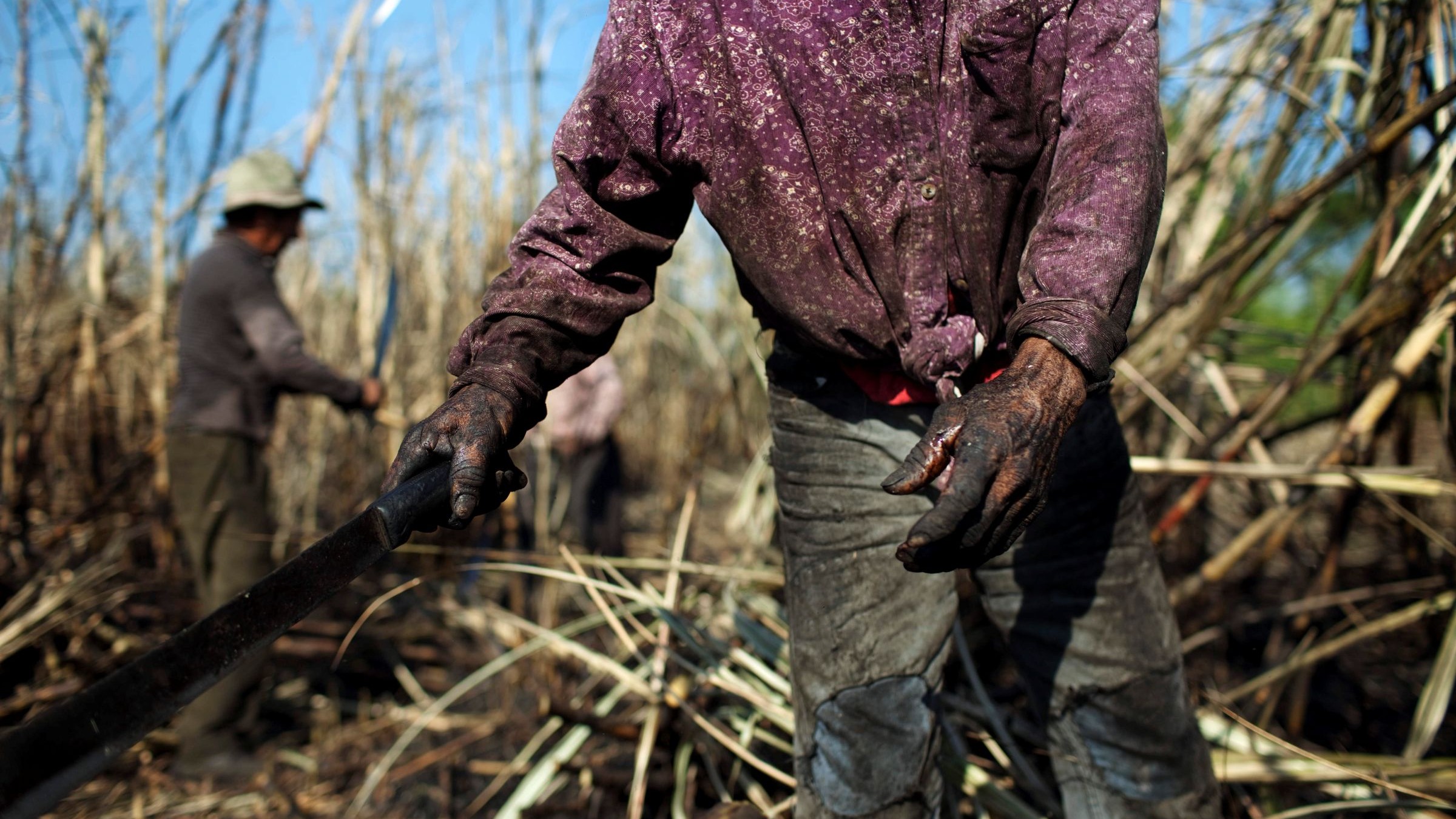
Years after Indigenous communities in Guatemala were forcibly evicted from their ancestral land, the Inter-American Commission on Human Rights (IACHR) is asking a court to hold the government responsible and provide reparations. On Oct. 28, the IACHR announced it had referred a case to the Inter-American Court of Human Rights, which rules on human rights violations in the Americas. The case involves 14 Maya Q’eqchi’ communities in Alta Verapaz that were removed from their land to make way for sugarcane plantations. “Sugarcane cultivation caused displacement and the loss of rice, maize and bean crops that supported the health and food security of the Indigenous Maya Q’eqchi’ population, and substantially affected the environment,” the IACHR said in its referral, submitted to the court Sept. 17. Disputes in the territory date back to at least 2005, when private companies started buying Indigenous land that the Maya Q’eqchi’ had occupied for centuries, according to the IACHR referral. The government hadn’t granted the communities proper land titles, creating confusion about who could occupy the area. In 2011, following years of protests, a court authorized the eviction of the 14 Indigenous communities, whose residents had refused to leave the land. “The government of the republic has a legal and moral obligation to stop the growing number of illegal actions that pose a serious risk to the country’s governability,” the government said in a statement at the time. The evictions were carried out “violently and with a disproportionate use of force,” the IACHR’s referral said. The Commission also found that officials failed to research the communities’ historical occupation of the land, and the social and cultural impacts that displacement would have. In May 2013, during the eviction of 95 families on the Río Polochic farm in Panzós, five Indigenous people suffered gunshot wounds and had to be taken to a hospital. Around the same time, the government approved mass sugarcane plantings without consulting the communities or conducting environmental impact studies, resulting in the destruction of traditional crops, according to the IACHR referral. “The state didn’t guarantee the communities’ right to food, understood as the right to adequate nutrition that preserves their health,” the referral said. The IACHR asked the court to order the Guatemalan government to repair damages inflicted upon community members. It said the state should guarantee the displaced communities “safe return” to their land and access to food, drinking water and housing. The state should also demarcate their land and grant collective land ownership to the 14 communities, and develop a legal framework to guarantee them ancestral rights, the Commission concluded. The Inter-American Court’s judgments are binding on states that have accepted its jurisdiction, including Guatemala. The IACHR submitted the case on Sept. 17 but has not announced a date for future proceedings. Banner image: Sugar cane workers in a field near Retalhuleu, Guatemala. Image by Rodrigo Abd via Associated Press. Credits Topics
Guatemala faces a human rights court over violent evictions of Indigenous communities
Full Article
Original Source
Read the full article at News →KhanList aggregates and links to publicly available news content. We do not host full articles from third-party sources. Always verify important information with original sources.