
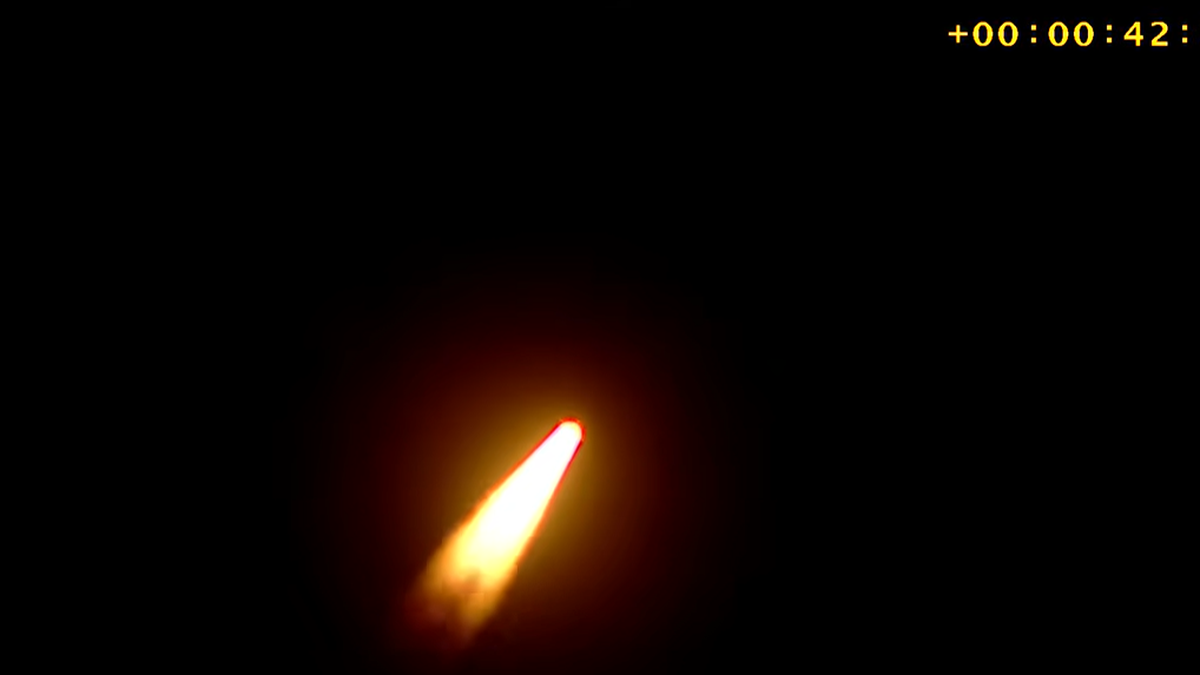
Home Sci-Tech Science NVS-03 satellite is equipped with an indigenous atomic clock alongside procured atomic clocks Updated - October 31, 2026 12:02 am IST GSLV-F18 carrying NVS-03 lifts off from Satish Dhawan Space Centre, SHAR, Sriharikota. Photo credit: X/@isro ISRO’s third space launch of 2026, GSLV-F18, will carry the 2,250-kg NVS-03 satellite into orbit. The mission is crucial to India’s efforts to gradually revive its ageing NavIC navigation satellite constellation.Also read | Countdown progressing for ISRO’s crucial GSLV-F18 launch carrying navigation satellite NVS-03Envisaged as India’s indigenous alternative to the U.S. GPS, Russia’s GLONASS and China’s BeiDou, NavIC (Navigation with Indian Constellation) is designed to provide independent navigation services across India and the surrounding region.Around 18 minutes and 40 seconds after liftoff from the Second Launch Pad at Sriharikota, the GSLV-F18 rocket is expected to deploy the NVS-03 satellite into its initial Geosynchronous Transfer Orbit (GTO). ISRO will then use the satellite’s onboard thrusters to raise it to its designated orbit.NVS-03 is equipped with an indigenous atomic clock alongside procured atomic clocks. It also features the L1 signal, in addition to the existing L5 and S-band signals, to enhance India’s NavIC navigation services.October 30, 2026 23:57 GSLV-F18 expected to place NVS-03 satellite into intended geosynchronous transfer orbit in 18.46 minutesThe GSLV rocket carrying the next-gen navigation satellite NVS-03 lifts off from Sriharikota Spaceport. 18.46 minutes later, the GSLV-F18 is expected to place the NVS-03 satellite into the intended geosynchronous transfer orbit. Cryo-stage performance of GSLV rocket normalISROOctober 30, 2026 23:55 GSLV-F18 with NVS-03 satellite lifts off from the Satish Dhawan Space Centre in SriharikotaOctober 30, 2026 23:35 T–30 minutes to the scheduled lift-off of GSLV-F18/NVS-03 missionOctober 30, 2026 22:31 ISRO to begin live streaming GSLV-F18/NVS-03 launch soonISRO’s live coverage of the GSLV-F18/NVS-03 mission will begin at 11:20 pm IST on October 30, ahead of the scheduled 11:51 pm launch from Sriharikota.October 30, 2026 21:22 NVS-series: A look at the launch timeline so farISRO’s NVS satellite launch programme has seen considerable gaps between missions. NVS-01 was launched in May 2023, followed by NVS-02 in January 2025, a gap of 19 months. The next satellite, NVS-03, is scheduled for launch in October 2026, nearly 20 months after its predecessor.The pace of launches has also been affected by setbacks in ISRO’s broader mission programme. The space agency recorded three failures in six missions launched from Indian soil between January 2025 and January 2026, adding to the challenges of maintaining a steady launch schedule.October 30, 2026 20:36 NVS-03 satellite set for launch aboard ISRO’s GSLV-F18Sriharikota [Andhra Pradesh], Oct 29 (ANI): A view of the NVS-03 satellite, which will enter the Geosynchronous Transfer Orbit in the 20th GSLV-F18 flight from Satish Dhawan Space Centre (SDSC-SHAR), in Sriharikota on Thursday. The launch is scheduled for October 30. (@isro X/ANI Photo)October 30, 2026 20:34 How does NavIC stack up against global navigation systems?The United States operates the Global Positioning System (GPS), a satellite network that underpins a vast range of civilian, commercial and military activities across the world. While 24 satellites are considered sufficient to provide global coverage and optimal performance, the US maintains a larger constellation of at least 30 satellites. This additional capacity acts as a safety net, ensuring uninterrupted and reliable services even if some satellites malfunction or go out of service.China, meanwhile, runs its own satellite-based navigation network, BeiDou, as an alternative to GPS and to meet its domestic and global positioning requirements. BeiDou’s global navigation services are designed around a constellation of 30 satellites, with estimates suggesting that approximately 35 satellites are currently in orbit.October 30, 2026 19:56 What will it take to revive India's NavIC system?Restoring NavIC to its minimum operational capacity would require ISRO to launch at least two more NVS-series satellites, NVS-04 and NVS-05, in addition to the existing NVS-01 and the upcoming NVS-03. These four satellites would form the minimum constellation needed to resume the system’s core navigation services. The launches would need to be carried out within a relatively short timeframe to ensure continuity.However, four satellites would only meet the basic requirement. For greater reliability, stronger coverage and uninterrupted services, India would need additional backup satellites in orbit. This would mean building and maintaining a constellation of around six to seven NVS-series satellites to ensure the long-term stability of a regional navigation system like NavIC.October 30, 2026 19:26 What is the present state of NavIC?For NavIC’s core services to function effectively, at least four satellites are theoretically required. However, information shared by the Indian government indicates that only three of the constellation’s 11 satellites are currently capable of performing their primary functions.These include first-generation satellites IRNSS-1B and IRNSS-1I, along with second-generation satellite NVS-01. IRNSS-1B has already exceeded its designed 10-year lifespan, making its continued operation uncertain, while IRNSS-1I could remain functional until around 2028. NVS-01, if it performs as intended, has at least another decade of service ahead. Meanwhile, NVS-02, launched in January 2025, was unable to raise its orbit after its onboard engines failed to fire, severely limiting its utility. As a result, NVS-01 is currently the only satellite that can be considered reliably operational over the long term.October 30, 2026 19:21 Why is ISRO’s NVS-03 satellite launch crucial? | ExplainedWhy is ISRO’s NVS-03 satellite launch crucial? | ExplainedISRO’s NVS-03 launch could restore NavIC’s functionality, upgrading indigenous clocks and improving regional navigation amid recent launch setbacks. Published - October 30, 2026 07:21 pm ISTSign in to unlock member-only benefits!Access 10 free stories every monthSave stories to read laterAccess to comment on every storySign-up/manage your newsletter subscriptions with a single clickGet notified by email for early access to discounts & offers on our products
GSLV-F18 carrying NVS-03 lifts off from Satish Dhawan Space Centre | LIVE
Full Article
Original Source
Read the full article at Thehindu →KhanList aggregates and links to publicly available news content. We do not host full articles from third-party sources. Always verify important information with original sources.