
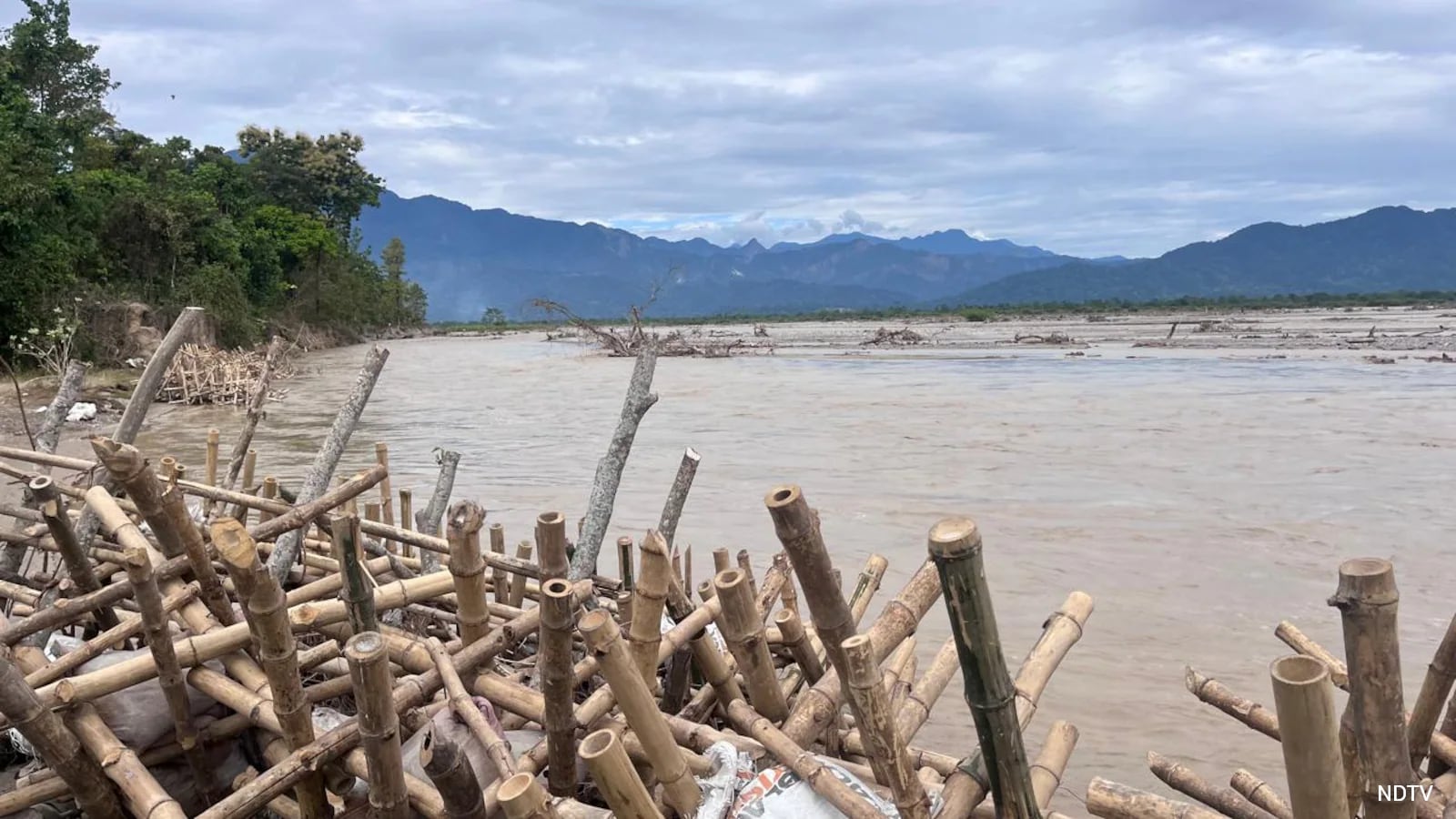
Alipurduar: Thousands of villagers in West Bengal's Alipurduar district had to be safely evacuated and relocated to higher ground and emergency shelters from Thursday evening, while Jalpaiguri remained on high alert following a warning from Bhutan about a possible breach in a glacial lake.Twenty-four hours after the evacuation, NDTV travelled to one of the remotest villages on the Indo-Bhutan border.Since Saturday morning, residents of Sankosh Forest Village have woken up to find the river flooded with dead fish and muddy water flowing uninterruptedly following the flash flood in Bhutan.The little hamlet of Alipurduar, located on the banks of the Sankosh River, still cannot believe that the worst has passed. Many residents fear that the threat from the glacial lake remains. Nearly 1,200 people, including women and children, had to be evacuated on Thursday evening within 30 minutes.Villagers narrated their experiences to NDTV. Many youths were seen going down to the river and picking up dead fish on Saturday.Although the water level in the Sankosh River, which flows along the Assam-Bengal border, is normal at present, the sudden influx of a large number of dead fish has caused a commotion in the area. According to locals, the river suddenly turned black late on Friday night, and a huge number of dead fish began flowing downstream from the Bhutan side.Photo Credit: NDTV Vivek Chetri was among the youths from Sankosh Forest Village who helped thousands of their neighbours reach nearby shelters. Chetri said, "We received the news that night. Our relatives in Bhutan were the first to inform us that the water level was rising. We have a WhatsApp group for our village, through which we alerted everyone. We then helped everyone evacuate and took them to a neighbouring village for shelter."Vikash Thapa, another resident of the forest village, went to the riverbank in the early hours of Saturday after hearing from someone that the colour of the Sankosh River had turned black. Thapa told NDTV, "Nearly 1,200 to 1,500 people had to be evacuated from our village. Some had gone out of the village for work. Women and elderly people were among those evacuated. After the administration sounded the alarm, we sped up the evacuation, which was completed within 30 minutes. Our village is the last village on the Indo-Bhutan border."Sankosh Forest Village is far removed from the city lights. This remote village, located at least 800 kilometres from Kolkata and 150 kilometres from Siliguri, comes under Kalchini in Alipurduar district. Surrounded by mountains and tea gardens, the village rarely experiences such flash floods, villagers said.Vinod Kumar said, "We remain deeply concerned. For instance, we have received reports that a glacial lake in Bhutan has developed a breach. We have witnessed similar flash floods in Nepal, where many people lost their lives, a memory that remains vivid for us. As soon as the alarm was raised, we were gripped by panic, and everyone in the village began to flee their homes. With the help of the administration and the collective effort of all the villagers, we managed to escape to safety."Kumar also added, "We remain in a state of alarm. We have received reports that a glacial lake in Bhutan has developed cracks, raising fears that a flash flood could occur suddenly."Utpal Dorjee, who runs a restaurant at Kumargram Market, was among those who helped people evacuate. "To prevent riverbank erosion, we constructed a barrier along the boundary in 2025 using bamboo and timber; however, it has proven insufficient. Every year, during the flood season, this village becomes submerged. The situation has become even more critical due to the constant threat of flash floods. We have repeatedly urged the administration to construct a permanent, reinforced embankment here. The force of the Sankosh River's current is terrifying. The local population is already living under the looming shadow of erosion; should a sudden flash flood occur, this settlement, along with the riverside tea gardens nestled against the hills and a vast stretch of the surrounding forest, could be obliterated in a matter of seconds," Dorjee said. Evacuating women and children was the most difficult task. Manika Subba said, "We were terrified that night. Everyone urged us to take whatever belongings we could and flee. At first, I panicked, wondering how we would manage to get the children out safely. But the villagers helped us, and we were able to escape. Even now, we live in constant fear of a flash flood."West Bengal minister Nishit Pramanik, speaking about the impact of the floods, said, "Two districts in North Bengal, including Alipurduar and Cooch Behar, are on high alert. We had to evacuate people from the riverbanks. One thing that proved beneficial for the Indian border areas was that, as there are many rivers in North Bengal, the water was divided among them and flowed towards Assam. However, the administrations in both districts remain on alert. People have been advised not to enter the rivers."
Ground Report: Thousands Relocated In Bengal After Lake Burst In Bhutan
Full Article
Original Source
Read the full article at Ndtv →KhanList aggregates and links to publicly available news content. We do not host full articles from third-party sources. Always verify important information with original sources.