
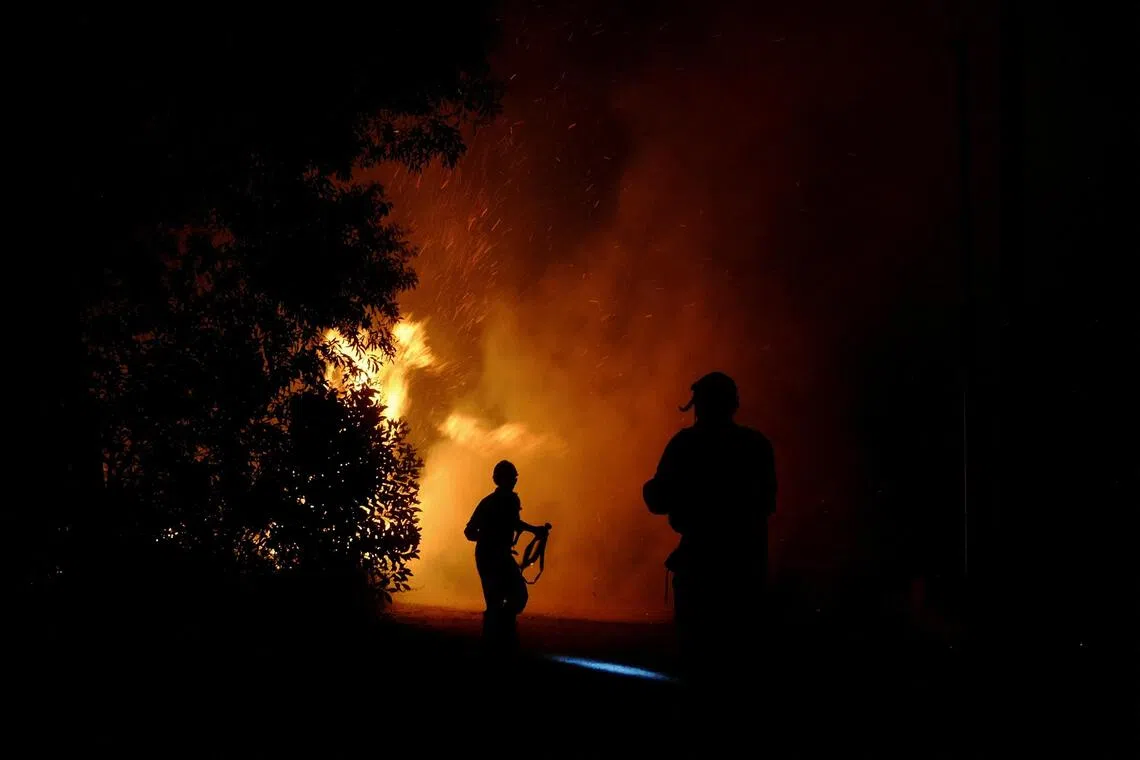
PALANGKARAYA, Indonesia – The wildfires have been burning in the peatlands for weeks, belching acrid smoke over West Kalimantan province in Indonesian Borneo. In the capital, Pontianak, everyone in Alfian Effendi’s family has developed coughs.The thick haze, which has also drifted into Malaysia, has forced schools in the area to temporarily suspend classes, including for Alfian’s four children, whose noses are running from the smoke.Local officials have distributed masks and urged people to stay indoors. But that is a luxury that Alfian, 37, the owner of a chicken slaughterhouse, said he does not have.“We all have to work to earn a living, right?” he said in a phone interview. “We know we are risking our health, but what choice do we have?”Wildfires are a seasonal occurrence in many parts of Indonesia, a vast archipelagic country, so this trade-off is nothing new for Alfian.But there is reason to fear that this year may be especially bad, according to experts. Indonesia is in the grip of a “super” El Nino that will likely suppress the rains that would otherwise extinguish the fires.And the fire season has yet to peak.“The question now is whether the current acceleration continues through September and October and first two weeks of November,” said David Gaveau, a landscape ecologist and founder of Nusantara Atlas, a website that tracks fires and deforestation in the region.“New mega fires may appear in southern Sumatra in September,” he added, referring to Indonesia’s third-largest island.As of Aug 20, there were more than 224,000 hot spots suggesting fire activity across Indonesia, according to Nusantara Atlas’s satellite data.Gaveau said this was an unusually high number that resembled the trend in 2019, one of Indonesia’s worst fire seasons, in which he said as many as 3 million ha burned.There are other worrying signs. About 93,000ha burned in July alone, roughly equal to the total area affected between January and June, based on data from Indonesia’s forest ministry.Many of Indonesia’s most devastating fire seasons have developed during strong El Nino events, in which the warming of the central Pacific Ocean shifts rain patterns, drenching some areas while drying out others.In 2015, another El Nino year, the government said about 2.6 million ha burned, sending smoke beyond Indonesia’s borders.A study by researchers from Harvard and Columbia universities later estimated that the haze from the fires contributed to around 100,000 premature deaths across Indonesia, Malaysia and Singapore.Firefighters put out hot spots in an area burned by wildfire in Pulang Pisau, Central Kalimantan Province, Indonesia. PHOTO: REUTERSClimate experts have noted that this year’s El Nino may end up being particularly formidable – the strongest in recorded history, according to some estimates.Alfian said he can already sense its effects in Pontianak, where he said the earth has been so hot and dry that it feels like even an errant spark could explode into flames, and the local river has become so depleted that seawater is rushing in, making the tap water salty.“We can only use it for baths now,” he said. “For cooking or washing our vegetables, we have to buy extra gallons of water.”Though El Nino has historically been a major accelerant for fires, experts point to the widespread degradation of Indonesia’s peatlands as the underlying reason for the country’s growing fire risk over the past few decades.In their natural state, peatlands, a type of spongy wetland that makes up around 10 per cent of Indonesia’s total land mass, are resistant to fire because they are composed of waterlogged decaying organic matter.But decades of industrialised agriculture, such as those used for palm oil, one of Indonesia’s biggest exports, have led to the mass draining of them.“The exposed, dry peat becomes combustible fuel,” said Resti Salmayenti, a tropical peatland researcher at the University of Leeds. “And once ignited, fires can spread below the surface, where they’re hard to detect and can burn for a long time during prolonged drought, like during El Nino.”In addition to harming respiratory health, those fires also produce disproportionately large greenhouse emissions because peatland stores far more carbon than forests.Though Indonesian law requires companies operating within significant peatlands to keep them wet, Bambang Saharjo, a forest fire forensics expert at IPB University in Bogor, West Java, said those rules are often ignored, while broader peatland restoration efforts, like using canal blocks to trap water, have also stalled.“Many canal blocks and boreholes have fallen into disrepair, rendering them ineffective for fire suppression and leading to an escalation of increasingly massive fires,” he said.In nearly all cases, he added, human activity is responsible for causing this damaged peatland to catch fire, such as companies or people burning them to free up usable land.The Indonesian authorities have arrested more than 70 people and launched investigations into at least four companies in connection with the ongoing fires.A security officer sprays down burning peatland in Kampar Riau in Sumatra, Indonesia. PHOTO: AFPOfficials have also turned to cloud-seeding, a weather modification technique that involves using planes to spray particles like silver iodide and salt in the air to trigger rainfall. But the method is only effective if there is already moisture in the clouds, so experts say the benefits may be limited.The same scarcity is being felt on the ground in West Kalimantan, where Bimpi Permata Restu, a volunteer firefighter, has been racing across the parched landscape on a motorbike outfitted with a pump and hose, dousing vegetation to keep it from catching fire.“The challenge for now is the dried-up water sources,” he said.Bimpi, 25, first started volunteering to fight fires as a teenager. Now he has a two-year-old child with another on the way. Their home is encircled by hot spots that spew smoke and fill him with anxiety about his family’s health. NYTIMESThis article originally appeared in The New York Times.
Gripped by El Nino, Indonesia battles intensifying wildfires
Full Article
Original Source
Read the full article at Straitstimes →KhanList aggregates and links to publicly available news content. We do not host full articles from third-party sources. Always verify important information with original sources.