
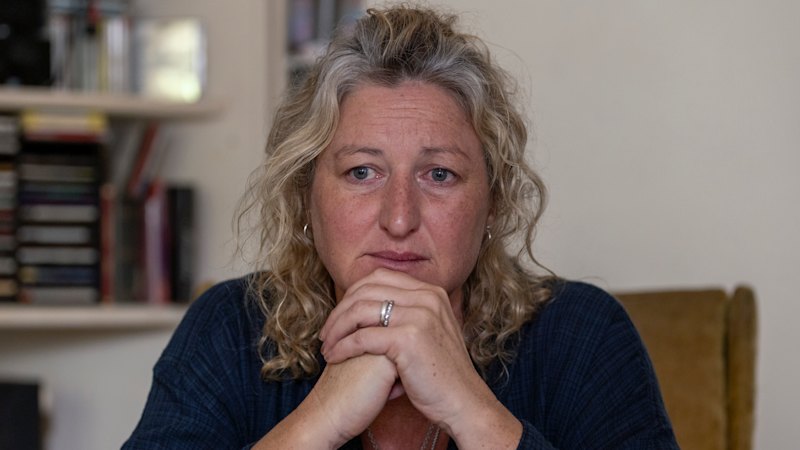
When producer Helen Bowden secured the rights to Rick Morton’s 2024 book Mean Streak about the Australian government’s robo-debt scandal, she was thrilled. But she also had concerns: would viewers be interested in a story about public servants and welfare recipients? At first blush, it sounds like a hard sell.But a few months later the British series Mr Bates Vs The Post Office, aired, which dramatised the true story of how more than 700 post office employees were wrongfully prosecuted for fraud due to a computer glitch. At least four people took their own lives, others lost their savings, their homes and marriages. It was a scandal that echoed our catastrophic robo-debt scheme, which saw almost half a million Australians between 2015 and 2019 receiving debt notices from Centrelink for money they didn’t owe.“Overnight, we realised, oh my god, it’s the same story,” says Bowden. “The parallels are just incredible – a previously manual system becoming automated.”The British series outraged the public and led to the UK government introducing emergency legislation to quash the wrongful convictions. The drama also won a slew of awards. “It was ITV’s most successful free-to-air drama in 20 years,” says Bowden. “After that, we got a lot of interest.”The result is the new ABC drama Shakedown, which tells the human story behind the robo-debt scandal, focusing on three women from both sides: Jennifer Miller (Kate Box), the mother who became an activist; public servant Malisa Golightly (Mandy McElhinney), a senior member of the Department of Human Services; and Centrelink worker Colleen Taylor (Justine Clarke), who was targeted after raising concerns about the scheme and then chose to retire from a job she loved.Miller is the mother of Rhys Cauzzo, a 28-year-old part-time florist who took his life in 2017 after being hounded by debt collectors for an unlawful Centrelink debt. Galvanised by grief and anger, she became one of the most prominent faces of the scheme’s human cost, helping shape the eventual royal commission. She was also involved in the production, giving interviews to the show’s producers and writers. Jack Patten as Jenny MIller’s son Rhys Cauzzo in Shakedown.“What an incredible woman,” says Box over Zoom. “I’d just written her a big letter telling her how grateful I was for everything she’s done. But then the NACC [National Anti-Corruption Commission] results came out and it was a shit time and I thought I’ll just leave this for a bit. I hope to cross paths with her at some point – I’m a big fan.”Portraying Miller, Box says, came with a feeling of responsibility; you’re never just “playing” someone, you’re representing a moment in their life.“And this is representing someone at one of the most devastating moments of their life, so you try to bring as much integrity as you can to that story,” says Box. “The first few days on set I felt … very humbled, worrying that I was going to fall short as I tried to understand her grief and her power and her persistence. When you’re representing the voice of somebody who has lived and used that voice so remarkably, it is a daunting task.”A decade on from the scheme’s instigation – an automated system that used inaccurate “income averaging” that reversed the burden of proof for welfare recipients to prove they didn’t owe money – not one person has faced criminal prosecution, even as the scheme was declared unlawful by the Federal Court in 2019 (a finding confirmed by the 2023 royal commission).The real Jenny Miller, with her son Rhys Cauzzo.The scheme has since ended up costing the government more than $2.4 billion in debt cancellations, class action compensation and refunds. It seems extraordinary nobody has been held accountable.“The sad thing is though, it’s not extraordinary,” says Box. “It’s so normalised in all our systems which is a rebuttal of accountability. As Jenny would put it, it’s just a bunch of people saving their own arse.”Box says she admires Miller’s persistence in trying to get someone to take accountability for her son’s death. “There can be a tendency in storytelling to romanticise a fight fuelled by a mother’s love and grief, but the amount of schooling that Jenny had to undertake to … learn the language of this broken system and tear it apart, throw it back in their faces time and time again is extraordinary,” she says. “She could smell a rat, and she backed herself, even though these systems are designed to seem too complicated to understand.”Actors, who work in the gig economy, have long relied on Centrelink to tide them through lean times, and Box has several mates who received false debt notices. “These are people with a healthy mistrust of the system, but there is still that automatic feeling of going, ‘What have I done?’“Even our critical thinking brains are being tested as we’re gifted these bullshit systems and told that we should abide when you get letters with official stamps on them because so many of those systems are just designed to exploit vulnerable people,” she says. “The beautiful thing about this story and Jenny’s story is, she just screams, ‘Wake up folks, keep asking.’”Mandy McElhinney as the late public servant Malisa Golightly.Lisa Tomasetti/ABCAlongside Miller’s story and those of others who were wrongfully accused, we also see the policymakers (including the then Social Services minister Scott Morrison, played by Justin Smith) responsible for pushing the scheme through.Mandy McElhinney plays Malisa Golightly, who was responsible for ensuring the scaling up of robo-debt, and its day-to-day operations. It’s not an enviable role, but McElhinney plays the ambitious public servant, who died in 2021, with nuance.“The creators made a great decision in giving a context of what she was going through at the time,” says McElhinney over Zoom from her home in WA. “The pressures that were on her from above, and her own ambitions drove her to … throw caution to the wind. But the fact that she is no longer around means that she is the perfect scapegoat.”There’s scant information about Golightly online, but it’s been suggested that in death she has been blamed for much of the scheme being pushed ahead. “But she wasn’t alone,” says McElhinney. “She was part of a big machine.” Her portrayal of Golightly is one of an ambitious woman who, despite some doubt, just wants to please her superior, Kathryn Campbell (Rebecca Massey), at all costs.In the public service, “everyone’s beholden to whoever’s above them and it’s all about trying to please the ministers, trying to show that they’re saving money,” says McElhinney. “And Malisa became absolutely obsessed because that was her job. But not to be a servant to the people, but to the ministers – their agenda and the government’s agenda. I don’t think she’s alone in that. I think that’s part of the system that we have and she thought she was doing the right thing.”Justine Clarke as Colleen Taylor, with Arka Das as Stephen in Shakedown.McElhinney didn’t want to portray Golightly as a monster – “I’m very aware she has a family and people who cared about her” – but read that she was known for letting her emotions get the better of her. “Everyone can say that she did it alone, but she was part of a big machine. Even if she didn’t seem very pleasant, I did feel for her.”The series uses verbatim quotes from the Royal Commission, and the parade of public servants and politicians replying to complex questions about the scheme with “I don’t recall” will make your blood boil.“During the filming, people came up to me saying, ‘Oh this happened to my mum’, or ‘this happened to me’. It happened to a lot of people and [they] just paid it if they were able to, and it was all completely false,” says McElhinney. “It’s stealing from people – like actors, who don’t have a set income – who contribute a lot to society. These systems are supposed to exist to help people in need, which, I think, is the mark of a civilised society.”The taut four-part series is gripping (yes, even the public service scenes), shocking and moving, even if you’re across the intricacies of robo-debt.“With drama, what you can do is get behind the curtain,” says Bowden, adding that she’s encountered many people who still aren’t quite sure what robo-debt was. “Or people who know of it, but haven’t read that much about it – it’s a bit like a column of smoke; hard to grasp and get your head around, but hopefully people will see the show and understand it more.”Bowden says she doesn’t expect justice to flow from the series, but “if it helps something like this not happen again, that would be so good.”
Grief, rage and reckoning: ABC drama takes on the human cost of a shocking scandal
Full Article
Original Source
Read the full article at Smh →KhanList aggregates and links to publicly available news content. We do not host full articles from third-party sources. Always verify important information with original sources.