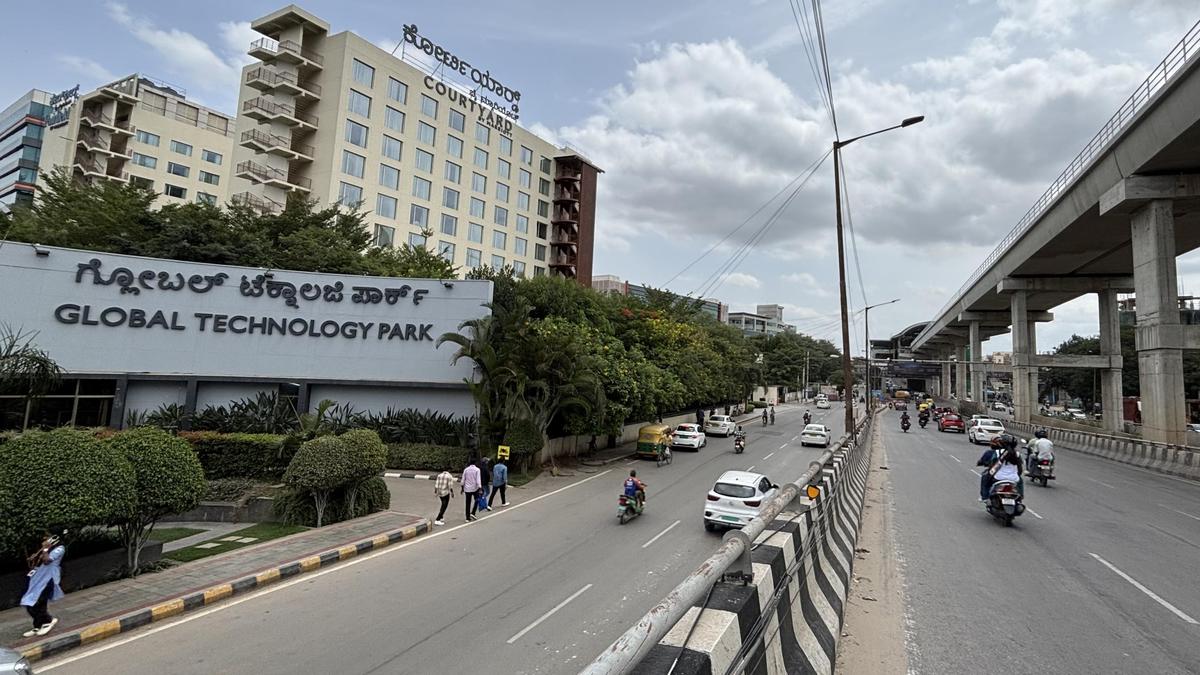
Wider footpaths, remodelled traffic junctions, and effective utilisation of space beneath the metro line are among the priority changes in the revised draft design for the Outer Ring Road (ORR) redevelopment presented by Greater Bengaluru Development Minister Krishna Byre Gowda on Saturday.While the project has a dedicated budget of ₹450 crore, Mr. Gowda said the government is willing to spend more if required, as it aims to transform the stretch into a model mobility corridor. The project seeks to redevelop the 17.01-km stretch between Silk Board junction and K.R. Pura metro station into a global-standard corridor.While most of the design remains unchanged, several aspects, including the road surfacing technique, are being revisited.At a meeting on Friday, GBA officials said white-topping the main carriageway would be a viable option for the stretch, citing advantages such as the lowest initial cost, a lifespan of 20 to 25 years, the lowest life-cycle cost, high load-bearing capacity, and resistance to rutting. However, it would also mean severe traffic disruption for at least eight months.Mr. Gowda has therefore asked citizens to share their views via email with the Bengaluru East City Corporation, following which a decision will be taken. Meanwhile, the service roads will be black-topped, though these stretches will undergo complete reconstruction.Changes in designWith the revised draft, the GBA aims to redesign every junction along the stretch differently, based on the specific requirements of each location. The redesign will also determine the placement of foot overbridges (FoBs) and the type of FoBs required.In addition, entry and exit points to the main carriageway will be planned based on the location of tech parks, ensuring that vehicles entering these campuses do not hold up traffic. Bus priority lanes will also be introduced and effectively separated from the main carriageway used by private vehicles.For pedestrian infrastructure, the new design proposes 10-foot-wide footpaths and dedicated cycle lanes. It also ensures that the footpaths remain continuous without breaks. In addition, the plan seeks to integrate the metro with footpaths and skywalks, creating a seamless network so that pedestrians do not have to spill onto the roads.The design also proposes utilising the space beneath the metro line as public spaces, including accommodating small food outlets to create a food street-like environment.Further, the new plan proposes shifting the drainage system completely underground, installing longer pipes, and creating utility ducts. It also includes relocating all electricity poles that currently obstruct pedestrian walkways.New surveyMr. Gowda said the authorities suspect that at least 15% to 20% of establishments have either failed to leave space for footpaths or have encroached upon them. A fresh survey has therefore been ordered to identify encroachments and ensure continuous and uniform pedestrian infrastructure along the stretch.Work after metro?According to Mr. Gowda, BMRCL will begin trial runs of the Blue Line in October, with operations expected to commence in 2027. He said GBA Commissioner M. Maheshwar Rao favours starting ORR redevelopment only after the metro work on the ground is completed so that simultaneous construction does not further affect traffic.In addition, Mr. Gowda hinted that not all companies along the stretch were contributing towards the pedestrian infrastructure planned beneath the metro viaduct. The proposal was announced in both the State and the East City Corporation Budgets.“A few of the companies initially offered to contribute, but some are not ready now. We are exploring options and are in discussions to make it happen,” he said.What is affecting the ORR?Mr. Gowda stressed that the ORR is a crucial corridor for the country’s economy and the growth of the IT sector. However, he said that over the past 30 to 40 years, unauthorised and illegal layouts and buildings have come up, resulting in a shortage of road width, stormwater drains, and footpaths.“For instance, while 23% of the land in Jayanagar is available for roads, only 8% is available in the eastern part of the city. In addition, the lack of parking space due to unauthorised buildings has led to vehicles being parked on roads, while illegal crossings have further worsened traffic congestion,” he said.
Greater Bengaluru Authority revisits ORR revamp, proposes wider footpaths; seeks public opinion on white-topping
Full Article
Original Source
Read the full article at Thehindu →KhanList aggregates and links to publicly available news content. We do not host full articles from third-party sources. Always verify important information with original sources.