
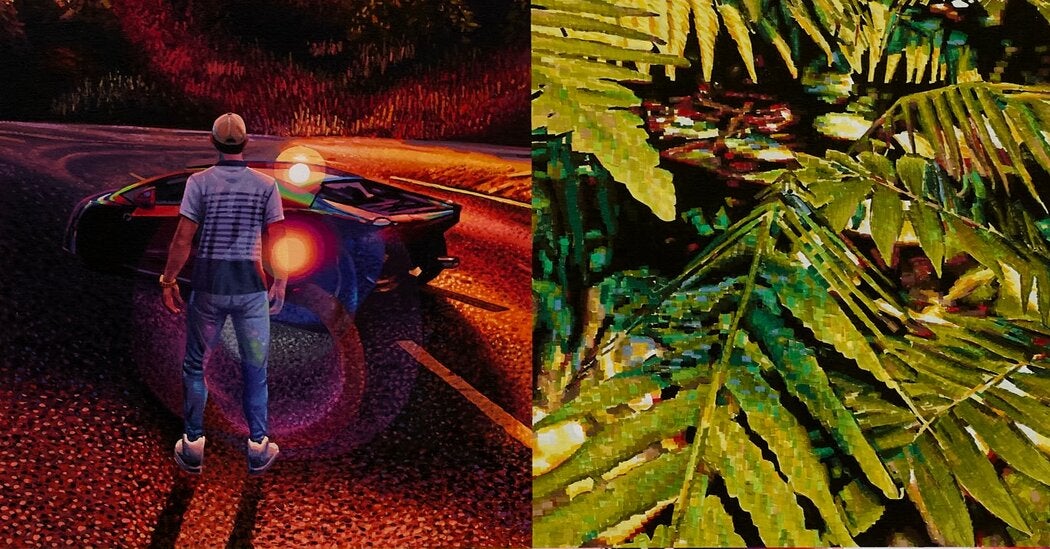
AdvertisementSKIP ADVERTISEMENTGuest EssayThe Seductive Danger of Grand Theft AutoNov. 17, 2026, 5:00 a.m. ETCredit...Mathew ZefeldtA player in Grand Theft Auto can — and should, in order to win — commit assault, mass murder and undertake innumerable automobile-related crimes. Past variations of the game objectify and demean women, deploy racist caricatures and encourage players to waterboard and electrocute characters. In its heightened, satirical take on America, death and destruction are the way of life. When its sixth edition is released on Nov. 19, its graphics will be second to none, its mayhem enticingly realistic and its character dynamics so sophisticated that you’ll be able to get lost in it.Running over civilians or shooting police are somewhat run-of-the-mill for video games. When I play, I do not wince much at those. I know I am in no danger of doing anything like that in real life. But some missions test my ability to dissociate. There is a torture scene in Grand Theft Auto V that players must participate in to advance to the game’s next stage. It’s highly disturbing: The player pulls teeth and electrocutes an unarmed man in a dark room. Players can summarily kill cats and dogs; I found my willingness to join in so troubling I couldn’t sleep at night. The act itself was merely virtual, but why had I decided to do it? The game exposed parts of me that I did not wish to see.As the graphics become more immersive, I begin to worry about what the game might be doing to me and my fellow players. Creating digital images of the morally reprehensible risks straining our understanding of reality and how we should react to it.These challenges are not new. Since humans began creating and seeing art, we have had a long, difficult relationship with its potential for depravity. Depraved art entices us, makes us curious; its forbidden pleasures draw us back for more. Like centuries of art before it, a game like Grand Theft Auto is not mere entertainment: It is a fun-house mirror of our moral universe. Its dangers are hard to swallow — they reflect our own worst impulses. We must rise to the moral challenges it presents.Ever since our human ancestors started drawing on the walls of caves, art has had the power to enchant and delight us but also the potential to seduce us into thinking, even doing, terrible things. According to a Roman legend, the first Greek sculpture of a naked woman — Praxiteles’ “Aphrodite of Knidos,” from the 4th century B.C.E. — was so stunningly lifelike that one man had sex with it, left his stain upon it and then, in shame, threw himself off a cliff. The pulsating eroticism of later paintings in the Italian Renaissance, with their quivering flesh and dripping sensuality, was believed to be capable of fomenting erotic desire through beautified sexual violence. In the mid-18th century, the pious Duke of Orléans attacked Correggio’s mythological painting “Leda and the Swan” with a knife because he was so offended by its steaminess.The infamous “moors murders” of 1960s Manchester — in which Ian Brady and Myra Hindley sexually assaulted and murdered five children — were partly inspired by the 18th-century novels of the Marquis de Sade. Sade’s writings eroticize pedophilia, coprophilia and necrophilia (as well as essentially everything else) and are grounded in a libertine, amoral system: Pleasure and pain are the only real values; morality is merely manufactured to control society. While Brady claimed to hold similar beliefs before he read Sade, he still considered himself one of Sade’s depraved heroes, inspired by the French nobleman’s work. The sheer brutality of Sade’s stories meant that his novels — along with many other literary and visual artworks that contained explicit sexual material or then-subversive themes like queer love — were widely censored across the world until the late 20th century. Liberalizing changes in obscenity law in many countries, including the United States and Britain, solidified the idea that a ban could not be carried forward if the art in question had some kind of value for society. Now, you can buy Sade’s novels from most major bookstores.Depravity, of course, is hard to define. In my work as a philosopher, I define “depravity” around an objective (im)morality. Moral objectivists like me think there are ethical facts independent of our fleeting beliefs about what is wrong or right: Rape and enslavement are wrong and always have been, even if some people once thought otherwise. Where to draw that objective line is an ongoing debate, but most objectivists would agree that much of what appears in art, from Sade to Grand Theft Auto, would qualify as depraved.Art is rarely neutral. It is very much alive, subtly shaping the world in its image. And the idea that video games can cause real-world violence by urging virtual misdeeds has become something of a cliché, but the premise is well established. Aristotle theorized that we may become what we behold in art. Pliny the Elder wrote that one Greek sculptor’s bronze statue of a lame man was so realistic that it caused viewers’ feet to become sore. This “mimetic contagion,” as explored by classicist Robert Germany, meant that viewers could absorb the ethical and emotional qualities of art. Even music, to ancient philosophers like Plato and Mozi, was dangerous: It could spur listeners to unmeasured emotion, or even induce chaos.Mimetic contagion may seem antiquated, but the ever-blurring line between fiction and reality makes it easier than ever to immerse ourselves in pretend worlds. Virtual reality and artificially generated images and videos are eroding our ability to easily distinguish the real from the fictitious.This is compounded by the “self-involving” design of video games in which players act in and help create the world they occupy, a system that almost fully merges reality with fiction. That can be innocent — or not. In the 2019 game Rape Day, players control a serial killer and rapist who, during a zombie apocalypse, sets out to rape and murder people, particularly women. (The platform Steam promptly removed it.) Its developer argued that “most people can separate fiction from reality pretty well,” while one academic said that appearing realistic does not cause a game to be “experienced as reality.” True enough: Even the most realistically violent games are rarely clear-cut incitement to real-world violence. (Though there are exceptions, like the racist video game “Ethnic Cleansing” from 2002.)But the ability to distinguish fiction from reality does not insulate the two from each other. We learn from fiction all the time; some philosophers argue that there is literal truth in it. And beliefs are influenced by the fictitious. Psychological research indicates that violent video games can inspire aggressive thoughts and increase beliefs in racist or sexist stereotypes. Games like Grand Theft Auto are, then, unlikely to be merely harmless fantasy.Still, evidence that they directly inspire immoral action is scarce — just as lots of people who read the Marquis de Sade might be titillated or disgusted but are not inspired to murder. Depraved art is not a mysterious external force seducing innocents into sin. Humanity, with its endless parade of atrocities, is already there. Art is a waxing and waning mirror of our human natures. We do not act because of Grand Theft Auto; it comments upon and parallels the pervasive images of real violence, genocide and war already on our phones. Depraved art first reflects, then entrenches and normalizes a background of violence that was present to begin with.Banning art has never been convincingly shown to halt society’s depravity. Instead, we must take the opportunity given to us by art about the terrible things humans can do to one another (as well as cats and dogs) to look inward, to heed its warnings and consider what it says about our own worst impulses. In doing so, we do not treat depraved art as something detached from reality but as a piece of it. We should take seriously art’s capacity to entrench our beliefs about the world and one another, abandoning the weak defense that it is merely fictional and so cannot touch us.We must question how we choose to exercise our agency within fictional worlds. A gamer, just as much as a reader, should approach depraved art ready to swallow bitter truths and confront the mirror held up before them. In a world still abundant with vice, we should not deride a quest for virtue.Related ContentAdvertisementSKIP ADVERTISEMENT
Grand Theft Auto VI Is Part of Depraved Art’s History
Full Article
Original Source
Read the full article at Nytimes →KhanList aggregates and links to publicly available news content. We do not host full articles from third-party sources. Always verify important information with original sources.