
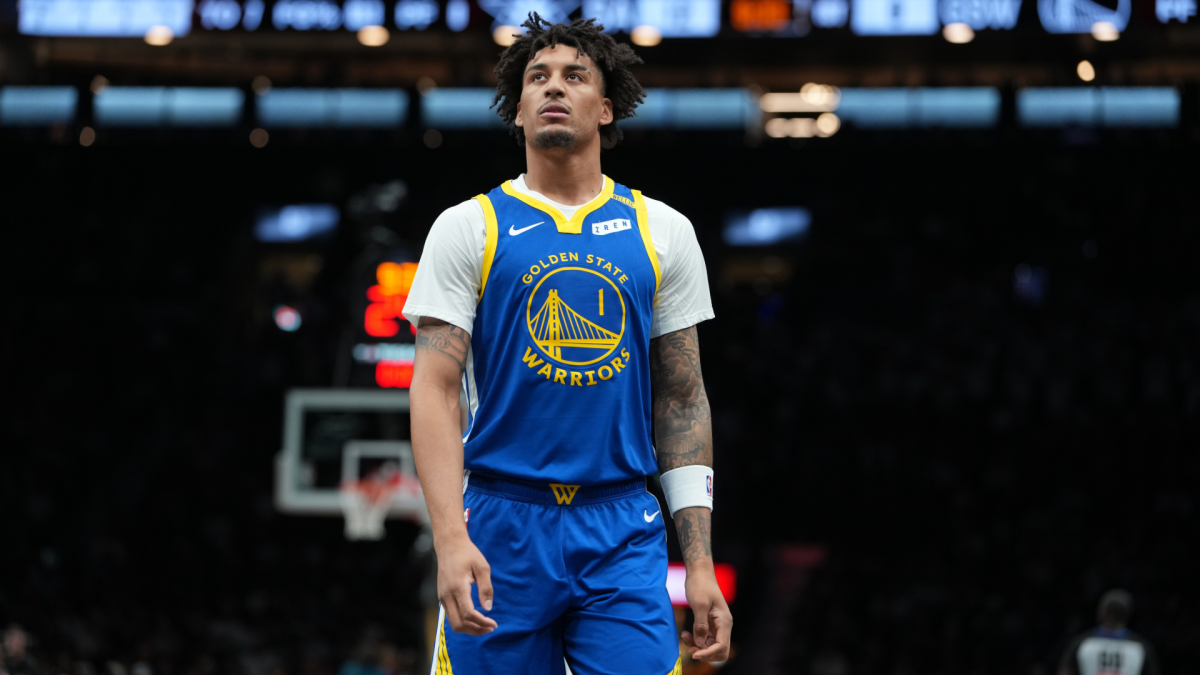
It's Thanksgiving. Well, almost anyway. While that's not a traditionally basketball-centric holiday, it is a useful landmark on the schedule for the NBA's crop of rookies. It's been more than a month. Teams have played about 20% of their schedules. Nobody's career trajectory is locked, but we've seen enough of everyone to start to form real opinions about who's headed where. It's fair to start to take stock of one of the more talented rookie classes in recent NBA history.So let's grade the lottery picks from June's NBA Draft. The grades will be based primarily on the performance of the player, yes, but will also take into account where the player was picked and the circumstances that player was drafted into. Before lottery reform, the draft was designed to send the best prospects to the worst teams, after all, so not everyone was drafted into an especially desirable situation. We'll start at No. 1 and work our way down. 1. AJ Dybantsa: BThe raw rim numbers are iffy. The rim tape is jaw-dropping. Dybantsa is one of the most breathtaking open-court players in the NBA, an absolutely lethal downhill driver with an exceedingly rare combination of athletic tools and ball skills. Those traits alone are going to take him far. The Wizards wasted him early in the season. They've thankfully started to shift more of the offense in his direction, but there is very little shooting on this roster and he spent most of his first dozen or so games watching Trae Young dribble. Dybantsa should never be stashed in the corner. That's true because it wastes his talents, yes, but it's also the reality of his miserable start as a jump-shooter. That's going to be the skill he needs to upgrade to reach true stardom. He doesn't need to be great at it. He just needs to be acceptable. If he gets there, and if the Wizards can put better supporting offensive talent around him, they should be encouraged by what they've seen thus far. The ball needs to be in his hands and they're starting to embrace that. He's buying in defensively more than many rookies of his pedigree, and his combination of size and foot speed makes him a potential nightmare for opposing ball-handlers. He'll need to clean up his shooting, but otherwise, it's been a fairly strong start. 2. Darryn Peterson: B-He never gets to the rim and it's becoming a bit of a problem. Rim-protectors are playing him for his floater and it's disrupting him as a driver. He'll have to get stronger to finish through contact since he simply doesn't have an elite first step. Getting Jusuf Nurkić back will be helpful in this respect. He's the least heralded of Utah's three injured bigs, but his screening is the single skill that's going to matter most to the Jazz guards. They're having so much trouble generating advantages. Nurkić will create space for them. Peterson's finishing is a worthwhile parallel to Dybantsa's shooting. It's never going to be the selling point. It has to improve to complement his true star trait: the shooting. It has come and gone early in the season. His poor catch-and-shoot numbers aren't much of a concern. He was great in that respect at Kansas and throughout his amateur career. His pull-up shooting -- and those are the sorts of shots stars need to be able to take and make -- has been more encouraging. He's not a point guard-level passer, and the fact that Keyonte George isn't either poses long-term problems, but he's a contributor in that respect. The Jazz are still figuring that fit out, and without Jaren Jackson Jr. and Lauri Markkanen as release valves, they're both overburdened. Give him time. Let the Jazz get healthy. He probably should have been in more of a complementary role as a rookie than he's gotten to be. That will come down the line. He recently had a five-game stretch averaging 24.4 points on almost nine 3-point attempts per game. That's his ticket to stardom: efficient, volume shooting that amplifies his floor game and playmaking. 3. Cam Boozer: A-Boozer's reputation as a winner is well-deserved. He makes a dozen little plays every night that tilt games towards the Grizzlies, and those great plays very often build off one another. He's already one of the NBA's best outlet passers, and one reason for that is how quickly his eyes dart down the floor after pulling in a rebound. It often happens while he's still in the air. He's better defensively than most rookies at this point because he just doesn't make the basic mistakes rookies -- especially rookie bigs -- so often make. He's almost always in the right place at the right time. He leads the rookie class in plus-minus pretty comfortably at +74. Don't make a habit of using that as a measure of individual performance, but it underlines the simple reality that good things happen when Boozer is on the floor. So why the minus? Boozer's scoring is still pretty inefficient. The 3-point shooting will come around. He just had a 7 of 13 game against the Wizards that showed what he can be from deep. That he's below 49% on 2s is a bit more concerning. Boozer basically never shoots mid-range jumpers, and things that worked in college aren't working in quite the same way in the NBA. He can't bully NBA-level defenders as easily as he could their college counterparts. He's not especially vertical either, so he's been blocked from behind a few times. He's going to need a go-to move or two near the basket, and he's probably going to have to develop his floater into a more consistent tool. The latter will only further weaponize his passing, especially with Zach Edey near the rim and so much shooting around him. We're not talking about a post-up exclusive player here either. Boozer is so comfortable as a driver for his size that he'll have plenty of options, and if the 3-point shot does come along, it will only make this sort of growth easier. 4. Caleb Wilson: BThe Bulls are really letting Wilson explore the studio space. The mistakes are loud. The highlights are louder. He can absolutely fly, and wearing this uniform, that says something. Wilson practically never lays the ball up. If he's near the basket, he's dunking. What's most notable here is what's happening when he's not near the basket. Wilson took just 27 3s at North Carolina. He's taking more than seven per game for the Bulls, more than any rookie but Darius Acuff. Chicago, under a different regime, nudged Matas Buzelis in this direction last year as well. The Bulls want their athletic wings to be 3-point shooters and they're willing to accept clunky offense to get there. Wilson is going to be a monster defensive playmaker. His length, athleticism and aggression already jump out of the screen, and he easily leads all rookies in steals and deflections per game. His work on the ball and in pick-and-roll is going to be a work in progress, and he has to get stronger. The Bulls don't have a true rim-protector on the roster yet, so judging just about anyone is tricky. The Bulls were the worst team in the NBA when Wilson was playing and are 4-3 since he got hurt. Buzelis in particular has hit his stride without having to devote so much of the offense to developing the franchise player, and that's worth monitoring as the Bulls are betting big on their partnership moving forward. Still, this is probably the right approach for a Bulls team going nowhere in the next few years. Let Wilson play through his mistakes, tighten up his handle and try to build a decent jumper. There is a star in here somewhere and we're already seeing signs of it in his rookie season. 5. Keaton Wagler: C+Wagler is the obvious post-deadline rookie breakout candidate to watch. Ty Lue has never loved playing young players, and sure enough, Wagler's playing time has been inconsistent early on. When the Clippers inevitably trade a bunch of veterans in February, we'll get more of him. Hopefully by then he'll have found ways to compensate for how ridiculously slow he is. Scoring inside of the arc has been an adventure for Wagler because he just can't get by anyone. If the NBA tracked the rate of drives in which a defender moves in total lockstep with the ball-handler for so long that said ball-handler just sort of throws up a contested prayer, Wagler would be near the top of the league. Getting to the rim, fortunately, is not his bread and butter. Wagler is already a stellar foul-drawer. He has nearly 50% more made free throws than field goal attempts. He's putting up a ton of 3s as well and making a reasonable chunk of them. He's not exactly Tyrese Haliburton on the break, but the Clippers are a far, far better transition offense with him on the floor. He's going to need more reps to learn how to play around his flaws, but this shot profile with a low-turnover point guard is a very promising prospect. 6. Mikel Brown Jr.: CBrown has had the toughest go of it so far among the four point guards picked in a row. The emergence of Nolan Traoré has mostly kept him out of the starting lineup, and Brooklyn's odd decision to trade for Julius Randle has left the Nets with more mouths to feed than a team this bad should really have. That has made it hard for Brown to find much of a rhythm as a rookie. When the jump shots fall, he's valuable. When they don't, he hasn't been able to impact games consistently, and his rim finishing has been a mess. He often feels rushed as a driver, but that's common for rookie guards. Brown got his first start in Brooklyn's last game, a loss to the Minnesota Timberwolves, and it was his best game as a professional. His reads in pick-and-roll were impressive and he's starting to get a better grasp on where help is coming from and how he can punish it with his passing. With Traoré now hurt, Brown figures to be a starter moving forward, and hopefully that gets his rookie year on track. 7. Darius Acuff Jr.: B+Most of the concerns about Acuff's playing style are overblown. He is not some empty-calorie chucker. Acuff's efficiency is in line with most of the other top picks, and he's doing it on substantially higher volume. He has a nearly 2-to-1 assist-to-turnover ratio. Sacramento's offense dies whenever he sits. His All Star-level counting stats don't make him an All-Star, but he's generating better team offense than anyone else on this miserable roster and most of this rookie class for that matter. To get these numbers out of a No. 7 overall pick, regardless of context, represents an almost absolute victory. That doesn't mean Sacramento is managing him flawlessly. There should be some real fear here that the Kings are teaching Acuff lessons he won't be able to unlearn. He's taking more shots per game than Jalen Brunson, Tyrese Maxey, Dwyane Wade or Derrick Rose ever did. Is he going to be able to scale down when his roster eventually calls for it? The danger in letting a rookie ball-handler have this long a leash is that it gives them an excuse not to develop the off-ball skills that good teams actually need even out of their primary ball-handlers. Think Trae Young. His defense is, predictably, a disaster. The shooting is almost all off the dribble. He's not the most eager cutter.The bar for stardom out of this player type is enormously high. He's going to have to become, say, a Damian Lillard-esque shooter to cover up his existing flaws if he doesn't improve them with time. That's possible, but it's not likely for basically anyone. Letting Acuff grow like this as a scorer is, generally, wise. He's the only true building block this team has. Maybe tone it down 10% and try to round him out a bit, if not now, then in the near future when you've had time to change the roster around him. 8. Kingston Flemings: BBoozer got the "winner" rep in this draft class, but Flemings is the closest thing this guard class has to one. His motor is infectious on both ends of the floor, particularly on defense, and his aggression as a driver will only get more powerful as he's surrounded by better shooters. He doesn't take many 3s, but he's making the ones he's taking and holding up well in mid-range. There's a path to "pretty good" when it comes to his shooting, which is all he'll need given his speed and playmaking. We're still dealing with relatively small samples here, but his on-off numbers with Jalen Johnson are worth monitoring. The Hawks are great when either plays without the other and terrible when they're on the floor together. Flemings' numbers, in particular, bolt upward when he gets to play without Atlanta's resident All-Star, and that makes sense when you think about how rim-dependent Johnson is. The floor is more open for Flemings when he plays without him, but these are two of the most important players on the roster moving forward. They have to figure out how to coexist, especially now that Flemings is starting for the injured CJ McCollum. 9. Morez Johnson: D+Fair or not, Dusty May is forever going to be attached to this pick. How influential he was in selecting Johnson, we may never know, but for what it's worth, that pick had Masai Ujiri written all over it. So does this roster, which is stuffed to the gills with the sort of rangy, athletic forwards that always populated Ujiri's Raptors teams. Johnson is redundant here. He's playing center full-time when his best defensive position is probably power forward. He's not offering much offensively besides his rebounding. He's going to be a real NBA player; he's just exactly the sort of player a team with Cooper Flagg, Naji Marshall, PJ Washington and Zaccharie Risacher didn't need. Again... we don't know how much influence May had on the pick. But the Mavericks had a massive information advantage over the field when it came to his three lottery-bound Michigan Wolverines. They had their pick out of the trio. One of them is a star, the other is off to a great start, and both offer skill sets this team needed more of. Dallas is dying for more shooting. We have no idea when or if Dereck Lively will get healthy, so adding a true long-term center should be a priority. Johnson may yet be the best Michigan player in this class down the line. For now, he's just not in a position to succeed, and he looks like the worst of Michigan's three lottery picks. 10. Brayden Burries: B-It took Burries a month to start hitting 3s, but now that he is, the theory of him as a player is starting to come together. He's not just a 3-and-D player, but 3-and-D are going to be centerpiece skills for him. He's probably never going to be a primary scorer, but he's going to affect games in a lot of other ways. He's already one of the NBA's best rebounding guards, for example. He's further along as a ball-handler than expected as well, already able to kill closeouts and make real reads in pick-and-roll. He's on the wrong team for this sort of skill set. He's meant to amplify great players, not shoulder a heavy burden on a team with minimal shot-creation. That's a Bucks problem. Burries is doing his part thus far, and if the 3s keep going in, he's headed for a very nice rookie year. 11. Yaxel Lendeborg: A+I thought about an "S." As in S-tier. Or savior. He's struggled since Stephen Curry went down. Fine. There's no other shot-creation on this roster. He turns the ball over. That's closer to a feature than a bug given the motion system Golden State uses. You'd rather not have players chirping at Luka Dončić. Negatives addressed. Yaxel Lendeborg is headed for stardom. We were told he was going to be a 3-and-D player in the NBA. He's self-creating 3s like a seasoned star. He's filling in for the absent Jimmy Butler in a number of unforeseeable ways. He's one of the only players on this team that gets to the line. He's a real playmaker, averaging more assists per game out of drives than Giannis Antetokounmpo. His on-ball defense is as advertised. When Steve Kerr publicly called out his off-ball defense, he took it and improved. If there were maturity concerns here, they certainly haven't affected his coachability thus far.The degree to which Lendeborg altered Golden State's trajectory can't be understated. The Warriors looked primed for a stealth tank before the season began. They didn't want to lose, per se, but they did little to actually, actively improve around a 38-year-old Curry and seemed pleased with the idea of three lottery balls in May. Now they have a foundational player on a rookie deal for four years, and if Butler returns at anything close to full strength, they'll be close enough to posing a meaningful threat in the playoffs to potentially justify trading a pick or two for help (ideally in the form of a shooting center, but perhaps another scorer as well). They're not going to win the championship, but they're a real team again because they picked one of the two best rookies in this class outside of the top 10. If nothing else, Curry's career gets to end with some dignity because Lendeborg will be on his team. 12. Aday Mara: A-The Thunder are missing defenders everywhere. They still give up basically nothing at the basket when Mara is on the floor. He's much more mobile than a center of his size has any right to be. He's fourth in the NBA in total dunks despite playing only about 22 minutes per night. His passing is going to become a real value-add over time, especially on a Thunder team that tends to move the ball minimally for the sake of avoiding turnovers. His reflexes are lightning quick in this respect. If a defender is napping off-ball for even a second, Mara will hit someone for a back cut. Is there star-level upside here? Probably not, and the defensive rebounding probably needs to be a bit better. Still, think of the price that teams are paying even for non-star centers lately. Walker Kessler and Ivica Zubac each netted premium draft returns. That made Mara's draft night slide so surprising. As the NBA pivots back towards size after years of pace-and-space, demand is severely outpacing supply at center. For the Thunder to get someone with a chance to be as valuable as Kessler or Zubac outside of the top 10 is yet another draft night home run for Sam Presti. 13. Nate Ament: C+His role has been fairly limited thus far, but he's doing what he can in the position that he's in. Offensively, it's basically all catch-and-shoot and transition. That's fine. The Bucks can slowly layer in on-ball opportunities. It's the combination of size and shooting that's so tantalizing here, and Ament is shooting very well on his open looks. He has a ways to go everywhere else, but the Bucks frankly have the time to develop him at his own pace. He's taken the challenge of defending tough assignments reasonably well by rookie standards. He's no stopper, but he's played hard and held his own. His off-ball defense needs work. That's typically a skill that comes a bit later, and not all players who get excited about guarding opposing stars are as diligent about that aspect of defense. He got his second start against Portland last Thursday and delivered his best game as a professional. The Bucks need to get Kyle Kuzma out of here so they can give Ament the full-time starting slot he'll need to grow. 14. Hannes Steinbach: D+ He's barely played. The skill that got him drafted in the lottery -- rebounding -- has mostly shown up in the scant minutes he's received. There's just not much we can learn out of 68 total minutes. The Hornets just have a very deep frontcourt and few shot-creating guards with which to support those forwards and centers. Allen Graves and Bennett Stirtz have made real impacts from this range of the draft, but remember, the Hornets also picked at No. 17 and got Christian Anderson, who's impressed early in his rookie season as well. We can't exactly write Steinbach off. We just haven't seen enough of him to say much definitively yet.
Grading every NBA lottery pick from 2026 Draft: Yaxel Lendeborg gets an A+, plus which rookies need more time
Full Article
Original Source
Read the full article at Cbssports →KhanList aggregates and links to publicly available news content. We do not host full articles from third-party sources. Always verify important information with original sources.