
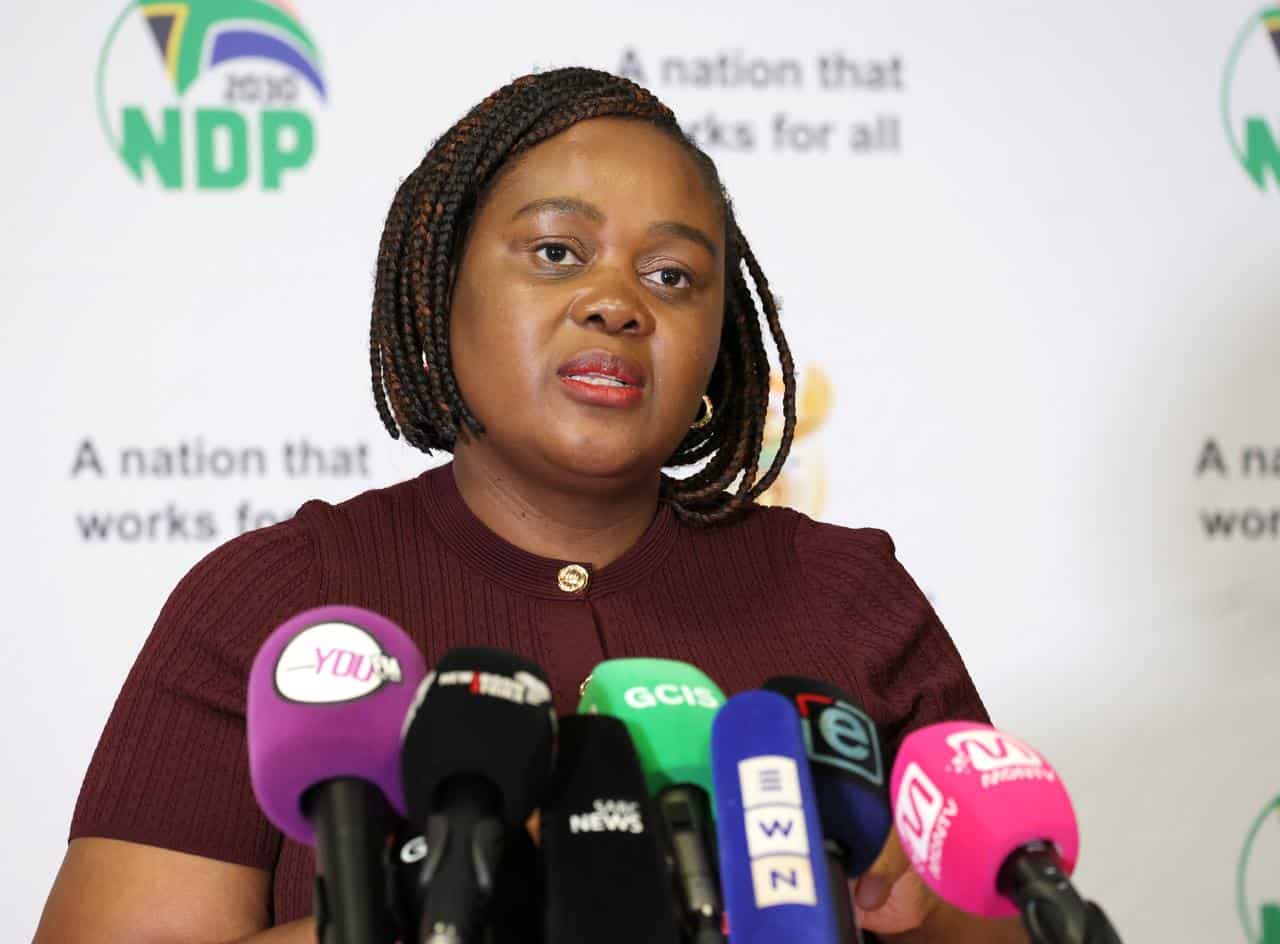
Kubayi says South Africans have asked the government to tackle organised crime, and some measures taken in response will inconvenience them. The chair of the inter-ministerial committee (IMC) on migration Minister of Justice and Constitutional Development, Mmamoloko Kubayi, has confirmed the government’s move to phase out some phones in the country. On Thursday, the IMC on migration updated the country on the work being undertaken by various government departments to strengthen border security, improve immigration enforcement, address non-compliance with immigration laws and regulations, and ensure that migration is managed in an orderly, lawful and secure manner. SIM card registration The government is taking on risks associated with unregulated SIM card registrations to strengthen RICA compliance and tackle organised crime. To address unregulated SIM card registrations, the government met with mobile network operators to discuss SIM card compliance. Regulated SIM card registrations should include fingerprints, sometimes your face, an ID number and then you get a full registration number. However, the unregulated market is thriving in the country, as people even purchase SIM cards on the side of the street. Others provide wrong ID numbers and still get a SIM card. The government is tackling this issue. “We have engaged with the mobile network operators to say this is a risk to South Africa, and we’ve asked them to ensure that they put their systems in place so that they can be able to have compliance,” said Kubayi. “We have met with them; they had asked us until the end of November to be able to put the systems in place. Initially, we had given them July; they wanted some time to correct. “We want to announce to the nation that we will be, through Operation Shanela, as government, cleaning up in this area. “It’s one of the areas that is a problem for us as a country in terms of organised crime, but similarly again in terms of illegal immigration. So we want SIM cards that are properly registered. “If you are a foreign national, the full registration must have your passport number, or if you are an asylum seeker, it must have your permit number to be in South Africa. If you are a South African, it must have your identity number.” Kubayi: ‘Too many SIM cards’ The government will also begin to limit the number of SIM cards an individual can have registered under their name, said Kubayi. “An individual can’t have so many SIM cards in your name. So you can’t, as a retailer, have 1 000 SIM cards under your name. We want SIM cards to be in the name of Mmamoloko. If Mmamoloko is using the SIM card, the SIM card must be in the name with the ID number of Mmamoloko Kubayi. If Mmamoloko Kubayi commits a crime, the law enforcement agencies are able to find Mmamoloko Kubayi.” Phones that can’t be traced The era of basic phones is also nearing its end, Kubayi said, as untraceable phones hinder police efforts to fight organised crime. “We want to start having laws to phase them out of the country because we can’t continue to have a country that battles with organised crime, with illegal immigration,” said Kubayi. “You asked us to do something about these matters. We are doing something about them, even to some discomfort, unfortunately. “So those with small phones must start finding proper phones. They are going to be discarded. The legislation is coming to deactivate them in the country.”
Government working on legislation to deactivate some phones in SA
Full Article
Original Source
Read the full article at Citizen →KhanList aggregates and links to publicly available news content. We do not host full articles from third-party sources. Always verify important information with original sources.