
SINGAPORE: The Public Service Division (PSD) said on Monday (Sep 14) that it was reviewing the data and methodology of information of a working paper by a US-based research organisation that alleged civil servants "disproportionately" purchased homes near planned but not yet publicly announced MRT stations.In response to media queries, PSD said that it was “aware of an academic working paper comparing home purchase rates near planned MRT stations”.The paper "reports that civil servants, as classified by the authors, disproportionately purchased homes near planned but not yet publicly announced MRT stations”, PSD said.“We take any integrity concerns extremely seriously. We are currently reviewing the data and methodology within the paper and will refer to CPIB if there is a material basis to do so,” said a PSD spokesperson, referring to the Corrupt Practices Investigation Bureau.The working paper was published by the National Bureau of Economic Research (NBER) and titled "Do Social Norms Substitute for Enforcement? Evidence from Public Officials' Home Purchases in Singapore".“NBER working papers are circulated for discussion and comment purposes. They have not been peer-reviewed or been subject to the review by the NBER Board of Directors that accompanies official NBER publications,” according to the first page of the paper.The authors wrote that they “began by examining whether public officials engage in informed home purchases before planned rail stations are publicly announced”.They referred to private-property transactions from legal filings in Singapore and linked buyers to the Singapore Government Directory Interactive (SGDI) to identify civil servants and trace their transaction histories.They then focused on purchases near planned but not yet publicly announced MRT stations around announcement dates as a “proxy for access to privileged location information”.“We find clear evidence of informed trading by civil servants: purchase intensity near planned MRT stations is higher for civil servants than for matched controls, with the difference concentrated one to two years before public announcements,” they alleged, adding that "robustness checks" supported their findings.These checks, according to the authors, included “a placebo exercise using Singapore’s highly regulated subsidised public-housing market, where eligibility and resale constraints make informed trading more difficult”.Using a large language model (LLM), the authors also found that the purchases in question were "concentrated among mid-level officials".These "mid-level officials face the highest net temptation because they have sufficient resources to act while bearing lower expected scrutiny and reputational costs than senior officials, whereas junior officials face binding resource constraints," according to the paper.These "informed purchases" were alllegedly more prevalent among officials in agencies involved in "rail-line planning, consistent with greater access to nonpublic location information", the authors said.The authors also compared the purchasing patterns of civil servants with those of real estate agents and corporate board members, but found neither group showed a similar increase in purchases near planned stations before their locations were announced. The authors said this supported their interpretation that the civil servants' purchases reflected access to non-public information, "rather than superior processing of public information.The paper was authored by Tomasz Piskorski from Columbia University, Jian Zhang from the University of Hong Kong, Amit Seru from Stanford University and Chun Zhao from Stanford University.The authors thanked, among others, Li Shengwu, Ivan Png and Sumit Agarwal.NBER is a Massachusetts-based private, nonprofit research organisation that conducts analyses on major economic issues, according to its website.
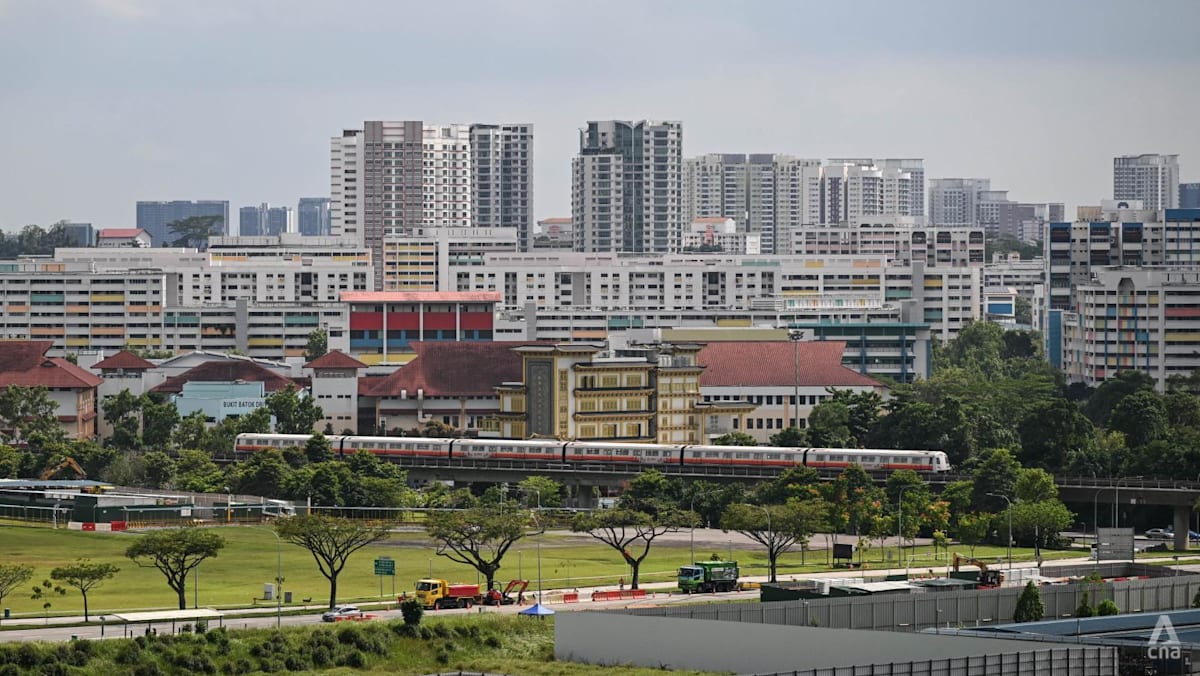
Government reviewing study alleging civil servants disproportionately bought homes near unannounced MRT stations
Full Article
Original Source
Read the full article at Channelnewsasia →KhanList aggregates and links to publicly available news content. We do not host full articles from third-party sources. Always verify important information with original sources.