
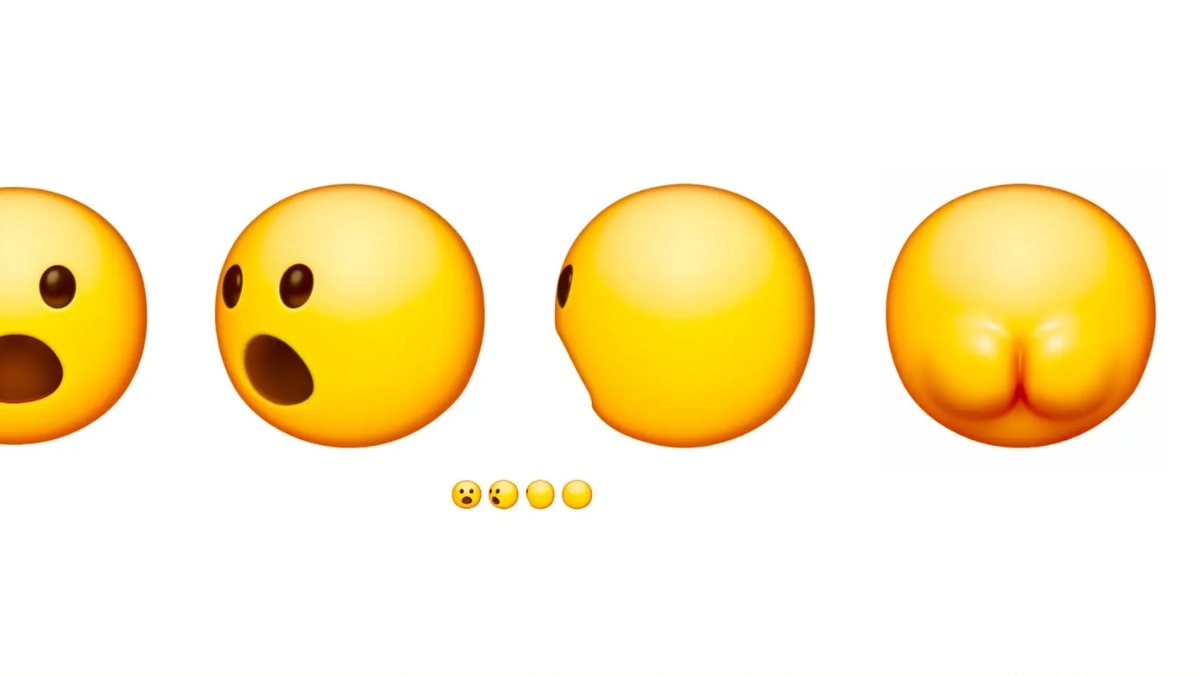
Google illustrated its Noto 3D design challenge by rotating a smiley to reveal a comic backside. The gag highlighted how three-dimensional emojis require details that flat artwork can keep hidden.Google’s 3D emoji blog gets cheeky with a smiley’s butt (Photo: Google Design)Google set out to explain how it was reimagining emojis for a three-dimensional world, but one rather unexpected detail stole the spotlight: what happens when you turn a smiley face around and look at its butt?In a blog titled “Bringing Emoji into the Next Era of Expression”, Google outlined its plans to give emojis more depth and personality through its new Noto 3D designs.The post discussed everything from making facial expressions easier to read to ensuring emojis remained recognisable on tiny screens. But when it came to imagining what a smiley face looked like from behind, the company decided to have a little fun.Under a section titled “The 360-Degree Reality Check”, Google explained that designing emojis in 3D presented a new challenge. Unlike flat illustrations, three-dimensional characters had to look convincing from every angle, raising an important question: what does the back of a smiley face look like? Google’s answer? A butt.The blog featured a series of four images showing a yellow, shocked-looking emoji rotating from the front to the back. As the character turned around, its rear end came into view, complete with two rounded cheeks. The visual was accompanied by the cheeky caption, “Just kidding! Butt, IMAGINE!” Take a look at the picture here:The deliberately exaggerated joke became the most amusing part of an otherwise detailed design discussion, turning a technical challenge about 3D modelling into an unexpected toilet-humour moment.Of course, Google’s point was not really about emoji anatomy. The company explained that moving from two-dimensional illustrations to 3D designs meant reconsidering details that had previously remained hidden. The post even revealed that its old poodle emoji had effectively been missing a leg, with the fourth limb tucked out of sight behind the others. Once redesigned in 3D, the dog finally had all four legs.The blog also discussed how Google wanted to preserve the personality of familiar emojis without making them overly realistic, improve their visibility in dark mode and ensure their expressions remained clear even at a tiny 18-by-18-pixel size.Still, among all the talk of design principles, accessibility and emotional expression, it was the smiley face's unexpected rear view that provided the blog with its cheekiest moment.- Ends
Google's 3D emoji blog gets cheeky with a smiley's butt. Viral, of course
Full Article
Original Source
Read the full article at Indiatoday →KhanList aggregates and links to publicly available news content. We do not host full articles from third-party sources. Always verify important information with original sources.