
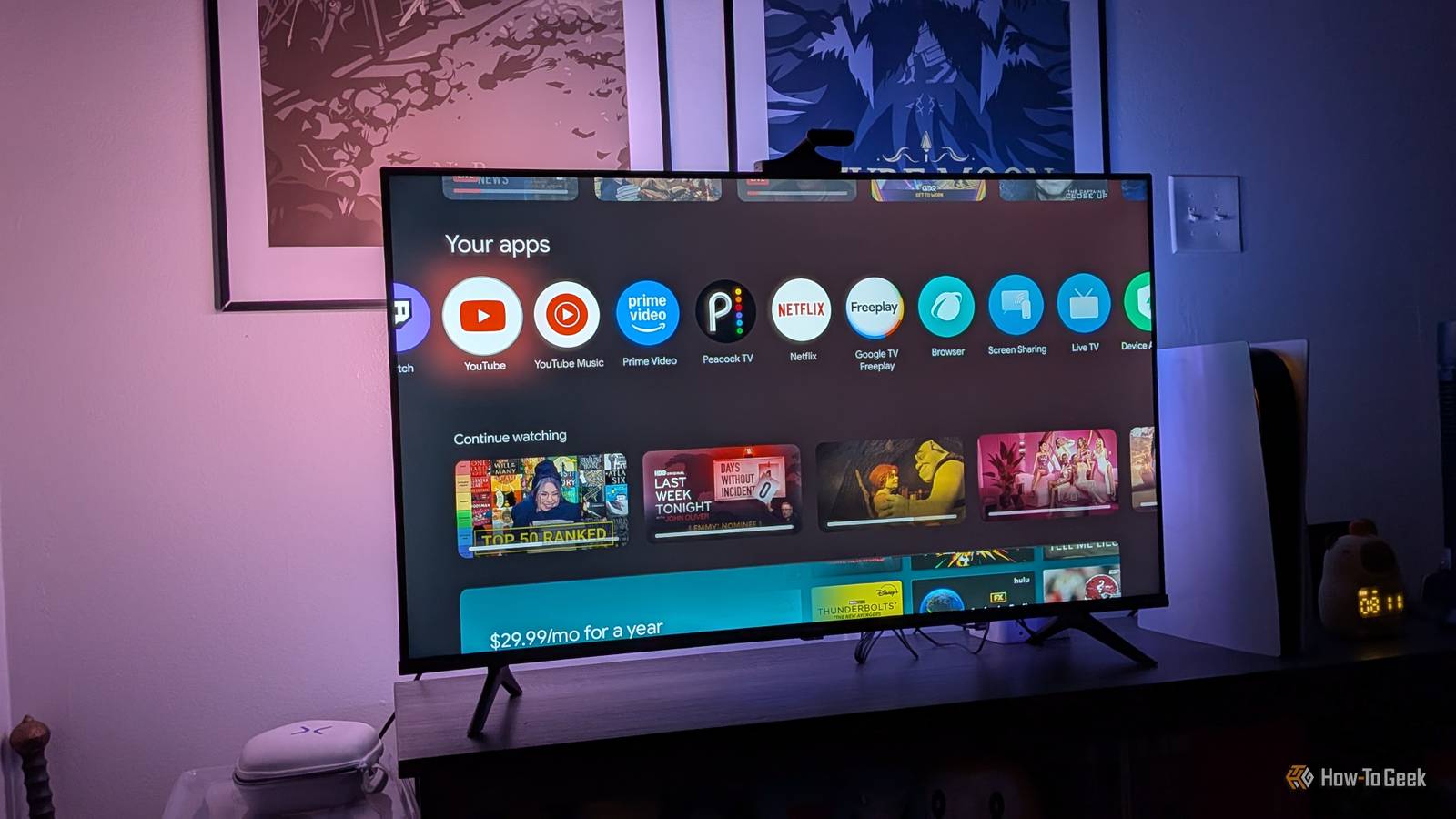
Published Sep 28, 2026, 8:30 AM EDT Jon is a seasoned journalist who has written definitive coverage of consumer tech at publications like Engadget, Android Authority, and BetaKit. He's an expert on making tech accessible ranging from mobile and PCs to emerging platforms like wearables. When he's not writing, he's going on adventures with ihis family and is an avid photographer. Google TV is popular, but it hasn't had an easy fight against Amazon's Fire TV and Roku devices. It's not hard to see why. Not only are there many Fire TV and Roku sets, but there's also a wider variety of devices: there's just one Google TV Streamer, but multiple Amazon and Roku media players. However, Google is benefiting from a classic adage: never interrupt your enemy when they're making a mistake. Amazon and Roku have both made decisions that have hurt their streaming hardware, making Google TV the most appealing option for many streaming video fans. Here's how Google is leading by sitting still. Others' ads are even more annoying Who knew Google TV would seem restrained? Google is certainly no stranger to putting ads on TV home screens or in apps like YouTube. But its rivals are making moves that could make Google TV look tasteful by comparison. Amazon has not only introduced mandatory pop-up ads on Fire TV devices after system updates, but has also redesigned the interface to allow for more ad placements in addition to better navigation. Roku, meanwhile, has been pushing more ads and even testing auto-playing video ads before the home screen. The behavior is frankly disrespectful — it puts ads ahead of me, the user. Google TV triumphs in that regard simply by being less obnoxious. I might have to deal with ads, but I don't have to wade through quite so many to get to the content I want. There's a Basic TV mode that strips out more ads to focus on apps, with limits. Until Amazon Fire TV devices and Roku sets defer more to viewers than marketers, they will not get my business. Google's interface is better overall It also has the best AI for TV Credit: Cory Gunther / How-To Geek Google TV has its interface (UI) flaws. It's clunky in default form, and that Basic TV mode locks you out of the Play Store, casting, and other common features. All the same, it has advantages that Fire TV and Roku devices just don't provide. Apps, live TV, and personalized content like recommendations and the watchlist work together more smoothly. The emphasis is once more on what I want to watch, with ads and content highlights not quite so prominent. As much as Amazon and Roku have streamlined their UI elements, there's still a disjunction between categories. The new Fire TV interface encourages you to check out live TV in a separate section, for instance, while Roku concentrates on picks and shortcuts at the expense of burying some sections. If you like that, great — but I suspect many people want to see apps and content no matter the format. Google TV Streamer 4K Dimensions 6.4in x 3in x 1in Wi-Fi Yes Then there's AI search. Whatever you think of AI, there's no doubt that Google Gemini is the most powerful on a TV. It taps into a vast level of web knowledge in addition to the usual device commands. Amazon doesn't have that direct pipeline, but only recently made Alexa+ free for Fire TV users. And Roku is relatively new to the game, having introduced conversational AI in late 2025. In that sense, Google TV is victorious not just by being first with advanced AI, but by letting competitors trip over themselves as they rush to catch up. Their work only underscore what Google is still doing better, and it could be a while before the company has to deliver a major upgrade. A neutral, higher-quality approach to content No AI slop channels built-in Google TV Freeplay showing an on-demand movie.Credit: Google All of these brands have their in-house services, whether it's Google TV Freeplay, Amazon Prime Video, or The Roku Channel. They have incentives to promote their own material. Yet Google is the most neutral. The Play Store acts as an equalizer, since Google wants to collect revenue from all developers in addition to its own services. Google will be happy to recommend Apple TV shows so long as you're subscribing through its online shop. Amazon, meanwhile, has every incentive to steer you toward Prime Video on Fire TV and isn't shy about doing it. This is the company whose tablets are ad vehicles, and whose one and only phone flopped partly by prioritizing Amazon services over helping users. Then there's the occasionally questionable content. Free, ad-supported TV is fine, but Prime Video and The Roku Channel now have a live stream (Fairground AI Creator TV) devoted to AI-generated video — in some cases, slop. You don't have to watch, of course, but decisions like these set a low bar for quality. You can access that and other channels on Google TV through apps like Prime Video. But they're a layer removed from the main interface. Google emerges on top by maintaining the status quo. It doesn't play favorites nearly as often, and its inherent distance from app creators keeps it from making controversial content selections. That could change if Freeplay suddenly adds a raft of AI channels, but it doesn't as I write this. That makes Google TV the easy pick if I want to use a wide range of services without having to sift through trash.
Google TV is winning by doing nothing as Fire TV and Roku self-destruct
Full Article
Original Source
Read the full article at Howtogeek →KhanList aggregates and links to publicly available news content. We do not host full articles from third-party sources. Always verify important information with original sources.