
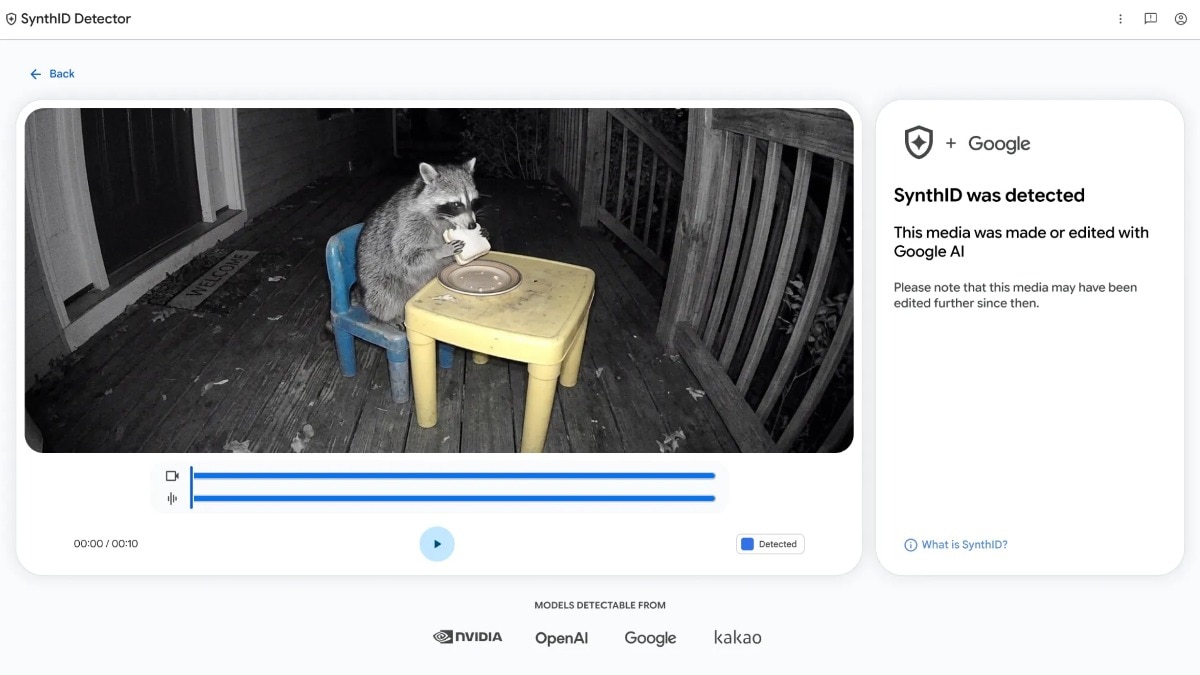
Not sure whether that image or video you just saw online is real or an AI deepfake? Google has a new tool that could help you find out. The company has made its SynthID Detector publicly available, allowing users to check whether an image, video or audio file was created or edited using supported AI tools.The website is now available globally in English, after previously being offered in limited access to journalists, media professionals and testers. Google says SynthID Detector can identify content made using its own AI tools as well as supported systems from partners including OpenAI, NVIDIA and Kakao. Support for Apple-generated content is also expected soon. How does Google's SynthID Detector work?Google's deepfake detector website is based on SynthID, the company's watermarking technology for AI-generated content. The system adds an invisible watermark to AI-generated media when it is created. Unlike a visible logo or label, the watermark cannot be seen in an image or heard in an audio file.Google says these watermarks are designed to remain detectable even after common changes are made to a file, such as cropping, applying colour filters, changing the frame rate or using lossy compression. How to use Google's SynthID Detector?To use Google's SynthID Detector, simply upload a supported image, video or audio file. The tool will scan it for an invisible SynthID watermark and, if it finds one, indicate whether the content was created or modified using an AI system that supports SynthID.Google has also integrated similar verification features into some of its other products. Users can check suspected content through Gemini, Search and Chrome, while Circle to Search can look for SynthID watermarks as well as C2PA content credentials.It won't detect every AI-generated image There is one important thing to keep in mind, though. SynthID Detector is not a universal AI detector. It can only identify content if it has a SynthID watermark, so AI-generated images, videos or audio made using tools that do not support SynthID may not be detected.Google has used SynthID to watermark more than 180 billion images and videos, along with around 240,000 years of audio. The company claims that its verification features across Search, Gemini and Chrome now handle more than one million requests every day.Where is SynthID Detector available?SynthID Detector is available globally through the web in English. Google is also expanding support across its products and partner AI systems, with Apple support expected in the future.- Ends
Google launches website to help you detect AI slop, here is how it works
Full Article
Original Source
Read the full article at Indiatoday →KhanList aggregates and links to publicly available news content. We do not host full articles from third-party sources. Always verify important information with original sources.