
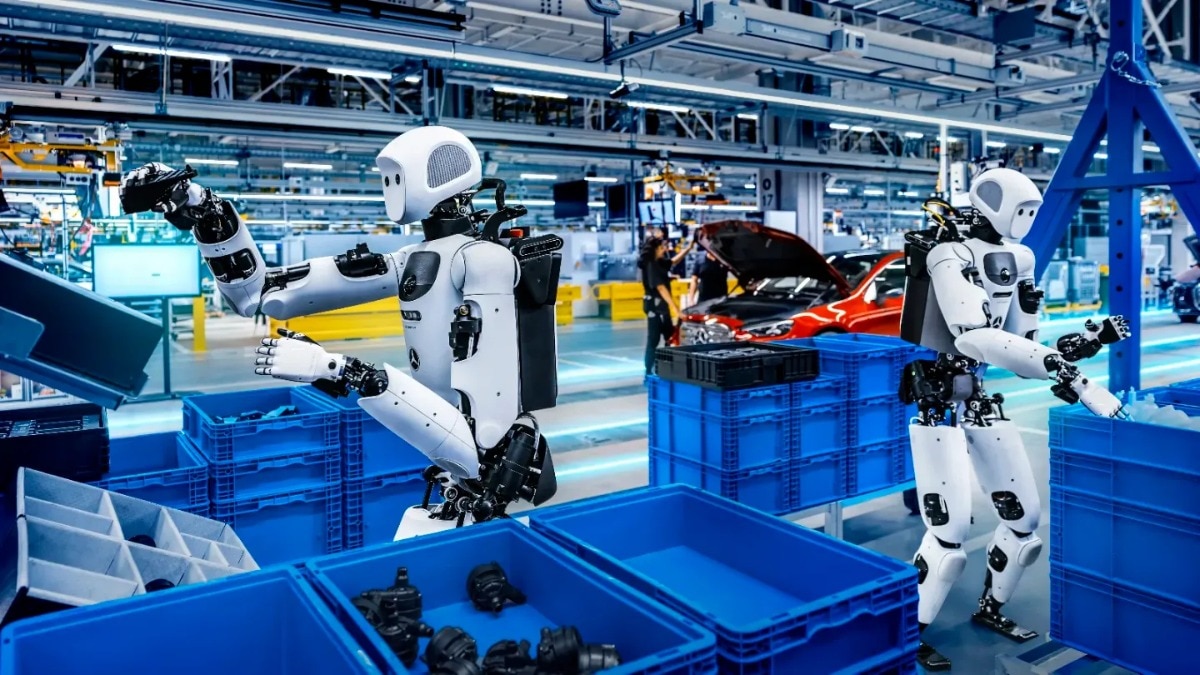
What's next after AI? Maybe it could be humanoid robots. Google stepped into the robotics space, introducing Robotics 1.5 which has basic features like motion transfer and upper-body control. Now the mountain-based tech giant rolled out Gemini Robotics 2.5 with a notable leap. It is designed to help robots handle everything from delicate objects to repetitive factory work with greater precision and reliability. The model can learn a wider range of skills and perform tasks faster, potentially bringing robots closer to working alongside humans in everyday environments. And Google says it has already put the technology to the test on automotive production lines.Carolina Parad, vice president and head of robotics at Google DeepMind, announced Gemini Robotics 2.5 in a post on X, calling it the company's most capable vision-language-action (VLA) model yet. In a blog post, Google explained how the model improves robot dexterity, reliability and safety. The company has also partnered with Apptronik and Mercedes-Benz to test its capabilities using Apptronik's Apollo 2 humanoid robots at automotive factories in Hungary and Germany.Gemini Robotics 2.5 makes robots more dexterousOne of the biggest improvements with Gemini Robotics 2.5 is how robots handle objects that require careful movements. Google says it tested the model across more than 200 tasks, including serving food with tongs, tying a bow on a gift box and pipetting liquid. These are not exactly the kind of tasks robots typically perform on factory floors, but they show how the technology is expanding beyond repetitive movements.Google says Gemini Robotics 2.5 achieves a 30 per cent to 100 per cent higher success rate across different tasks compared with previous models. It can also complete tasks 20 per cent to 30 per cent faster. The model's factory capabilities are particularly interesting. During a proof-of-concept with Mercedes-Benz, Apollo 2 robots used Gemini Robotics 2.5 to pick automotive parts from bulk bins and arrange them into trays in the required order. The robots achieved a 96 per cent success rate, helping automate repetitive work that otherwise requires technicians.Safety is another major focus. Google says the model can identify hazards and people nearby and adjust robot movements in real time. Its safety guidance improved safe task completion around obstacles by 33 per cent and around people by 43 per cent in evaluations.Google is also introducing ASIMOV-Jailbreak, an open-source benchmark designed to test whether robots can resist unsafe instructions disguised as ordinary requests. The company says these improvements could help robots operate more safely in unpredictable environments.- Ends
Google launches Gemini Robotics 2.5, says robots achieve 96% success rate
Full Article
Original Source
Read the full article at Indiatoday →KhanList aggregates and links to publicly available news content. We do not host full articles from third-party sources. Always verify important information with original sources.