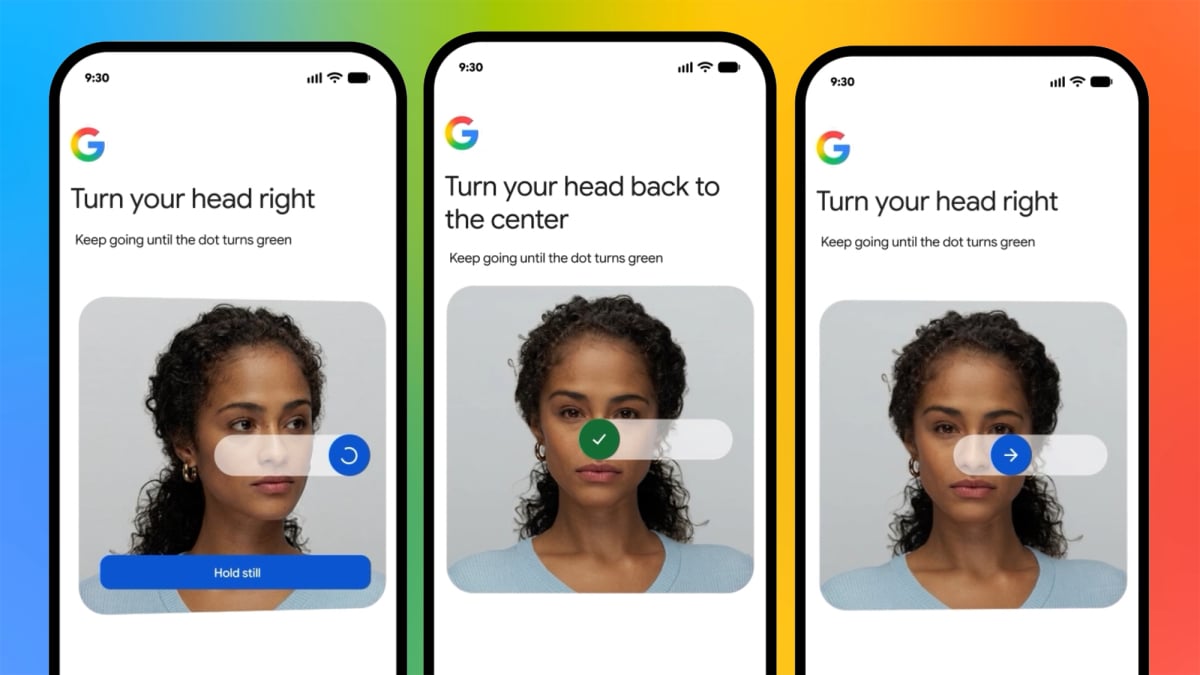
David Nield David Nield Freelance Writer ExperienceDavid Nield is a technology journalist from Manchester in the U.K. who has been writing about gadgets and apps for more than 20 years. He has a bachelor's degree in English Literature from Durham University, where he also spent a term as editor of the award-winning student newspaper Palatinate. His journalism career started in print media, where he contributed to and edited several technology magazines and bookazines sold in the U.K. and internationally. More recently, he has worked as a freelancer for some of the biggest technology publications on the web, covering everything from on-the-ground reporting about product launches, to detailed explainers and how-to guides on apps, gadgets, and platforms. His expertise covers broad areas of consumer tech, including smartphones, laptops, wearables, and AI. Read Full Bio July 23, 2026 Add as a preferred source on Google Add as a preferred source on Google Credit: Google Key Takeaways Google is adding a new video selfie sign-in option for user accounts. You can use it for identity verification if you're having trouble logging in. The feature seems to be available for some but not all users right now. Table of Contents Finding yourself locked out of your Google account for whatever reason is a stressful situation to be in—what with all your emails, documents, photos, and other data suddenly out of bounds—but there's now a new way to prove your identity and regain access: a simple selfie video.It's always wise to have multiple sign-in methods set up, beyond the basic password and email address, as each additional one gives you a better chance of getting your account back if something goes wrong. The recovery contacts feature is a good example, where Google uses verified, trusted contacts of yours to prove your identity.Now you can also use a selfie video. By following this link you can see if the feature is live for your account, and record your selfie via a webcam or phone camera. If you're having trouble logging in, you'll be able to record a new selfie, which will be compared against the original saved in your account. At the moment, the selfie video option for my account isn't available, so I couldn't test it out. It seems this will be rolled out gradually to users, though Google hasn't said anything specific about availability or a schedule—just that users can now check if their account is eligible."Your selfie video is yours and you're in control," says Google in its announcement blog post. "It is recorded and securely stored with your consent, and you can delete it at any time in your Google Account. It's used only for helping you sign in, unless you opt to share it for additional purposes. Your selfie video is encrypted at rest, meaning it's securely stored even when it's not being used."Those "additional purposes" mean that Google will use your "video and related data to help ongoing efforts to develop and improve facial recognition, age estimation, and other verification methods that may use your physical features or movement" (the specter of age verification looms large again). What do you think so far? There's also the rather obvious issue of deepfakes. Google says there are "multiple layers of security" to guard against fake photos and videos, including getting you to go through several simple movements when recording the selfie—movements that are hard to predict and mimic with a deepfake.All of the usual Google account checks will be in force too, so (for example) you might find additional security questions pop up if you're suddenly trying to log in from the other side of the world from where your usual login attempts are.Given the accuracy of technologies like Face ID these days, video selfie sign-in should prove to be a useful backup method of accessing your account. There's nothing extra for you to remember—you just have to bring your face—and it appears at the moment to be difficult to get around. Lifehacker has been a go-to source of tech help and life advice since 2005. Our mission is to offer reliable tech help and credible, practical, science-based life advice to help you live better. Our Mission Our Team Newsletter © 2001-2026 Ziff Davis, LLC., A ZIFF DAVIS COMPANY. ALL RIGHTS RESERVED. Lifehacker is a federally registered trademark of Ziff Davis and may not be used by third parties without explicit permission. The display of third-party trademarks and trade names on this site does not necessarily indicate any affiliation or the endorsement of Lifehacker. If you click an affiliate link and buy a product or service, we may be paid a fee by that merchant.
Google Is Rolling Out a Video-Selfie Option If You Get Locked Out of Your Account
Full Article
Original Source
Read the full article at Lifehacker →KhanList aggregates and links to publicly available news content. We do not host full articles from third-party sources. Always verify important information with original sources.