
Diplomacy is often associated with formal meetings, agreements, and handshakes between governments. But for New Zealand Ambassador to the Philippines Catherine McIntosh, some of its most meaningful moments can be found in something much simpler: a Filipino saying they have a relative in New Zealand, a student preparing to leave for a scholarship, an indigenous leader meeting Māori counterparts, or sharing a plate of turon (fried banana roll) As the Philippines and New Zealand mark 60 years of diplomatic relations this year, Ambassador McIntosh sees the relationship as entering a new chapter, one that is increasingly defined not only by governments, but by farmers, students, indigenous communities, entrepreneurs, workers, and ordinary people moving between the two countries. “New Zealand and the Philippines are in an exciting phase of their partnership,” McIntosh said in earlier remarks about the approaching anniversary. She described the move to a Comprehensive Partnership as a major milestone for the two countries. Foreign ministers formally elevated in 2026 around four pillars: political engagement; defense, security and maritime cooperation; trade and economic ties; and people-to-people links. For McIntosh, however, the real strength of those pillars lies in the people who give them life. A relationship built by people The ambassador has repeatedly emphasized the depth of people-to-people connections between the two countries. In a recent conversation, she reflected on how frequently Filipinos she encounters have a personal connection to New Zealand. “Diplomacy isn’t distant at all. It’s so deeply personal and lived every day through the people,” she said. VISIT. Ambassador Catherine McIntosh shakes hands with with a student during her visit to Surigao del Norte and Dinagat Islands in partnership with UNICEF Philippines. “Every day I encounter a Filipino who says, ‘I have a relative,’ or ‘I have a friend in New Zealand,’ or ‘New Zealand is on my bucket list.’ And those human connections are what make our diplomatic impact a success across generations.” That connection is increasingly visible in New Zealand itself. Filipinos are among the country’s fastest-growing ethnic communities, contributing to sectors ranging from healthcare and agriculture to education, construction and hospitality. For McIntosh, this means the relationship is no longer something that exists only between Manila and Wellington. It is present in families, workplaces, schools, communities and increasingly, in the lives of young people who move between both countries. Learning from each other’s farms Agriculture is one area where the relationship has particularly practical potential. New Zealand’s dairy, meat, and horticulture exports contribute to Philippine food security and nutrition, while New Zealand has welcomed increasing volumes of Philippine bananas and pineapples. McIntosh also pointed to pilot shipments of Philippine cacao and mangoes to New Zealand as promising developments. “The future of our agriculture partnership is bright, with the increased flow of goods between our countries and enhanced cooperation in certain areas,” she said. But she sees the relationship as more than simply buying and selling agricultural products. New Zealand has also been sharing agricultural knowledge through scholarships, technical expertise, and development programs. The focus has increasingly shifted toward climate-smart agriculture, helping farmers increase yields while minimizing environmental impacts. “Our investment from New Zealand and sharing know-how is in various forms,” McIntosh said. “We have our short-term scholarships under the Manaaki New Zealand Scholarship Program, including agricultural representatives from the Philippines coming to New Zealand and immersing themselves in some of our know-how and meeting our experts.” The exchange, she said, is ultimately about helping farmers gain access to higher-value markets and creating more sustainable livelihoods in rural communities. For a country like the Philippines, where agriculture is deeply intertwined with rural development, climate resilience, nutrition, and poverty reduction, the lesson is not simply about adopting New Zealand technology. It is also about adapting knowledge to local communities and conditions. Where Māori and indigenous Filipino values meet Perhaps one of the most interesting dimensions of the relationship is emerging through indigenous cooperation. New Zealand’s I-LEAD (Indigenous Women and Girls Leadership and Empowerment in Ancestral Domains) program in Mindanao has created opportunities for indigenous Filipino leaders to engage directly with Māori communities. McIntosh recalled the first delegation of Philippine indigenous leaders to New Zealand and described the I-LEAD learning exchange as “really inspiring” for both sides. One story particularly stayed with her. The Philippine delegates met Māori tribes who were discussing their long-term vision for their communities and economic enterprises. “They weren’t just talking about a two-month plan. They even had a one-thousand-year horizon,” she said. For McIntosh, that encounter offered an important lesson: indigenous development can be about thinking beyond immediate projects toward responsibilities that extend across generations. One Māori concept stood out. “Kaitiakitanga,” she explained, means guardianship, the idea of valuing resources such as land, air, and water and preserving and caring for them for the next generation. “That sort of long-term view was a really valuable mindset for both sides to reflect on,” she said. The idea has resonance in the Philippines, where indigenous communities have long-standing relationships with ancestral domains and natural resources. Sustainability beyond the environment That same intergenerational thinking is shaping the broader relationship. For McIntosh, sustainability cannot be reduced to environmental protection alone. “It’s multi-dimensional,” she said. A sustainable partnership, she explained, should deliver outcomes for a range of stakeholders, from farmers and rural communities to indigenous peoples and young people. Better market access, for example, can translate into higher incomes for agricultural workers. Development programs can strengthen the capacity of indigenous women while respecting cultural practices. Scholarships and exchanges can give young people skills and experiences that they can bring back to their communities. New Zealand Ambassador Catherine McIntosh joins the send-off ceremony for Mindanao Young Leaders Programme delegates. “The development program can be an enabler across all four pillars,” she said, referring to the countries’ comprehensive partnership. That is where diplomacy becomes tangible: when an agreement between two governments eventually becomes a new market for a farmer, a leadership opportunity for an indigenous woman, or an international experience for a young Filipino. The young people who will carry the relationship Asked what young people will need to thrive in an increasingly connected Indo-Pacific, McIntosh did not begin with a technical qualification. She began with adaptability. “In a changing environment, in a dynamic situation where technology is advancing, where people are more connected, I think it’s important to have an open mindset, be curious, and be open to change and see the opportunities,” she said. But adaptability, for her, also needs to be accompanied by the ability to work with people who are different from us. “You need to build the relational ability, the ability to work across cultures, to listen well, to find the common point, the point of synergy, the way to work together.” Her formulation is simple: listen, adapt, and find ways to work together. That philosophy is already visible in programs such as the Manaaki New Zealand Scholarship Program, where young Filipinos gain exposure to New Zealand expertise while bringing their own experiences and perspectives in return. McIntosh described the Manaaki program as particularly meaningful because it connects young leaders who are already deeply committed to their communities with New Zealand experience and expertise. “They come back to the Philippines with the best of both worlds,” she said, retaining their deep commitment and networks at home while bringing back new ideas and connections from New Zealand. “Both sides have been enriched.” What comes next? For the next decade, McIntosh sees the relationship expanding through these people-to-people exchanges and through practical cooperation in agriculture, climate action, indigenous development, education, trade, and other emerging areas. The goal is not simply to add more programs. It is to create more connections that can generate ideas, skills, investment, and opportunities across borders. Her own experience as ambassador reflects that approach. She has immersed herself in Filipino culture, from learning Filipino to exploring the country’s food and communities. She values the expression of Māori culture into the embassy’s work, including the use of Māori language in her speeches and incorporating the Waiata (song) as a segment of key embassy events. WAIATA. New Zealand Ambassador Catherine McIntosh’s Waiata performance during a reception in this undated photo. And, when asked about Filipino food, her answer was immediate. “I’m a fan of quite a few things,” she said, before naming turon. “It’s sweet and crispy at the same time, so really delicious flavor and texture. Great dining experience. Fun to eat.” She also praised tinola (chicken ginger soup), describing it as a light soup filled with “interesting treasures” of chicken and vegetables. It was a small, natural exchange, but perhaps that is precisely the point. The relationship between the Philippines and New Zealand may be marked by treaties, trade figures, diplomatic agreements, and a 60th anniversary. But its everyday expression can be much more personal: food, music, scholarships, farmers, families, Indigenous communities, young leaders, and conversations between people who discover how much they have in common. So, if the Philippines-New Zealand relationship were a person celebrating its 60th birthday, how would McIntosh describe it? She laughed. “Definitely vibrant.” Then she added four words that could also serve as a description of where the partnership is headed: “Vibrant. Going places. Purposeful. And connected.” – Rappler.com Ariestelo A. Asilo is a TOYM 2021, Asia 21, and PHINMA-DLSU Siklab Fellow. He is the president and CEO of www.varacco.com and www.thinnkfarm.com which operate through social entrepreneurship selling coffee, and creating farmer-scientists in coffee production in Mindanao. Currently, he is taking his Doctorate in Sustainability at the University of the Philippines-Open University. He loves to cook and he drinks coffee a lot. Contact: telo@varacco.com
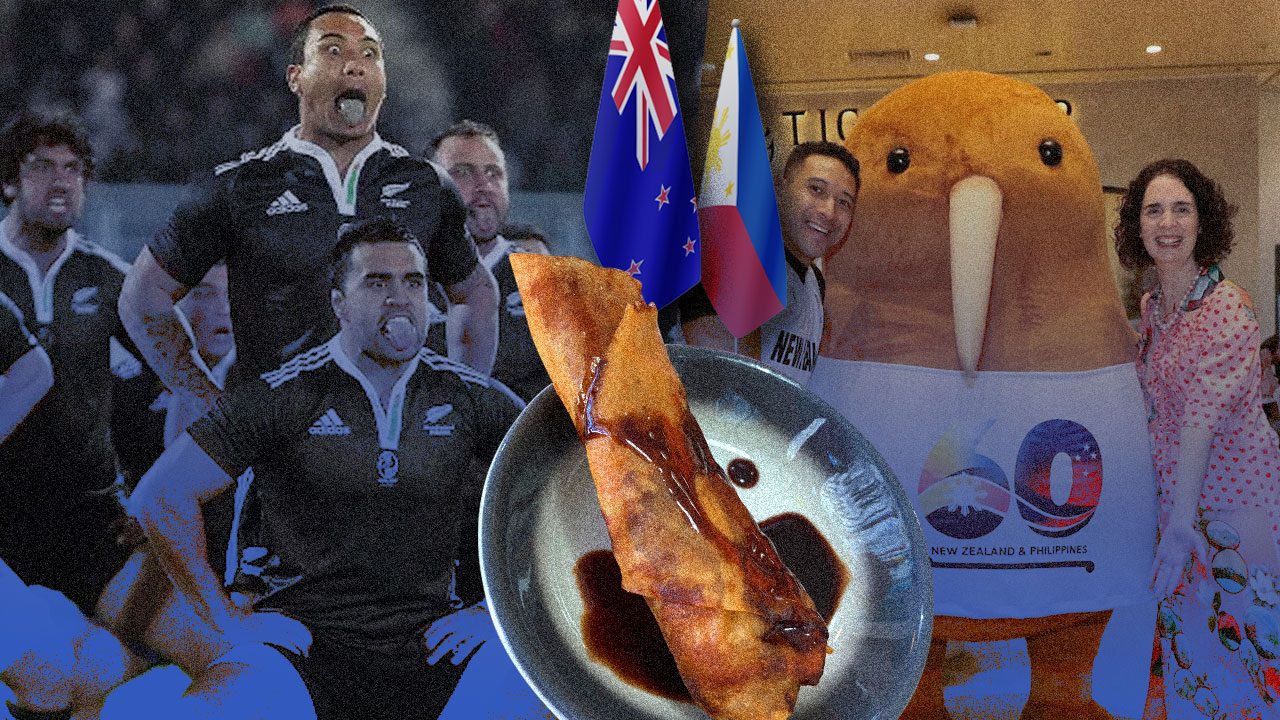
[Good Business] Haka, turon, and 60 years: NZ envoy on the future of ties with PH
Full Article
Original Source
Read the full article at Rappler →KhanList aggregates and links to publicly available news content. We do not host full articles from third-party sources. Always verify important information with original sources.