
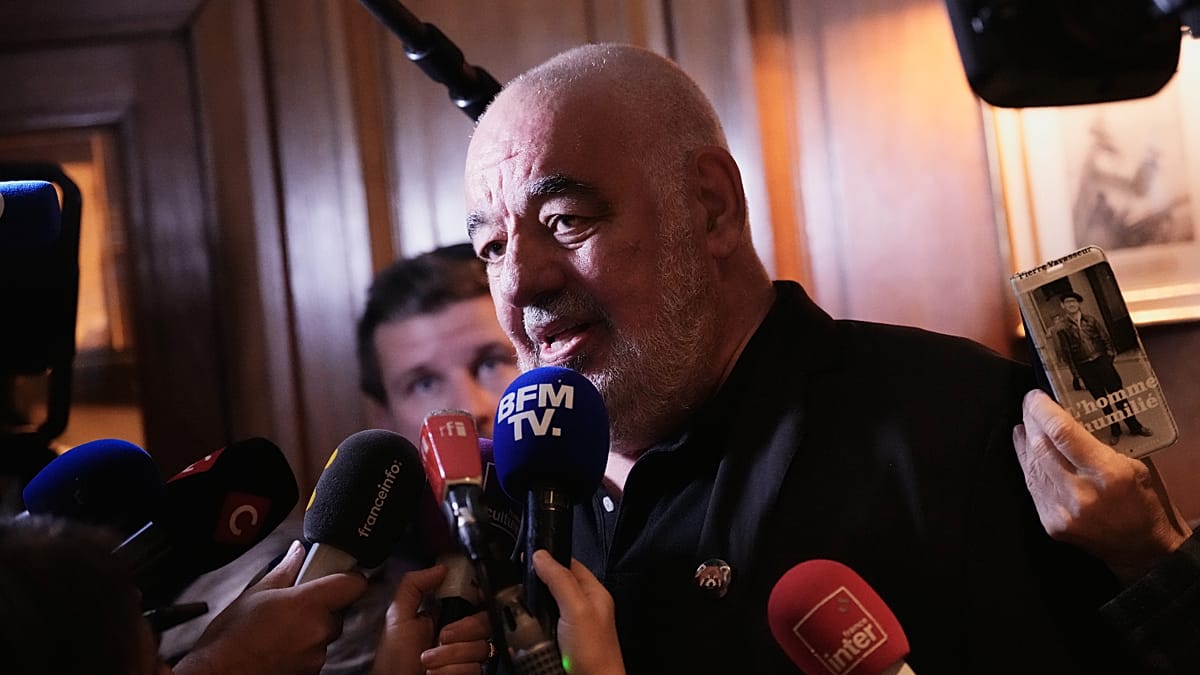
Published on 4 November 2026 - 16:59 GMT+1 As the Thélyson Orélien case, in which he is accused of having used AI for his novel ''C'était ça ou mourir'', shakes the literary world, the Goncourt Prize winner admitted on France Inter that he had turned to artificial intelligence "three times" while writing his book. Enough to reignite the debate on AI? ADVERTISEMENT ADVERTISEMENT Philippe Jaenada said he first used it to slip in a sentence written by ChatGPT, in order to "play with the reader". He only revealed this sentence to the Goncourt jurors on Tuesday. "If it comes out, I know who it will come from", he joked. The AI was also used "to make fun a bit of ChatGPT, which gives completely absurd answers about a technical piece of data", he added, without giving further details. The 62-year-old novelist, a specialist in unsolved criminal cases, said he had also used this technology for technical research: "I think we cannot push AI away, we cannot act as if it did not exist. We have to use it, we have to acknowledge it, we have to tame it and not let ourselves be replaced. It has to be useful." "Does no one know how to write alone?" These comments were immediately picked up on social media. While some believe that AI "is going to become unavoidable (...) like a spellchecker today", others express their disappointment. "I want to read authors who make the effort and take the time to create by themselves, with the strength of their heart, their guts and their brain", laments one fan on X. Another internet user wonders: "Does no one know how to write alone in this 2026 literary season or what, and OK, for 'playing with the readers', but what does that have to do with the novel?" Philippe Jaenada succeeds Laurent Mauvignier, winner of the 2025 Goncourt Prize. He was honoured for his novel ''L'Inconnue du quai de Javel'', which investigates the unsolved murder of a young woman in Paris in the late 1940s. With this new book, the writer continues in the intimate crime vein that has helped him win a loyal readership after "Sulak" (2013), "La Petite Femelle" (2015) and "La Serpe" (2017). Presented as one of the favourites only a few weeks ago, Thélyson Orélien's novel was removed from the second Goncourt shortlist and excluded from other literary prizes because of suspicions of AI use, on top of accusations of plagiarism. His historic historic publishing house, Éditions du Boréal, based in Montreal, has officially ended its collaboration with the writer and announced that his book will not be reprinted.
Goncourt 2026 winner Philippe Jaenada admits using AI in novel, sparking AI debate in literature
Full Article
Original Source
Read the full article at Euronews →KhanList aggregates and links to publicly available news content. We do not host full articles from third-party sources. Always verify important information with original sources.