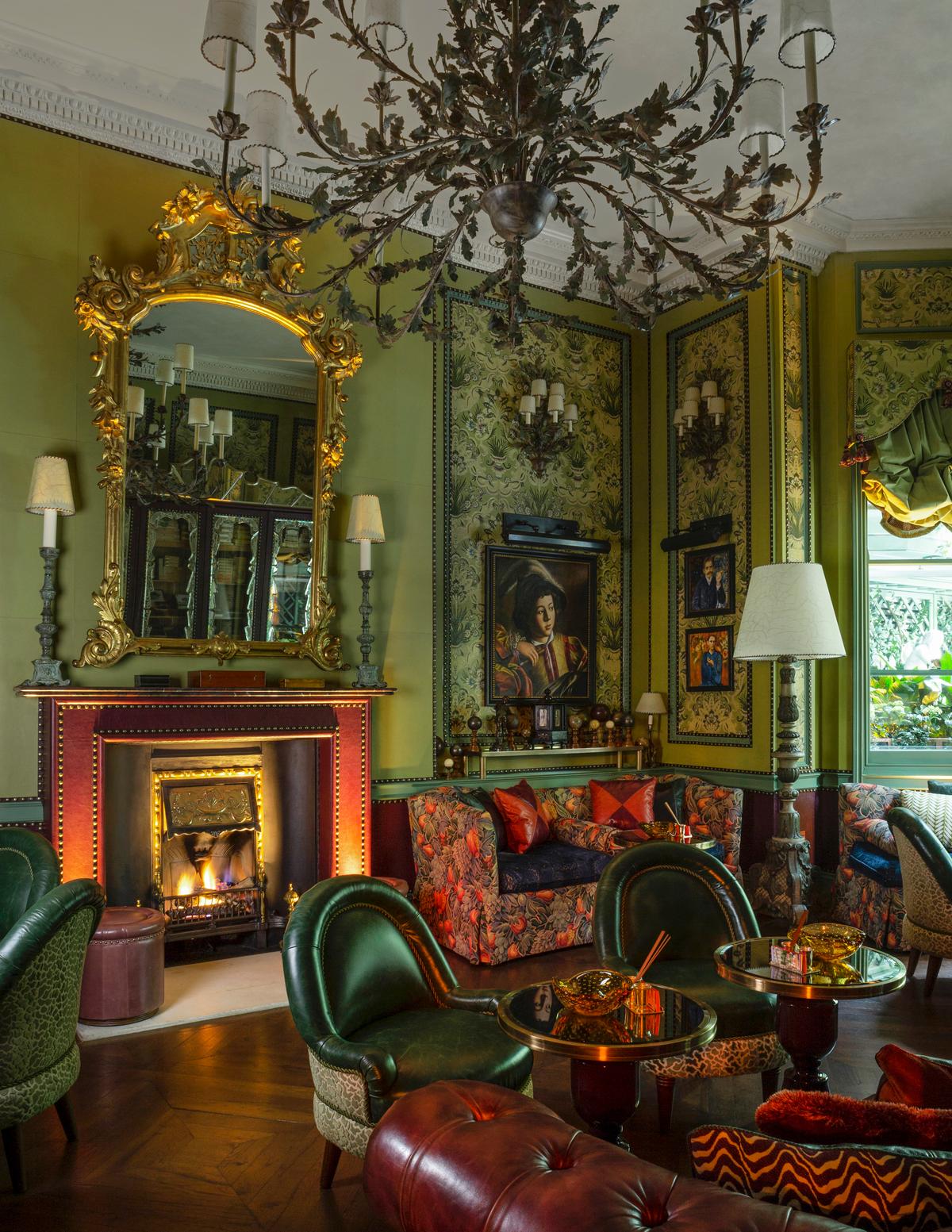
Is London’s private members’ club scene enjoying a golden era the likes of which it has not witnessed since the Reform, the Athenaeum and the Army & Navy sprang up on Pall Mall two centuries ago? Or does an extraordinary explosion of recent openings point to an unsustainable bubble — with too many clubs chasing not enough members — that will inevitably end with the pain of closures and consolidation? It is a question that haunts London’s clubland this summer as it braces for the imminent launch of the biggest and most ambitious private members’ social club ever seen in the capital. The Pembroke, a vast seven-storey behemoth of a Victorian building on Belgravia’s Grosvenor Place close to the Peninsula hotel, is getting ready for lift-off after an investment of more than £100 million. Annabel’s private members’ clubAnnabel’s“I just wasn’t sure if they understood what they are taking on,” said one source who was involved at an early stage in the creation of what is being dubbed London’s first super-members’ club, but who decided not to continue the connection. The fears come amid reports that lawyers have advised non-doms who are quitting Britain to avoid paying higher tax rates that they should tear up their memberships of clubs such as Annabel’s, Soho House or 5 Hertford Street as they could be seen by HMRC as evidence of continued close links to the UK. Guidance from HMRC for its Statutory Residence Test lists “membership of clubs, for example, sports, health or social clubs” as potential evidence that someone is still resident for tax purposes in the UK. “There is just too much club capacity in London”As a result some clubs have reportedly seen a rash of resignations just as new venues are coming on stream. As one rival operator put it of the Pembroke’s launch: “There is just too much club capacity in London now, it will end in tears.” If that is true, the memo has not reached the owners of the Pembroke or the small army of builders, decorators and designers putting the finishing touches to the hugely ambitious project. Nor indeed to the teams behind a raft of other clubs that have recently opened or are in the pipeline in London. They include the Leconfield, an exclusive Mayfair business networking club planned for a former MI5 building founded by property tycoon Robert Tchenguiz and backed by former prime minister Liz Truss. Founding life memberships cost an extraordinary £500,000. “The problem with membership fees at that level is you will be surrounded by people you really don’t want to spend time with,” the operator of one more modestly priced establishment observed.Read MoreOther notable new arrivals are 40 Duke, the 25,000 sq ft private members’ enclave at Selfridges reserved for its very best shoppers; Maslow’s Kensington, a new 30,000 sq ft “wellbeing and working” members’ club from the team behind Mortimer House, which opened just last week; the four-storey NEXUS in Kensington; and Tramp Health, the new and unlikely Grosvenor Square-based wellness sister club of the notoriously hedonistic nightspot revived by Italian entrepreneur Luca Maggiora. Nexus club in KensingtonNexusRemarkably, despite the boom, there have been relatively few closures. Covent Garden’s the Hospital Club, backed by billionaire Microsoft co-founder Paul Allen and Eurythmics musician and producer Dave Stewart, was a rare high-profile exception to the rule. It fell by the wayside during the pandemic in June 2020. By most estimates there are between 130 and 140 private members’ clubs in London today, far more than in any other city. According to one industry insider, as many as “eight or nine” potential new openings are currently in the early planning stage. With average membership likely to be about the 3,000 mark — although many clubs are coy about that sort of detail — that suggests there could be more than 400,000 people paying fees to London clubs every month. Even allowing for the fact that some will be promiscuous multi-club members, the numbers are astonishing. So what is driving the trend? Some commentators argue that in a shallow social media world the appeal of real connections has grown. Particularly in a cossetted “third space” away from the pressures of work and home. Ross Shohan, the restaurateur behind opulent Mayfair destination Lilibet’s, said: “More and more people are looking for ways to achieve a status symbol. Being a member of the new, the hot, the hard-to-get-into only adds to the ways they can try to separate themselves and be part of a ‘like-minded’ crowd.” London is the private members’ club capital of the worldThe private club was invented in London and it has thrived in three distinct waves: the classic Pall Mall gentlemen’s club of the 19th century; the Soho House-inspired lifestyle clubs of the 1990s and 2000s; and today’s wellness and specialist interest clubs.Even New York, the closest rival in the field, has only an estimated 35 to 40 clubs, with many of the more recent arrivals spin-offs from London based originals. The British invasion includes Manhattan’s three Soho House outposts and The Ned NoMad. Club entrepreneur Robin Birley, who owns 5 Hertford Street and Oswald’s in Mayfair, has now opened Maxime’s in the former Westbury Hotel on the Upper East Side. Even Annabel’s is reportedly eyeing up a Manhattan outpost, in the Meatpacking District. Scout Willis and her mother Demi Moore at 5 Hertford street in LondonWireImage for Charles FinchThe private members’ club is a concept London has exported to all corners of the world, from the sports-focused Gezira Club in Cairo to Australia’s elite Melbourne Club, founded in 1838, and Club Unión in Panama City. All can trace their ancestry to what is universally acknowledged as the first of the genre, White’s on St James’s Street, founded in 1693. But can London support yet another huge private members’ destination with an entry level annual fee for over 30s starting at £2,750 — plus a £1,000 joining fee — at a time when the capital is suffering an apparent outflow of potential members? Some in the industry believe that with deep pockets of the Oman Investment Authority behind it the Pembroke can thrive, but only if given time to establish itself. “I know of several upscale clubs in London that still have long waiting lists”Luxury hospitality consultant Jamie Caring said: “Anecdotally I know of some wealthy people who have left the country but not given up their London club memberships. Hopefully some of those people might return when we have got a different government, different tax regulation. “I hope that the Pembroke is successful. I know of several upscale clubs in London that still have long waiting lists so maybe those people will consider it. Some clubs are getting a bit crowded so if there is a quieter club opening in Belgravia, who knows, you might give it a try. I’ll be fascinated to see how it goes.” However, he warned the club had yet to demonstrate it provides a USP that will give it the clear identity it will need to build a community in the same way that 67 Pall Mall has drawn in wine lovers or the Groucho has concentrated on the arts and media scene. George Michael and Liza Minnelli at the Groucho Club in 1990SuppliedHe said the Belgravia location could also score against it. “Belgravia can be very sleepy, there’s not much going on immediately nearby. The best of clubs flourish in neighbourhoods that are very vibrant, in bustling locations but can act as a bit of an escape from the craziness.” Caring also pointed out that the epicentre of the club scene has shifted in recent years with wellness-focused venues that also served as social venues now hitting the sweet spot. “They have committed the cardinal sin of obsessing too much on the facilities”He said “I know of six or seven fairly ambitious wellness clubs in the pipeline that have not come to market yet.” But one competitor is sceptical that the operators of the Pembroke have yet found the magic secret sauce. He told the Standard: “They have committed the cardinal sin of obsessing too much on the facilities, rather than the people. You can’t build a community that way, and the best clubs are all about community.” The club’s launch marks the completion of a gruelling seven-year journey. Of the £100 million-plus bill, roughly half went on buying the previously sadly neglected but undeniably grand former residence of Liberal prime minister Sir Henry Campbell-Bannerman, and half on transforming it into a new sybaritic temple for the capital. About 250 newly recruited staff — chosen from more than 3,000 applicants — are being trained at the Grade II listed building in readiness for the first test events for founder members this month. The huge club is laid out so that you arrive on the ground floor in the morning for calmness and coffee and work your way up as the day goes on and gets more energetic. A gold rush of openingsJulian Hogan, membership director, says visiting the Pembroke will be like “coming to your dotty auntie’s Belgravia townhouse while you’ve got the run of the place when she’s away travelling”. “We really think it will breathe life back into London,” he adds. “We see it as a London club for Londoners. When most people think of a private members’ club they think of Mayfair but we’re trying to move the needle. It’s an emblematic space in an emblematic area and we want to do it justice.” The Pembroke plans on treating its members to a dedicated ‘butter sommelier’ The PembrokeThe project is being led by 48-year-old Harvard Business School alumnus Will Woodhams. He previously ran upmarket bookies Fitzdares, which also (natch) operates its own sports-focused private members’ clubs in Mayfair and the Cotswolds. Woodhams describes the recent rash of openings as “a bit of gold rush” often targetting the Dubai crowd and believes the new club will stand out. Despite the fears about over supply Woodhams says there have already been “thousands” of membership applications, “much more than expected”. Time will tell whether the Pembroke establishes itself alongside the grand old establishments of Pall Mall and St James’s. But to know that for sure we will have to wait 200 years.
Golden era or overcapacity: Why London's private members' club boom might end in bust
Full Article
📰 Original Source
Read full article at Standard →KhanList aggregates and links to publicly available news content. We do not host full articles from third-party sources. Always verify important information with original sources.