
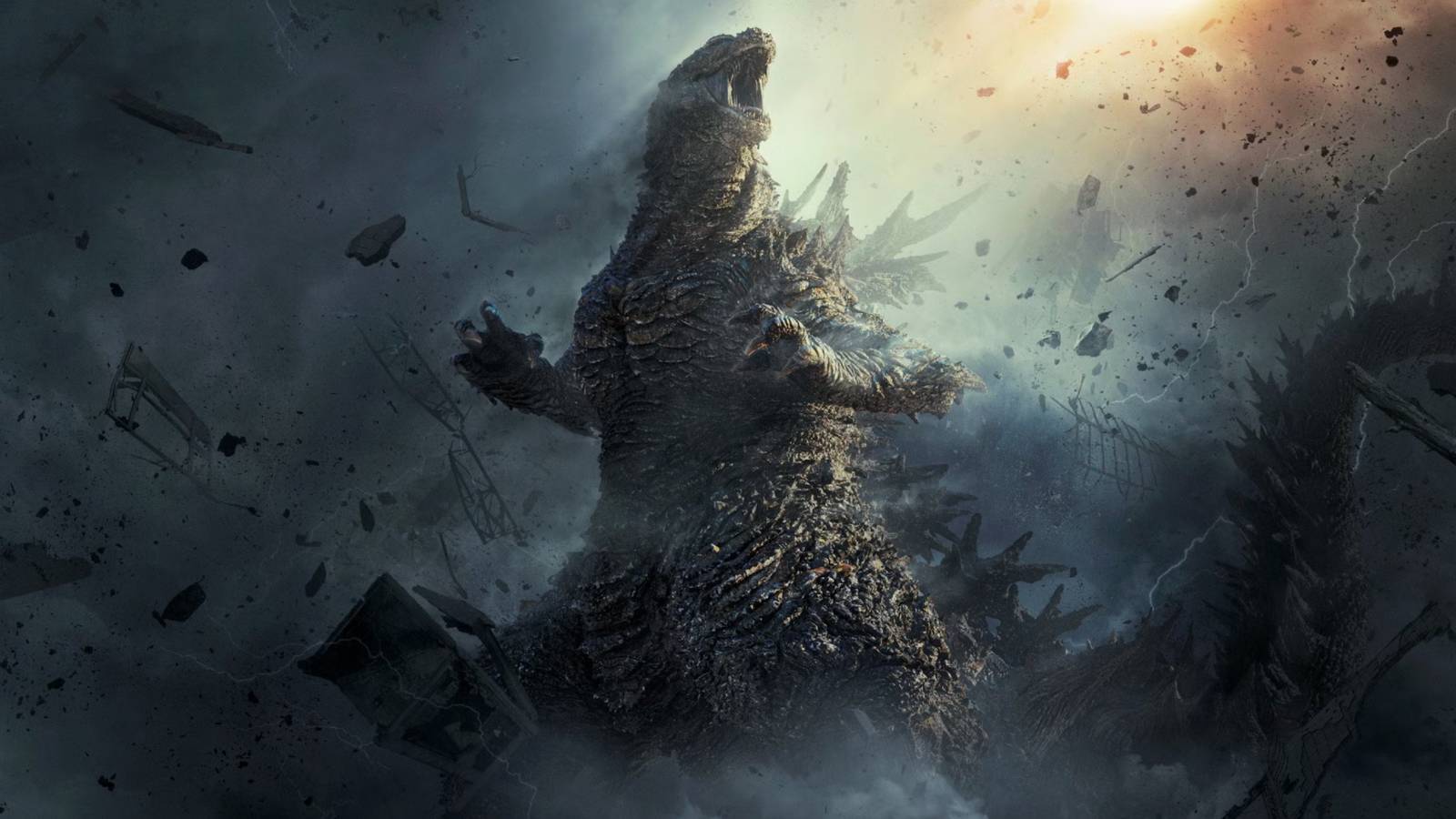
Published Nov 5, 2026, 6:30 PM EST Brandon Zachary is a Lead Writer for Screen Rant's New Movie Team. He also writes or has written for Comicbook.com, CBR, That Hashtag Show, Just Watch, and TVBrittanyF. Brandon is an Emerging Screenwriters Semi-Finalist, co-writer of a Screencraft Quarter-Finalist, a seasoned on-screen interviewer, and a MASSIVE nerd. You can reach him at bs.zachary@gmail.com The following contains spoilers for Godzilla Minus ZeroGodzilla Minus Zero builds off the history of the franchise and sets up a thematically rich direction for any prospective sequels. Building off the events of Godzilla Minus One, the period-piece setting allows the filmmakers to directly reflect the societal fallout from the end of World War II through a battle between Godzilla and the alien entity dubbed Ghidorah. The Kaiju battle is the bulk of the film's latter half, with the humans doing their best to tip the battle in Godzilla's favor and even giving the monstrous creature an edge it takes advantage of to assert itself as King of the Monsters. However, that doesn't mean the danger posed by Godzilla has been resolved. Paying off the sequel's thematic arc of exploring the cycle of violence that causes warfare and bloodshed, Godzilla Minus Zero's climax leaves the door open for a larger plot that follows governments and militaries as they try to turn creatures like Godzilla into weapons. It's a compelling ending that never loses sight of what makes the film so thematically rich. Godzilla Minus Zero Sets Up A Very Different World For The Kaiju Godzilla Minus Zero closes out with the titular Kaiju as the undisputed king of the monsters, but with a very different type of target on his back, courtesy of the United States military. Initially, the battle between Godzilla and Ghidorah is meant to weaken the victor enough so that the American and Japanese forces could sweep in and take them down once and for all. However, the American soldiers back off, implicitly revealing that the military wants to weaponize Murakami's Resonance Wave generator. This is a pointed thematic direction for the film, given Murakami's underlying subplot about wanting to do the same thing but as a means of getting revenge on the United States for the nuclear bombs that hit Hiroshima and Nagasaki. The film ends with Godzilla making its way back to the ocean, firmly establishing itself as an engine of destruction on a global scale. The idea that governments and militaries would immediately try to weaponize them presents this world with a new version of the Cold War that could heat up very quickly. It's a grim evolution of the destructive potential that wartime America exhibited when it bombed Japan. While Murakami destroys his invention and Noriko flees before she can be taken into custody, this lays the groundwork for future efforts to use Godzilla (or other creatures like him) as the bedrock for a new generation of weapons of mass destruction. It's a clever way to evolve the setting and set up other creatures to be brought into this continuity, and it pays off the movie's themes about the cycle of violence Why Noriko, Shikishima, And Akiko Go On The Run In Godzilla Minus Zero’s Ending Shikishima speaks for the film's themes throughout the movie, but never more pointedly when he refuses to let Noriko be made into a weapon. Still reeling from a survivor's guilt that only grows across the course of the film, Shikishima underscores the movie's perspective on how the creation of new weapons, even in pursuit of good intentions, can only lead to more death. Noriko's status as the only survivor of the G-Cell infection from Godzilla Minus One means she's the one person capable of using the Resonance Wave generator to connect with (and effectively summon) Godzilla. Although Noda promises to let her be used as a tool for destruction, both Murakami and the US government think differently. While Murakami changes his mind and even helps them escape, the US military will likely keep looking for the pair so that they can use Noriko as a means of causing massive destruction with Godzilla. This is why they go on the run, initially even planning to leave Akiko at the orphanage out of fear for her life with them on the move. Instead, Akiko's dogged refusal to let them leave leads to them all heading off into an uncertain future as a family. It's the big payoff of the film's emotional center, highlighting the bonds that endure in the face of death and destruction. It's also a good way to set up a more active adventure next time around, as a prospective sequel could follow the family on the move. Godzilla Minus Zero’s Hiroshima Subplot Reinforces The Franchise’s Original Message One of the biggest thematic throughlines of the film is the shadow of the atomic bomb. Murakami's family was killed in Hiroshima, leaving him reeling from a grief and fury that almost leads him to stage a calamitous rebuttal with Godzilla. It's the pursuit of an absolute power at the moral cost of countless lives that were and could have been. It all makes Godzilla and the efforts to weaponize him an apt metaphor for the efforts to build upon the destructive power of the atomic bomb. Whether driven by national ambition or spiteful rage, the desire to have the biggest weapon just raises the risk that more innocent people will be caught in the crosshairs. There's a reason the film underscores the value of every person and is horrified at every death. It's a key element of the DNA of the franchise, going all the way back to 1954's Godzilla. Famously, Godzilla was designed as a thematic reflection of the destructive power and mortal cost of the nuclear bomb. This makes its direct parallelism to Hiroshima, particularly as a movie openly reeling from America's actions, feel like the movie's most powerful political point. As Nado pleads with Murakami before the final mission, it's on them to end the cycle of violence. While he could get revenge by bringing Godzilla to New York City, he would only be killing countless more and prompting more revenge. There's no way to escape the grief they suffer from but it's still on them to recognize the pattern and break it. The True Meaning Of Godzilla Minus Zero Godzilla Minus Zero builds on the survivor's guilt that pervaded the first film and takes it even further by highlighting the responsibility that the survivors take on in the world left behind. Much of the movie is focused on people reeling from trauma, either their experiences during the war or in the aftermath of Godzilla's last attack. The heroes of the film are people like Shikishima, Noriko, and Nado, who recognize the price these kinds of events incur and refuse to let it be used again. They are traumatized, but focused on helping others and keeping that same pain from befalling others. That trauma can also spur on grimmer thoughts, like with Murakami, but it's possible to move beyond them. In fact, humanity must do so if it wants to thrive. Godzilla Minus Zero doesn't hold back with its criticism of militarization in the nuclear age, the constant escalating and evolving danger represented by the ever-adaptable Godzilla and Ghidorah. The ending of Godzilla Minus Zero, with the survivors in Japan refusing to let the rest of the world suffer the same things they experienced, takes on a greater meaning as a result. Godzilla Minus Zero Release Date November 6, 2026 Runtime 135 minutes Director Takashi Yamazaki Writers Takashi Yamazaki Cast Ryunosuke Kamiki Koichi Shikishima Minami Hamabe Noriko Oishi Min Tanaka Kanji Murakami Hidetaka Yoshioka Kenji Noda
Godzilla Minus Zero Ending Explained: Who Becomes King Of The Monsters & How It Sets Up A Sequel
Full Article
Original Source
Read the full article at Screenrant →KhanList aggregates and links to publicly available news content. We do not host full articles from third-party sources. Always verify important information with original sources.