
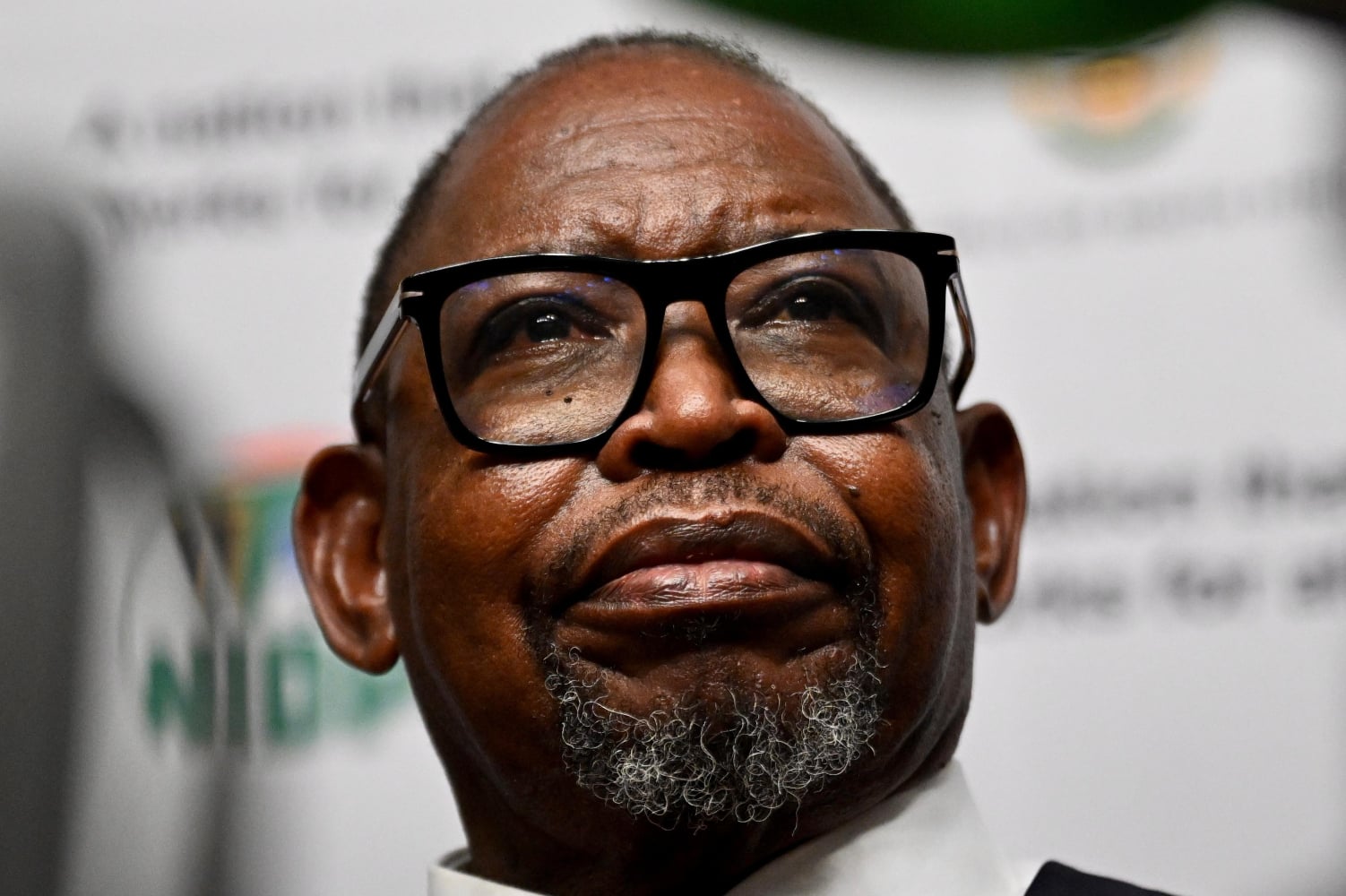
Finance minister Enoch Godongwana confirmed billions in additional funding to deal with the gender-based violence and femicide crisis. National Treasury’s response to gender-based violence and femicide (GBVF) will come in the form of funding for more sexual offences courts and an increase in care centres. At least R4 billion will be allocated to entities dealing with the causes and consequences of GBVF, with the cash injection doubling as job creation. Minister of Finance Enoch Godongwana announced the GBVF interventions while presenting his 2026 Medium-Term Budget Policy statement on Wednesday. The additional funding for GBVF, and the other financial adjustments made by Godongwana, were made possible through a tightening of administrative belts. “Targeted and responsible savings exploit the trade-offs we are making in improving the quality of spending and funding pressures. “We are phasing out programmes that are no longer fit for purpose. We are also restructuring underperforming and inefficient programmes, and reducing administrative inefficiencies and fraud in programmes,” Godongwana told the National Assembly. ‘No reason for complacency’ The minister said he was delivering on instructions from the executive and responding to the sentiment expressed by the country as a whole. “Mr President, in September you announced decisive measures to address crime and violence against women. “We are making additional resources available to implement these measures, but this progress is no reason for complacency,” stated Godongwana. The minister confirmed that R3.8 billion would be made available to employ 3 500 social workers to “strengthen prevention” of GBVF attacks. Forensic and investigative capacity will be bolstered by the injection of R186 million, while R157 million would be given to the Department of Women, Youth and Persons with Disabilities to improve “oversight of government’s response to GBVF”. Godongwana said the number of specialised sexual offences courts would be increased from 55 to 101, with Thuthuzela Care Centres increasing from 72 to 80 – although those numbers are targets for 2029. Over 18 million grant recipients As well as support for those vulnerable to GBVF, Godongwana stated that social expenditure remained a key feature of government spending. “The fiscal space created through disciplined budgeting allows us to protect frontline services, preserve the jobs of teachers, doctors and nurses, while protecting the social wage for the most vulnerable,” said the minister. He confirmed that health, education, shelter, and social development would account for 60% of non-interest expenditure. This included free basic electricity, water, sanitation and waste management to 11 million poor households, and the funding of subsidised education and nutrition for 77% of school children. Improving prenatal care and the first three years of a child’s life through anti-stunting and malnutrition programmes will also receive an extra R1.6 billion. “The budget also funds a comprehensive social safety net of old-age, disability and child support, and other social grants to 18.1 million beneficiaries,” said Godongwana. ‘Bounce back better and faster’ Treasury made space for the reforms by identifying R38 billion for reprioritisation across the 2027 medium term, and R12 billion in the 2026 budget. Undisclosed “low-priority programmes”, duplicated functions and limiting administrative inefficiencies accounted for R11 billion of that amount. Reducing social grant fraud freed up R13 billion, while R5 billion was sourced via public entity surpluses. A further R7.8 billion was identified in the human settlements development grant, where “programme inefficiencies and rent seeking” were rife. “Despite global volatility, South Africa is weathering the storm much better than its peers because we have been able to consistently take hard decisions over the last five years that have built our fiscal buffers and fortified our resilience. “We are able to bounce back better and faster,” Godongwana concluded.
Godongwana on GBVF: Billions for social workers, courts and care centres
Full Article
Original Source
Read the full article at Citizen →KhanList aggregates and links to publicly available news content. We do not host full articles from third-party sources. Always verify important information with original sources.