
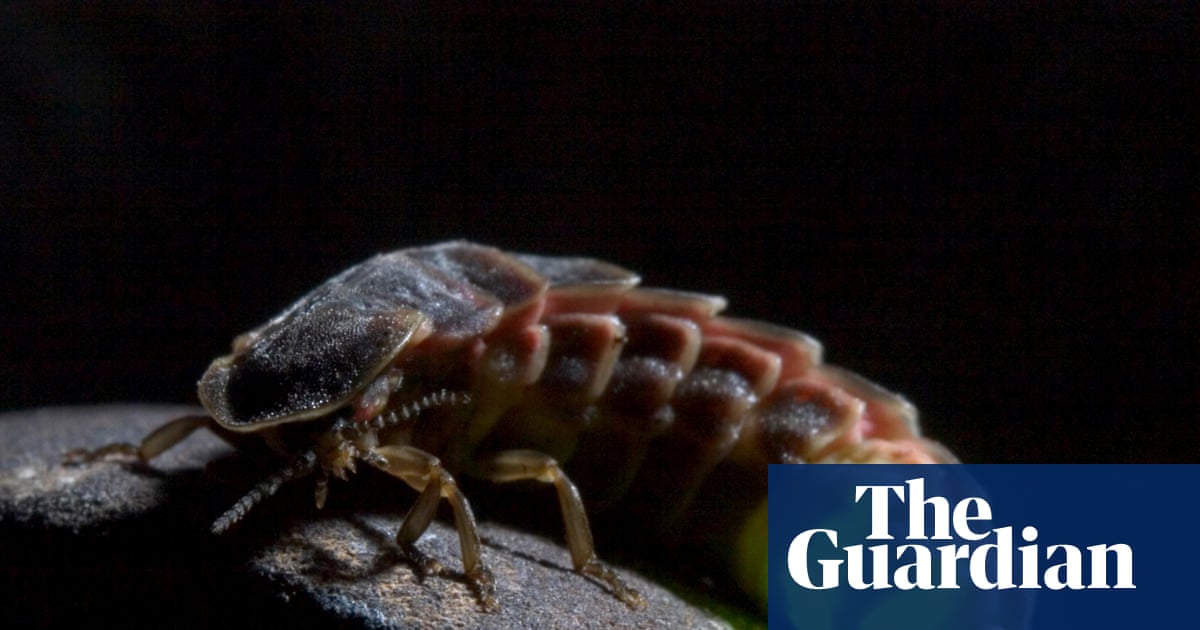
The bioluminescent beams of “fairy folk” are shining again from a nature reserve in North Yorkshire for the first time in a century after the successful reintroduction of endangered glowworms.Female glowworms were spotted over multiple weeks at Nosterfield nature reserve this summer following a no-frills, almost zero-budget reintroduction of the much-loved invertebrates, which have vanished from the British countryside in recent decades and are notoriously difficult to re-establish.The reintroduction by volunteer “glow-getters” and the independent ecologist Pete Cooper involved the authorised collecting of a small number of glowworms from a local donor site, breeding them in captivity and rearing hundreds of snail-eating glowworm larvae in a garden shed in Bristol.Pete Cooper counting glowworm larvae before their release. Photograph: Pete CooperLarvae were transported north and first released at Nosterfield in 2024 but because glowworms take two years to reach the adult stage of their life cycle – where the flightless female glows to attract feeble-flying, beamless males – it was not until this summer that the first signs of success emerged.Volunteers for the Lower Ure Conservation Trust counted up to 12 glowing females over successive weeks this summer, which was a “huge relief” for Cooper, who has spent six years mastering the complexities of breeding and releasing glowworms.“It’s a really great first indicator of initial success,” said Cooper, who gave his time to the project for free. “We know that glowworms can live out their full life cycle at this site – there is great food and plenty of mating opportunity, and it makes all that time and effort worthwhile.”Cooper is developing formal standards and guidance for glowworm breeding and release, as well as appropriate habitat management to ensure sites are suitable for glowworms to thrive.A profusion of glowworms in 1909 were hailed at Nosterfield by the writer Edmund Bogg as “wont to hang out their fieldstar lamps … as if lit by the hands of fairy folk”.But here, as elsewhere across Britain, the much-celebrated beetles and their “love torches” – as Samuel Taylor Coleridge put it – have been extinguished because of more intensive farming, development, electric lights and the cult of tidiness which has removed the rough and varied grassland they require.Cooper releasing one-month old glowworm larvae at Nosterfield in 2024. Photograph: Amy-Jane BeerIn Nosterfield, quarrying led to the glowworm’s disappearance but, since 1997, when the Lower Ure Conservation Trust bought its first 72 acres of disused quarry, swaths of land have gradually returned to species-rich wetland and grassland on magnesian limestone. The charity will soon be managing nearly 600 acres of former quarry for wildlife, with booming bitterns and marsh harriers now making their home on the site.Simon Warwick, the director of the conservation trust, said the project was a credit to “the raw passion and enthusiasm” of Cooper and his willingness to freely volunteer his time, as well as the 80 volunteers at the nature reserve who had tweaked habitat management for the glowworms and monitored their emergence.skip past newsletter promotionafter newsletter promotionGlowworm larvae released at Nosterfield in September 2024. Photograph: Amy-Jane Beer“We are very fortunate to have a lot of really knowledgable volunteers alongside our brilliant staff who are managing the land that allows the glowworms to re-establish itself in this landscape after an absence of more than 100 years,” said Warwick. “They are incredibly rare in the region and I can’t tell you how excited the volunteers have been about it.”This year, helped by glow-getter volunteers at Westbury Wildlife Park Foundation, Cooper has bred another 1,900 glowworm larvae which will be released at Nosterfield later this year.According to Cooper, they will not be certain that the reserve has a self-sustaining population of glowworms until 2030, when the offspring of this year’s wild adult glowworms will reach maturity and shine their lights.‘As if lit by the hands of fairy folk’: a 19th-century illustration of glowworms. Photograph: 19th era 2/AlamyCeilidhs for wildlife organised by Cooper and friends have raised enough money to upgrade the breeding facilities at Westbury to ensure it is easier to captive-breed more glowworms, with growing interest from other conservation groups in glowworm translocations and reintroductions. The UK glowworm survey is also helping by collecting sightings of glowworms nationally to help conservationists assess where translocations would be helpful and where hidden populations of glowworms may still endure.“It will be wonderful to see this project grow bigger than me,” said Cooper.
Glowworms shine again in North Yorkshire after larvae reared in garden shed
Full Article
Original Source
Read the full article at Theguardian →KhanList aggregates and links to publicly available news content. We do not host full articles from third-party sources. Always verify important information with original sources.