
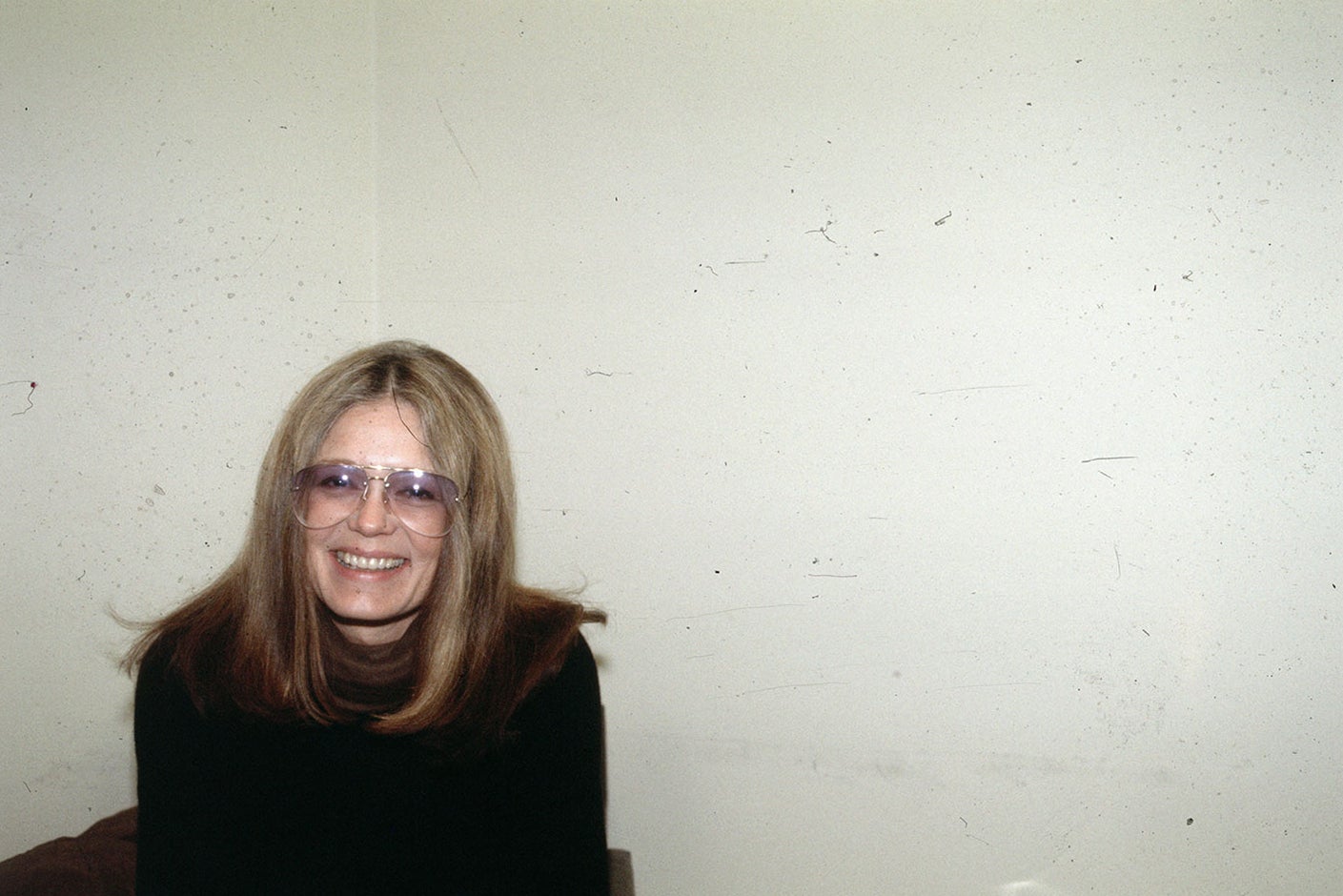
Books An Unexpected Life is all about the immortality of feminism. By Enter your email to receive alerts for this author. Sign in or create an account to better manage your email preferences. Unsubscribe from email alerts Are you sure you want to unsubscribe from email alerts for Scaachi Koul? Sept 22, 202611:46 AM Bettmann/Corbis/Getty Images All the women who raised me are dying. Catherine O’Hara and Dolly Parton both died this year, and as if that wasn’t bad enough, feminist activist Gloria Steinem died at the beginning of the month at 92. With them has gone a sense of joy, of purpose, great tomes of history. These deaths all feel so personal now, like we’re losing a generation of feminists at a time when we need every living one we can get. But at least they left behind records—albums and movies and books, something to cling to while the president considers whether to demolish the Kennedy Center. Today, just a few weeks after her death, Steinem has posthumously released her ninth book, An Unexpected Life: A Memoir. In another version of the world, she’s promoting it on Amy Poehler’s podcast or chopping it up with Oprah and we’re relieved to still live among feminist titans. In this reality, all we have is the record left behind. On the cover of the book is a photo of Steinem when she was younger, standing on a rooftop in New York in her trademark glasses and a trendy ’70s coat. Inside, a photo of her near the end of her life, sitting inside her Manhattan brownstone, poised and relaxed, posing like a glamorous oracle. This, the spectrum of her life, collapsed into 200 pages, urging the rest of us forward without her. An Unexpected Life is filled with lines that now, in Steinem’s death, feel prophetic. She dedicates the book to the late Wilma Mankiller, the first woman elected as principal chief of the Cherokee Nation. “Nothing can make up for her loss,” Steinem writes, “but I hope her spirit might be carried by these pages.” She writes about how proud she is that she has the means and ability to support herself if she lives to 100, “which I plan to do.” She marvels at the full life she had already had while also thinking about her future. “Being remembered with love,” Steinem writes, “is the best form of immortality.” It is all present tense, and it feels good to live in a world where we read Steinem as she is and not who she was. There are no women alive in America now who live unaffected by Gloria Steinem’s work. In the 50 years that she worked as a political and social activist and lived as a cultural iconoclast, Steinem was a part of more civil rights movements than one could easily count from memory. Naturally, her loss has hit hardest with American women, many of us still in grief over losing her not just as a person, but a symbol of the fight we’re still having against conservatism and male dominance. The best thing she could leave us is a little optimism for a future she won’t see, which it seems like An Unexpected Life was designed to do. “I count myself lucky that not only have I been free,” Steinem writes, “but I have seen so many other women who are, too.” Throughout her long life, Steinem wrote several books, a few memoirs, and gave plenty of interviews about her rich existence. An Unexpected Life reads, maybe presciently, as a nudge to younger generations to keep up the good fight, to notice the wins where they happen, and to not get discouraged. Things were, she keeps reminding us in this book, much, much worse. “Then being a ‘battered woman’ was just called ‘life,’ and the term domestic violence did not exist,” she writes. “Now we have languages, laws, and even shelters for women who have experienced domestic violence.” Even her personal wins are detailed, like how she realized in her college days that she had the right to get mad. “I discovered that a mood was a prerogative one could exercise from time to time, and no one would think worse of you,” she wrote. “I was delighted. I immediately began to have moods.” Still, some of the victories Steinem writes about can feel a little pitiful, namely in the aftermath of her death. “Then the most popular actor in America was John Wayne, a man whose attitude toward women was protective at best and dominating at worst,” Steinem writes in a section comparing how things have improved culturally for women. “Now topping the list are actors like Timothée Chalamet, a man whose style distinctly has great range.” Not that there’s anything particularly wrong with ballet-hater Chalamet, but he’s hardly the proto-feminist radical anti-capitalist voice the arts sorely need in the form of a straight white man. (On that note, anyone already unimpressed by Steinem’s support of neoliberal men won’t be thrilled by the few pages in the book where she compares Ronald Reagan unfavorably to Bill Clinton, who she says “brought his habit of empathy into political life.”) An Unexpected Life also offers several lists on how to be a good part of a movement, or leader in a movement. Advice varies from making sure that you’re not photographed alone so as not to become a part of a “distorted view” to suggesting you inquire about a bank’s lending policies before opening an account. Much of the book has to do with how feminism arose in early Indigenous communities, a reminder that our societal woes are all especially American, capitalistic, and recent. “For me, it’s been helpful to remember that patriarchy is very new in human history; it’s a system spread mostly by colonizers and their religions in the last 5 percent of human history,” Steinem writes. “Much of what we assume to be human nature, from selfishness and territoriality to male dominance, was not common during most of history.” But Steinem was still a celebrity, so there are mentions of celebrity interactions, like James Baldwin telling her, “There are no experts. … Nobody knows a damn bit more about anything than you do.” She writes about Hugh Hefner and how “I am glad to finally live in a world without him.” She writes passionately about hating Andy Warhol, calling him “a spectacular fake,” a funny thing to say about a guy who died 39 years ago. “It seems a low point of the art world that Andy Warhol’s work is considered valuable, while many people of much greater talent and brilliance still do not get support or recognition.” Who knows why Warhol in particular gets this sideswipe, but what a delight to read; there aren’t many people left who can hate on Warhol with one degree of separation. Slate receives a commission when you purchase items using the links on this page. Thank you for your support. And, like any good nonagenarian, Steinem ends the book with a reminder to listen to your mother. “Listening to elders is vital and can be infinitely rewarding,” she writes. “They are living, breathing, all-five-senses textbooks that can rocket us into the future with a speed and reach and wisdom we could never otherwise discover.” But it’s tough to read her book and not feel a pang of fear and pessimism, knowing that one of those breathing textbooks is gone now. When women like Steinem die, we lose a leader of an unwieldy movement that we still desperately need. We’re left here trying to do the work in her absence. The grief is hard to fight off, but the best way to read Steinem’s final words is the way she wanted you to: with hope for the future. It’s easy to feel like no progress has been made, that our wins have been too small to count. At the end of her life, Steinem made sure to register and record all the victories she helped ensure, and to point out that the work is still being done, and progress is still in motion. Death is sometimes a painful reminder of how much progress can be made in a lifetime. Steinem dedicated her life to making life better for women; she dedicated her death to making sure we never forgot what the fight was for in the first place. Books Celebrities Feminism History Women
Gloria Steinem’s Posthumous Memoir Is a Guide for a Future Without Her
Full Article
Original Source
Read the full article at Slate →KhanList aggregates and links to publicly available news content. We do not host full articles from third-party sources. Always verify important information with original sources.