
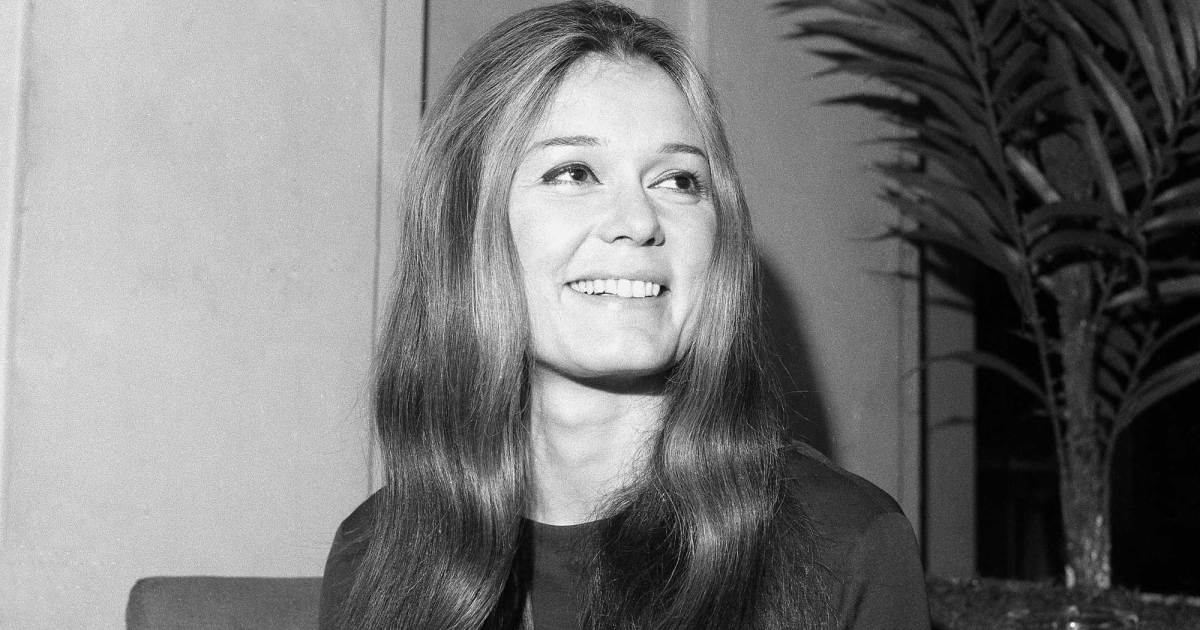
Gloria Steinem in New York on February 17, 1970Anthony Camerano/AP A version of the below article first appeared in David Corn’s newsletter, Our Land. The newsletter comes out twice a week (most of the time) and provides behind-the-scenes stories and articles about politics, media, and culture. Subscribing costs just $5 a month—but you can sign up for a free 30-day trial. What made Gloria Steinem so dangerous was that she was sassy, charismatic, fierce, funny, and attractive. She blew apart the right-wing trope that feminists were ugly, humorless, bitter man-haters. That’s been a major component of the conservative assault on women’s rights. In 1988, Rush Limbaugh included on his list of “undeniable truths” the assertion that “feminism was established so as to allow unattractive women easier access to the mainstream of society.” In 1992, Pat Robertson, the Christian right leader, derided the “feminist agenda” as “a socialist, anti-family political movement that encourages women to leave their husbands, kill their children, practice witchcraft, destroy capitalism, and become lesbians.” Twenty-nine years later, this sentiment was hiding not too deeply in JD Vance’s comment that the United States was run by “a bunch of childless cat ladies who are miserable at their own lives and the choices that they’ve made and so they want to make the rest of the country miserable, too.” She was vibrant, glamorous, and so damn smart. A skilled writer and activist, she brought wit and strategic savvy to the women’s movement. Yet no one could accuse Gloria, the pioneering feminist who died this week at the age of 92, of eschewing fun…and sex. She was vibrant, glamorous, and so damn smart. A skilled writer and activist, she brought wit and strategic savvy to the women’s movement. I knew her through her work with Voters for Choice, a political action committee, and the Women’s Media Center, which she founded with actor Jane Fonda and poet Robin Morgan in 2005 to increase the visibility of women in the media. Every encounter I had with her sparkled with energy. She had plenty of juice that she generously shared nonstop with those around her. Not surprisingly, she knew everyone and was an enthusiastic networker. Once I was backstage at a Madonna concert in Madison Square Garden, where Voters for Choice was holding a fundraising reception. Gloria was there. As was Pete Townshend of The Who. At one point, Gloria and Townshend engaged in a deep conversation that went on for a while. Afterward, I asked her what they had been discussing so intensely. She told me that they had been friends for years because Townshend and his bandmates had helped finance the first shelter in England for women escaping domestic violence. “C’mon,” she said. “Let me introduce you and make a connection.” In the past few days, there have been many accolades for Gloria. In a statement, Fonda noted: Gloria, in her graceful, kind, and deeply intelligent way, changed the world we live in. For decades, she trudged through every airport in the country, in sandals and a trench, carrying her own suitcase, packed with a few black clothes, hair curlers, and steam iron, in order to speak to women—at conferences, town halls, consciousness raising groups. No group was too small to deserve Gloria’s time. This is how she built the new women’s movement. And for a good part of those trips, she insisted she be joined by her friends Dorothy Pitman Hughes and, later, Florynce Kennedy, two prominent Black activists who helped show that this women’s movement addressed race as well as gender. She had a clever, often funny way to say just what was needed to surface feelings and ideas about where we belonged, what our inchoate yearnings meant, whether power was a word that women could and should embrace for ourselves, and how different power looked when held in men’s hands alone. She helped so many of us find our voices and the courage to stand up for ourselves and for other women…I believe that she lives on in the changed lives of many women who don’t consider themselves feminists or part of the women’s movement. I’ve met many such women who because of what Gloria said or wrote gained the courage to leave bad marriages, start their own businesses, persuade husbands to help with household chores. Julie Burton, the president and CEO of the Women’s Media Center, recalled: Gloria once wrote a letter to Supreme Court Justice Harry Blackmun, author of the Roe v. Wade decision, thanking him for saving more women’s lives than anyone in US history. We could say the same about Gloria’s impact on women’s lives, because for decades she was at the forefront of the struggle for political and social equality and justice for women. She used her voice and writing to raise visibility for women and the issues of our time. We came to take it for granted that she would always be where she was most needed—at the podium, on TV, on the plane, on the phone, or at the computer—to make the ideal of social justice a reality. Her phrases have become mottoes of our time. “What would happen, for instance,” she once wrote in Ms. magazine, “if suddenly, magically, men could menstruate and women could not?” I remember the first time Gloria wowed me. She was describing what I would call the Gloria Steinem role-reversal principle. This is a thought experiment: In any given situation or controversy, flip the genders of those involved and see what changes. Her most famous example of this was an essay titled “If Men Could Menstruate” that she wrote in 1978 for Ms. magazine, which she co-founded. Here’s a taste: What would happen, for instance, if suddenly, magically, men could menstruate and women could not? The answer is clear—menstruation would become an enviable, boast-worthy, masculine event: Men would brag about how long and how much. Boys would mark the onset of menses, that longed-for proof of manhood, with religious ritual and stag parties. Congress would fund a National Institute of Dysmenorrhea to help stamp out monthly discomforts. Sanitary supplies would be federally funded and free. (Of course, some men would still pay for the prestige of commercial brands such as John Wayne Tampons, Muhammad Ali’s Rope-a-dope Pads, Joe Namath Jock Shields—“For Those Light Bachelor Days,” and Robert “Baretta” Blake Maxi-Pads.) It goes on from there. Gloria would apply this switcheroo—which could also involve swapping race or political party—to news stories to determine if the coverage might be advancing or covering up a double standard. It’s a valuable device that I often call to mind. (Imagine if a female president fell asleep in the Oval Office.) Looking back at some of her work and writings, I came across an interview with Gloria that appeared in Mother Jones 31 years ago, when she turned 61. She offered her take on the effort to divide feminism into opposing camps. (She was opposed to that.) And she contemplated her decades as an activist. The piece included this exchange: At age 61, you’re still declaring yourself a radical and an activist. What are you up against as you grow older? “If we want a world in which you can tell jokes and get massages and have sex and dress however you fucking well please, then we have to create a form of activism that reflects that, and have fun while we’re doing it.“ In my case, and in the case of some other women, it takes a lot of years even to question your conditioning. There’s such a deep part of our conditioning that is to make nice. That has an upside, it makes me a peacemaker. But a major problem I see is that we are into this kind of inner-outer division, so that activism is perceived as an activity in which you kill yourself and burn out. There’s that joke, you know, that death is nature’s way of telling you to slow down. Well, burnout is a way of telling you that your form of activism was perhaps not very full circle. If we want a world in which you can tell jokes and get massages and have sex and dress however you fucking well please, then we have to create a form of activism that reflects that, and have fun while we’re doing it. Actually the women’s movement has been pretty good at that, but we constantly get sucked back towards the culture in order to prove Seriousness. So we have to be conscious of the fact that as Gandhi said, and Martin Luther King said, and Emma Goldman said, and everybody else in the world who has had this experience has concluded, it isn’t that the end justifies the means, it’s that the means are the ends. And if we can do that, you see, it makes for joy, and mind-expansion, and friendships, and jokes in the process. And that means we can go on forever. Gloria couldn’t go on forever, of course. We can hope her spirit does. When she turned 85, I was invited by the WMC to participate in an online tribute to her. I wrote: For years, what I most relished about Gloria (and envied her for) was her remarkable ability to deftly and elegantly reveal and dissect the destructive power imbalances of American life. Yet now as a father, I treasure Gloria for inspiring my two daughters and for showing them—and so many others across multiple generations—how one can be a great human being, a kickass woman, and a warrior for social justice over an entire lifetime. There’s no higher praise: She has taught us all. So many people will miss her dearly. And so many more will live better lives because of her without ever realizing what she did for them.
Gloria Steinem, a Dangerous Woman
Full Article
Original Source
Read the full article at Motherjones →KhanList aggregates and links to publicly available news content. We do not host full articles from third-party sources. Always verify important information with original sources.