
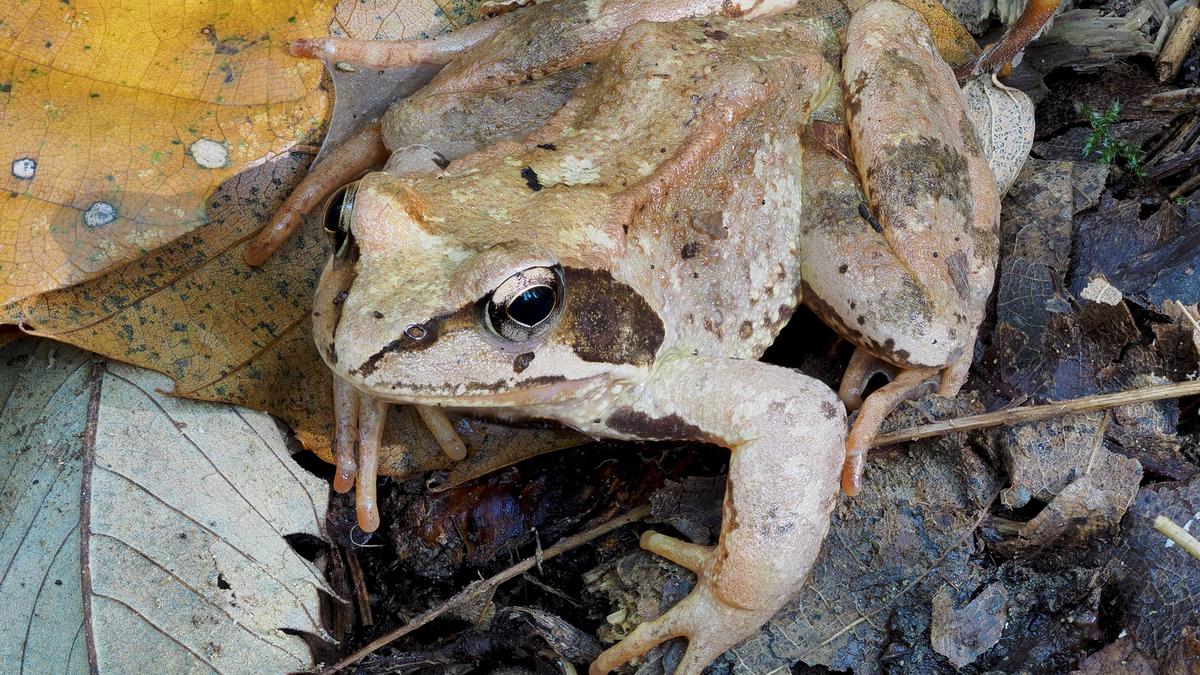
Some fish can switch sex more than once over a lifetime. In lizards, genetically male hatchlings can be born looking and functioning as females. In some frogs, genetically female individuals can develop into fertile males.This phenomenon is called sex reversal. It is well documented in the animal kingdom, from invertebrates to amphibians to birds, where an individual can begin life with one sex and later switch to another.But a warming planet is making these changes more frequent and potentially more consequential for animals. In a population skewed towards one sex, individuals may run out of mates to reproduce with, slowing population growth, reducing genetic diversity, and ultimately raising the risk of extinction.Agile frogsAround 40% of amphibian species face the risk of extinction, which makes them the most threatened vertebrates on the earth. As temperatures continue to climb, scientists are asking whether increased sex reversal could affect the long-term survival of amphibian populations.To answer this, a group of researchers turned to agile frogs in Hungary. They found that sex-reversed wild males sire fewer offspring — which are in turn more vulnerable to heat and infectious disease. These disadvantages could together speed up population declines as the planet keeps warming.The results were published in Science Advances on September 3.In agile frogs as in mammals, the sex at birth is determined by chromosomes. Two X chromosomes make a genetic female whereas an X and a Y make a genetic male. But excessive heat in the tadpole stage can override that genetic recipe and turn some genetically female tadpoles into physically normal and fertile male tadpoles.“Theoretical models suggest that this threat can be mitigated, up to a certain severity of climate change, for example XX males siring all-XX offspring,” said Veronika Bokony, the study’s lead author and researcher at the HUN-REN Centre for Agricultural Research. However, “this mitigating effect can be lost if sex-reversed individuals cannot participate in reproduction.”Chance of matingBokony et al. first looked at whether animals whose sex differs from their genetic sex reproduce just as successfully in the wild. They paired 20 sex-reversed males with 20 sex-concordant males, matched for body size and arrival time at the breeding ponds, two traits known to affect mating success. They let each male mate with a female.The team then tracked whether the female laid eggs, how long it took, and whether the eggs developed into tadpoles. The team found that sex-reversed males were just as capable of winning mates and fertilised eggs did develop into tadpoles. However, sex-reversed males did not have an equal chance at mating. About one-third of females paired with sex-reversed males laid only part of their eggs, called the split clutch strategy in which they saved the rest for a better mate.In an experimental set-up, females had no choice, so sex-reversed males could still coerce the female into mating and sire a clutch.“Had they been free in a real mating aggregation, this could have allowed the female to find another male who could replace the sex-reversed male by fighting,” Dr. Bokony said.Artificial heatwaveSo the researchers turned to breeding ponds in the wild. They sampled more than a hundred egg masses from 16 different populations and found that even though the sex-reversed male agile frogs made up roughly 20% of the wild populations, only 4% of egg clutches belonged to them.“This suggests that when the frogs mate freely, the sex-reversed individuals are not as successful at becoming sires as the sex-concordant males,” Dr. Bokony said.The few offspring they did sire were also not in the clear. As researchers tracked the development of lab-reared tadpoles, they found that 61% of the offspring of sex-reversed males underwent sex reversal, developing as males despite being genetically female. Only 17% of offspring of sex-concordant males did, however.“We were suspicious that sex reversal might have negative consequences on individual fitness and on population viability,” Dr. Bokony said.A warming climate is also amplifying the threat of infectious diseases. The pathogen ranavirus is of particular concern: in some instances, it has wiped out more than 90% of tadpoles in a single event.To understand how well these offspring could withstand such climate-driven stressors, researchers exposed eggs from sex-reversed and sex-concordant males to an artificial heat wave along with ranavirus. Under high temperatures, tadpoles of sex-reversed males carried higher viral loads.With lower paternity, higher rates of sex reversal in offspring, and greater disease susceptibility all being plausible outcomes, the team turned to computer models to test how these combined pressures could affect wild agile frog populations.Higher extinction risk“What happens in the laboratory and what occurs in the field are two different matters, and the strength of this study lies in the assessment of the impact of sex reversal in the wild,” University of Canberra professor Arthur Georges, who was not involved in the study, said.Their results showed small populations were especially vulnerable, since losing even a few breeding females could affect a population’s ability to reproduce.While some populations may already have begun declining, others could disappear within 60 to 70 years as heat-driven sex reversal pushed populations towards more males with fewer females to mate with.When the model factored in the mortality from ranavirus among the offspring of sex-reversed males, population decline began roughly 10 years earlier and extinction came about 9.5 years sooner.Without ranavirus, populations still declined about eight years earlier — but the extinction occurred only about two years earlier.“We, as scientists, underestimate the number of sex-reversed individuals in populations and species,” Dominique Potvin, associate professor at the University of the Sunshine Coast, Australia, said.She added that scientists need to know how the environment is affecting sex reversal and affecting the long-term survival of species to update their interpretations and management strategies for conservation.Rupsy Khurana is science communication and outreach lead at the National Centre for Biological Science, Bengaluru.
Global warming is turning frogs’ sex reversal into an extinction risk
Full Article
Original Source
Read the full article at Thehindu →KhanList aggregates and links to publicly available news content. We do not host full articles from third-party sources. Always verify important information with original sources.