
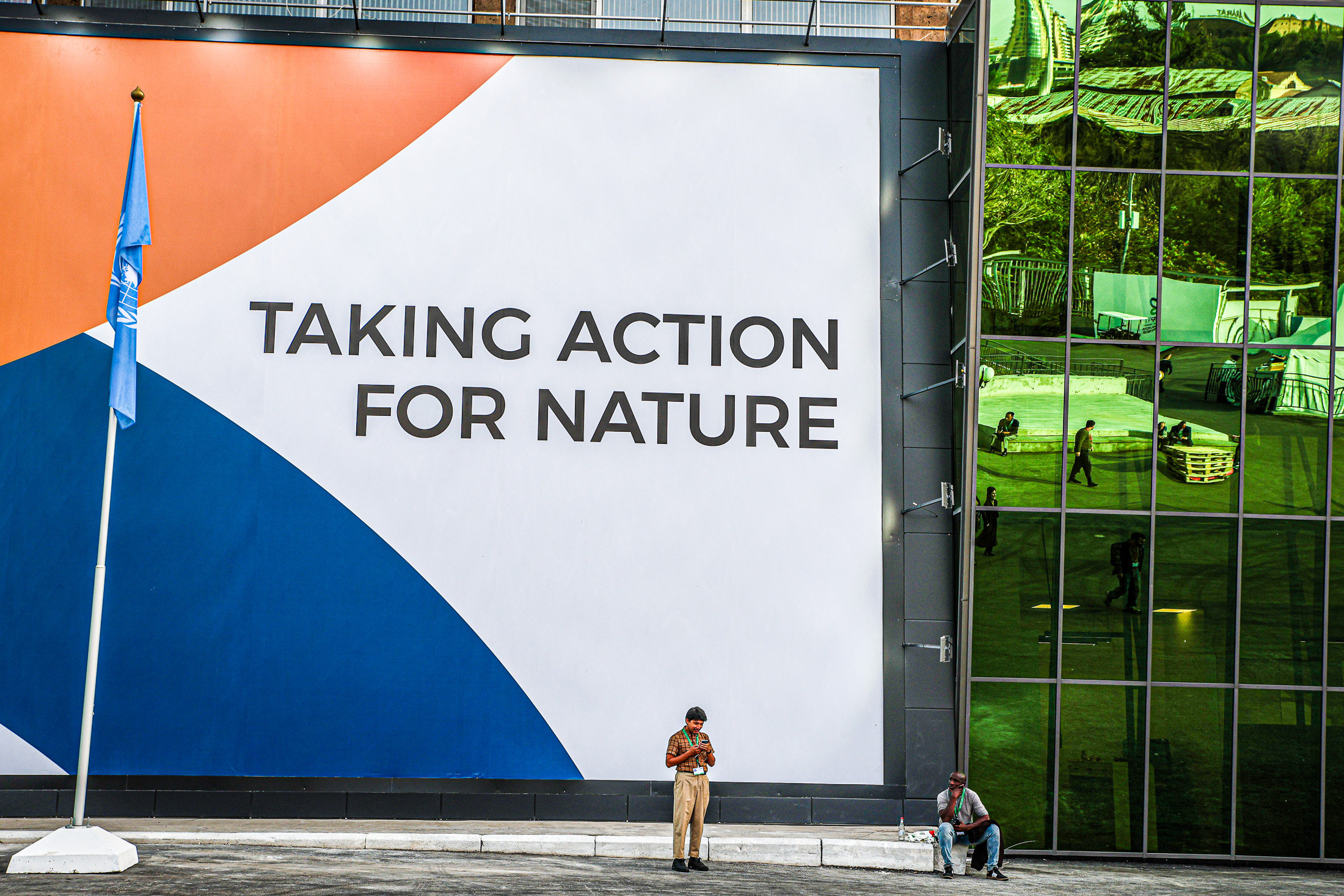
African countries left the United Nations biodiversity conference in Yerevan, Armenia, with an unresolved funding gap for conservation. International funding for protected and conserved areas in Africa fell significantly even as countries are working toward a global agreement to protect 30% of the world’s land and oceans by 2030, known as the 30×30 goal. During the Oct. 19-30 summit, roughly $1.8 billion in new funds for global biodiversity conservation was announced. Negotiators agreed to expand the pool of countries that contribute to international biodiversity finance, inviting developing countries like China and Persian Gulf states to contribute. “The first element remains the lack of funding,” Nadège Nzoyem, WWF’s regional director for the Congo Basin, had told Mongabay’s David Akana in response to a question about the biggest challenges in the run-up to the conference. “To improve wildlife monitoring, you need funds. To ensure that the forest is conserved, you also need funds.” With just over four years to go before the 2030 conservation deadline, African nations are closer to reaching the 30×30 goal than the global average, but still off track. On average, African nations protect 19.9% of their land and 17.2% of their seas, compared with the global average of 18.7% of land and 10% of marine landscapes protected. That’s according to a tracker run by SkyTruth, a U.S.-based environmental watchdog. At the Yerevan summit, the African Group, representing 54 nations, had pushed for more financial support to meet global biodiversity targets. A report released during the summit found that recent funding for African conservation declined in 2025. African nations received about $389 million in international funding, 32% less than the 2022-2024 annual average. Between 2023 and 2024, the continent received 48% of all tracked funding; this fell to roughly 39% in 2025. “Africa has seen the largest absolute decline in recent years,” the report notes. The decline reflects a larger global trend as international funding for protected and conserved areas worldwide fell from around $1.2 billion in 2023 to about $1 billion in 2025. “Rich countries spend over 10 times as much money on chewing gum each year as they spend on advancing 30×30 in developing countries,” Brian O’Donnell, director of Campaign for Nature, said in a statement accompanying the report. The Forest Declaration Assessment 2026, published Oct. 13, found that while deforestation around the world declined by around 15% in 2025, led largely by Brazil, in tropical Africa deforestation and degradation actually increased over the same period. “We know what needs to change,” Astrid Schomaker, executive secretary of the Convention on Biological Diversity, said in a statement. “We cannot protect nature while continuing to finance its destruction. Resources must reach the countries and communities that need them. And biodiversity must become part of everyday economic decisions.” Banner image: Outdoor banner at the COP17 summit in Yerevan, Armenia. Image courtesy of Mike Muzurakis/IISD/ENB. Credits Topics
Global biodiversity summit ends with shortfall of funding for Africa, despite 30×30 push
Full Article
Original Source
Read the full article at News →KhanList aggregates and links to publicly available news content. We do not host full articles from third-party sources. Always verify important information with original sources.