
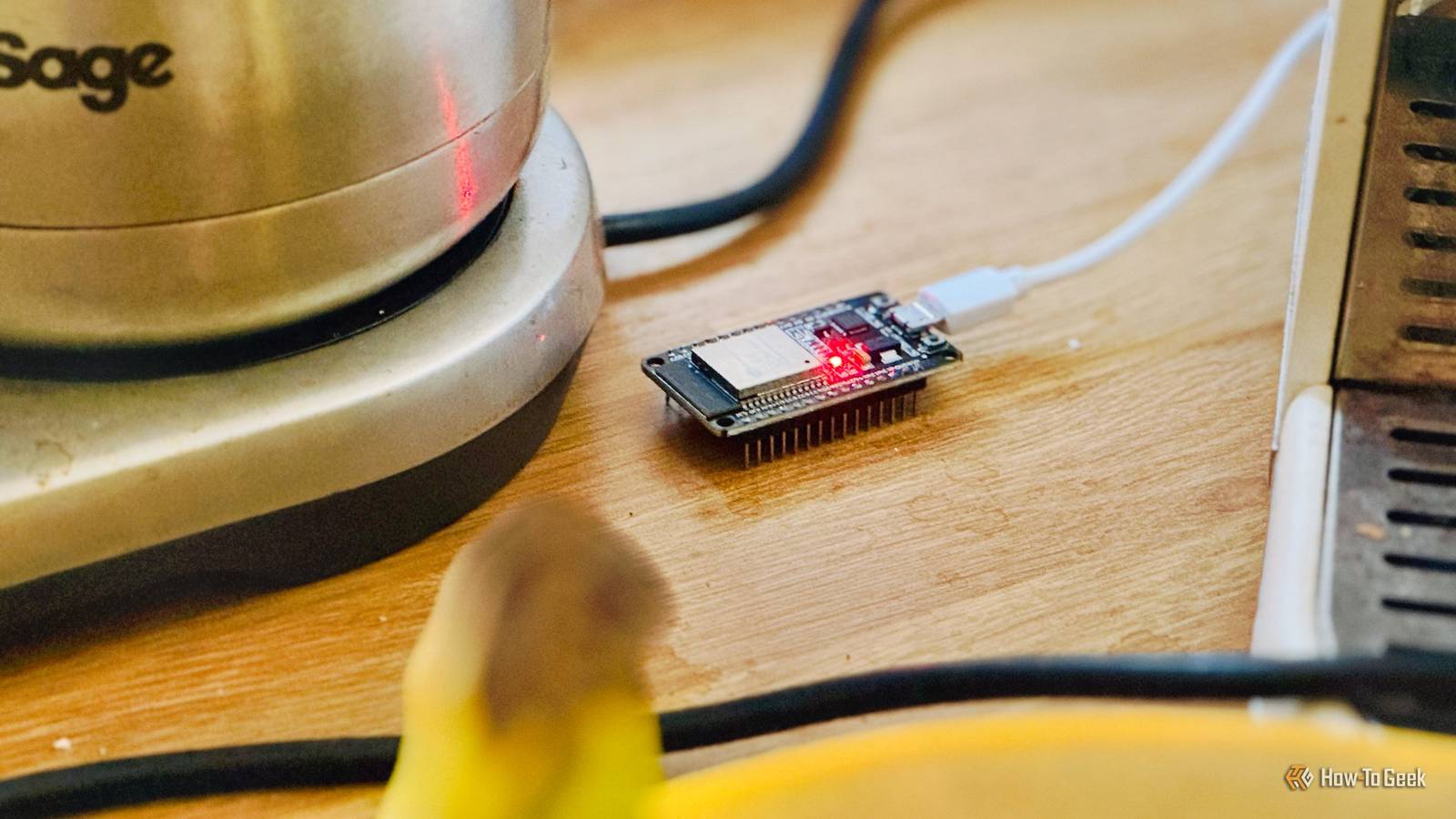
Published Aug 21, 2026, 7:00 AM EDT Adam has a degree in Engineering and has a life-long interest in technology. He has been writing for over a decade for various print and online publications, with a focus on consumer tech. He joined How-To Geek in 2024 while working at Pocket-lint. As well as being a long-term fan of Apple products, he also has a strong interest in smart home tech, running a Home Assistant server at home to automate all his smart home devices. He believes that the ideal smart home should work with minimal interaction from the user, with automations running as if by magic rather than requiring you to push buttons on a control panel. You can find more of his work on Muck Rack. USB devices are often fairly small, and old devices can end up being thrown into your junk drawer and forgotten about. If you replace a USB device with something else, or no longer need it for its original purpose, your USB device can end up gathering dust, but you may be able to repurpose it for Home Assistant. Zigbee dongles Your old Zigbee stick can still do a job Credit: Adam Davidson/How-To Geek If you've been using Zigbee in Home Assistant for a long time, then the chances are that you started out with a USB Zigbee stick such as a ConBee or Sonoff. My first Zigbee coordinator was a cheap CC2531 dongle that was just a bare circuit board with an antenna screwed onto it. Zigbee coordinators have come a long way since then, and if you've upgraded, you may still have your old Zigbee coordinator lying unused in a drawer. If this is the case, you can still put it to good use. If you stopped using your Zigbee dongle because you upgraded to a smart home hub with Zigbee built in, such as a Home Assistant Yellow, then you may find that your hub isn't in the ideal location to communicate with all the Zigbee devices in your home. You can use your Zigbee dongle to run Zigbee2MQTT or similar on a separate device such as a Raspberry Pi and place it in a more central location. If your Zigbee coordinator is already perfectly placed, your old USB dongle can still be useful. If you have devices that are a long way from your main mesh, such as in a garage, setting up a secondary Zigbee network may be more feasible than trying to bridge the gap with routers. Some Zigbee dongles can also be flashed with router firmware so that you can use them as powered Zigbee repeaters. Bluetooth adapters Add Bluetooth capabilities to your smart home Credit: Jorge Aguilar / How-To Geek Most modern laptops and desktops come with Bluetooth built in, but that wasn't always the case. You may still have old USB Bluetooth dongles in your junk drawer that you used to add Bluetooth support to an old computer. If you're running Home Assistant on a device that doesn't have Bluetooth, such as an old thin client or a cheap mini PC, you could be missing out. Adding Bluetooth to Home Assistant allows you to control Bluetooth devices such as SwitchBot finger robots, Bluetooth soil moisture sensors, Xiaomi temperature and humidity sensors, and some smart locks. Not every old Bluetooth adapter will work with Home Assistant. You can find a list of known working adapters and unsupported adapters on the Home Assistant website. If your Bluetooth dongle isn't on the list, it may still work, although older adapters can be less reliable. ESP32 Microcontrollers An ESP32 can extend Bluetooth range Bluetooth isn't designed for long-range communication, so using a Bluetooth dongle can add coverage around the Home Assistant server itself, but it won't be able to communicate with a Bluetooth device on the other side of your home. That's where those old ESP32 boards you have lying in your drawer left over from abandoned DIY projects can help. Many ESP32 boards have both Bluetooth and Wi-Fi on board. This makes them perfect for use as Bluetooth proxies. Bluetooth proxies make it possible for your Home Assistant server to communicate with Bluetooth devices that are too far away to communicate directly. You can even use them to talk to Bluetooth devices when your Home Assistant hub doesn't have Bluetooth support at all. The ESP32 talks to nearby Bluetooth devices using its onboard Bluetooth and then forwards the data it receives to Home Assistant over Wi-Fi. It works the other way too; Home Assistant can control Bluetooth devices by passing commands through the Bluetooth proxy. SDR dongles Repurpose tech from your old hobby Credit: Joe Kucinski | How-to Geek This isn't something that every Home Assistant user will have lying around in their junk drawer. A software-defined radio (SDR) dongle is a radio receiver that covers a wide range of frequencies rather than being limited to a specific standard. People often buy these dongles to use with hobbies such as amateur radio or aircraft tracking. If you're no longer using an SDR dongle for other purposes, you may be able to put it to good use in your smart home. Some devices you use around your home transmit data using radio frequencies that an SDR dongle can detect. That includes devices that were never intended to integrate with your smart home. There's an add-on for Home Assistant called rtl_433 that can be used to decode radio transmissions picked up by the SDR dongle. The data can then be published through MQTT, with MQTT discovery used to create entities in Home Assistant. Devices that may be possible to connect to Home Assistant using this method include swimming pool temperature sensors, wireless weather stations, tire pressure monitors, energy meters, and more. Put old tech to new use It's always worth taking a look through your old tech junk drawer now and again and seeing what you can find. Home Assistant adds new features all the time, including recently added Infrared and RF support, so you may find that devices that weren't any use in the past may become genuinely useful again.
Give these 4 forgotten USB devices a second life in Home Assistant
Full Article
Original Source
Read the full article at Howtogeek →KhanList aggregates and links to publicly available news content. We do not host full articles from third-party sources. Always verify important information with original sources.