
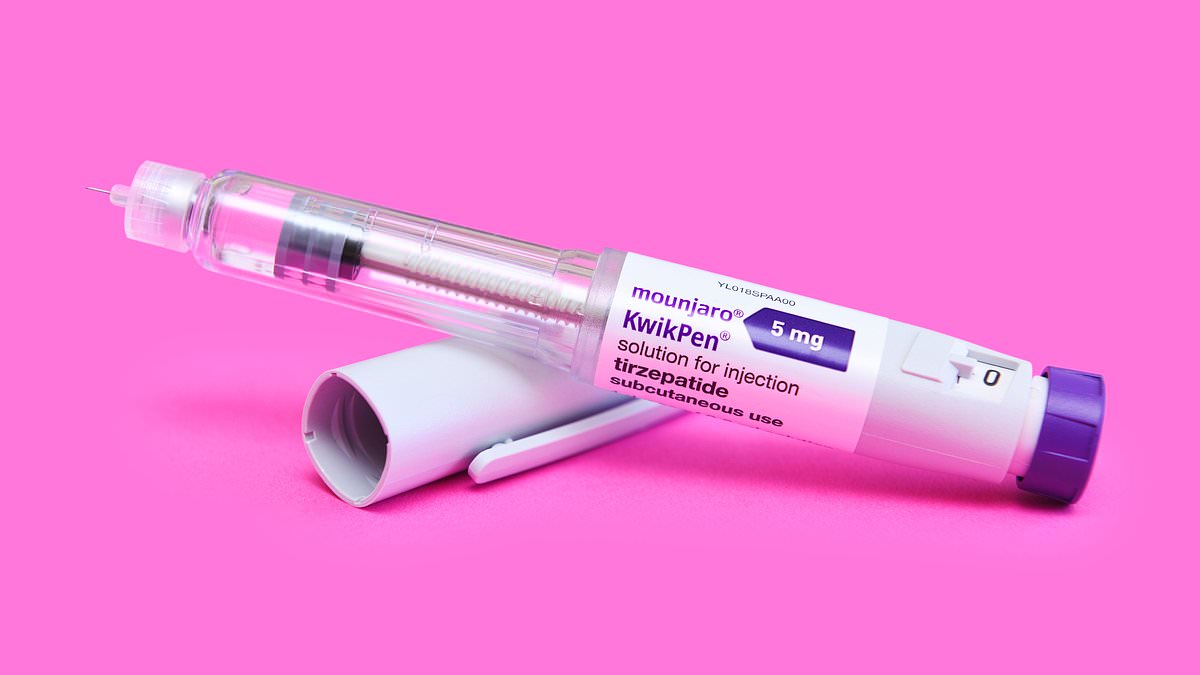
Millions more Britons should be offered the blockbuster weight loss jab Mounjaro on the NHS , MPs have warned the Government.A damning cross-party report shows just 6 per cent of the millions of eligible patients will get access to the injections as part of the NHS' three year roll-out, which began in 2024.The Health and Social Care Committee (HSCC) warned that the 'woeful' situation will likely drive many desperate patients to turn to the black market, risking serious harm.Meanwhile, others seeking access to the treatments privately are plunging into debt to do so by spending upwards of £300 a month.This has created what MPs described as a 'two-tier system' that may block those at greatest need from affording treatment.Mounjaro – referred to as the 'King Kong' of slimming jabs – was approved for use by NHS drug watchdogs in late 2024.National Institute for Health and Care Excellence (NICE) promised a gradual roll out, committing to delivering the drug to 200,000 patients over the course of three years. The staggered access was said to allow the NHS to cope with high demand and avoid placing undue pressure on GPs services. The rollout of the blockbuster fat jab Mounjaro on the NHS is 'unambitious', MPs have warnedHowever, MPs say the target does not go far enough. 'Current plans to rollout Mounjaro are unambitious given the scale of the challenge of obesity and reach a woefully small number of people who could benefit from this lifechanging treatment,' MPs wrote in the HSCC report.'We acknowledge there are challenges relating to capacity and funding. 'However, given the much larger number of private prescriptions of GLP-1s, we believe there are opportunities to learn from the private sector and better use the capacity of digital providers.'The system needs to be designed to support wider access now and be ready for the future.'The HSCC argued that expanding NHS access to the drugs could prevent dangerous complications from obesity.Committee chairwoman Layla Moran said this could 'save the NHS billions in the long-term'.Obesity – classed when a person has a body mass index (BMI) of more than 30 – costs the UK economy more than £74billion a year, and the NHS more than £9billion. Around two-thirds of English adults are classed as overweight or obese. MPs are now calling on the Government to 'urgently reassess the pace of rollout of Mounjaro'.It is the most powerful approved weight loss jab, helping patients shed around a fifth of their body weight after 17 months.But currently, patients must meet strict criteria before being given weight loss jabs on the NHS.Mounjaro can be prescribed by GPs to people who are severely obese – a BMI of more than 35 – who also have at least four serious weight-related health conditions like type 2 diabetes, heart disease, sleep apnoea and high cholesterol.Wegovy, meanwhile, can only be accessed through specialist weight-management clinics and cannot be prescribed by a GP.Another popular jab, Ozempic, is prescribed on the NHS for type 2 diabetes rather than obesity. The report did not propose specific changes to prescribing criteria for GLP-1s, but MPs said more could be done to improve access to obesity treatment more widely. Instead of every patient needing repeated GP appointments, for example, they suggested that the NHS could work with already approved digital providers.These could help to prescribe, monitor and support people taking weight-loss drugs at scale – freeing up NHS capacity while expanding access.They also argued that a significant change would be recognising obesity as a chronic, relapsing disease that needs treating, similar to conditions such as type 2 diabetes and asthma, rather than being viewed as a lifestyle issue.Furthermore, MPs called for greater use of bariatric surgery, which they branded a 'cost-effective underutilised treatment for obesity'.They said just 6,550 procedures were carried out in 2024-25, reaching fewer than 1 per cent of eligible patients, and called for this to be doubled. The committee also warned of a 'postcode lottery' emerging, with access to specialist services and surgery varying depending on where patients live.For example, there were 785 bariatric procedures in the North East and North Cumbria compared with 340 in south-east London. Overall, the report concluded that 'people living with obesity are being let down by the NHS'. Ms Moran said: 'Our report urges the Government to make improvements to obesity care a priority – both to improve public health and quality of life, and to save the NHS billions in the long-term.'NHS England and the Department of Health and Social Care were approached for comment. 'Obesity is one of the biggest challenges facing our health service, and this government is determined to end the obesity epidemic to help drive the shift from sickness to prevention.'We expect NHS Integrated Care Boards to be making these drugs available as part of a phased rollout, starting with people in the greatest clinical need, while building the workforce and capacity needed to expand access safely and sustainably.'We will carefully consider the Committee's recommendations and respond in due course.'
Give millions more weight loss jabs, MPs demand - as report shows just 6% of eligible patients are offered Mounjaro
Full Article
Original Source
Read the full article at Dailymail →KhanList aggregates and links to publicly available news content. We do not host full articles from third-party sources. Always verify important information with original sources.