
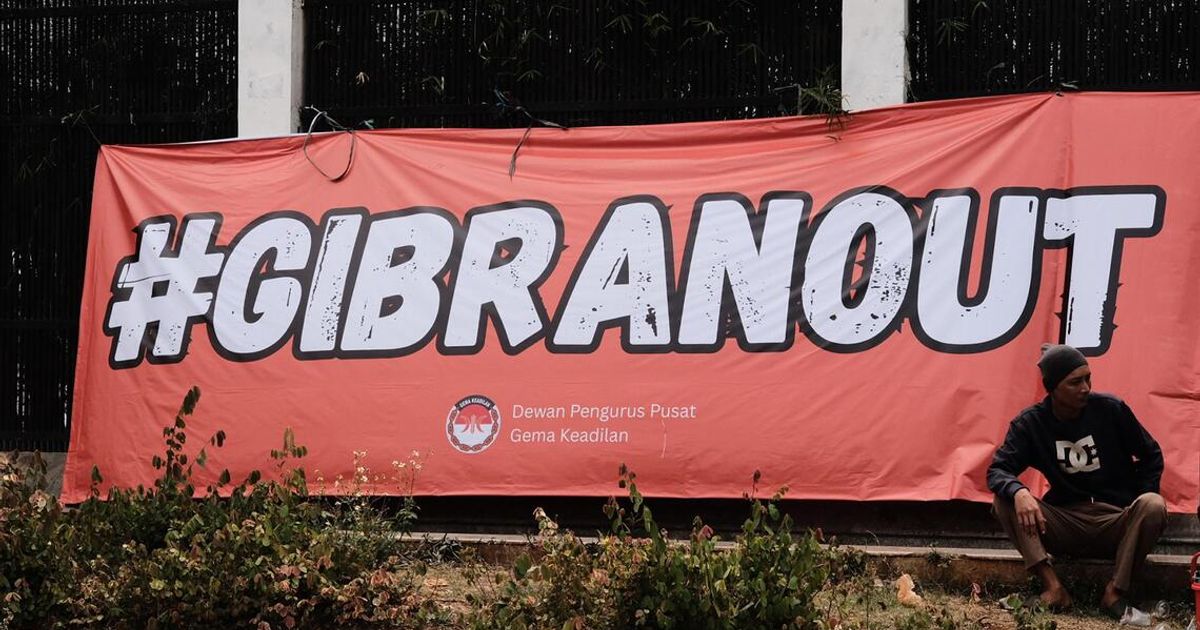
JAKARTA - A day after vowing to fight the court rulings that have thrown his education credentials – and thus eligibility for office – into doubt, Indonesian Vice-President Gibran Rakabuming Raka is facing possible impeachment.On Nov 11, 120 lawmakers from all eight parties in Parliament filed a motion of opinion against him, the first formal step towards impeachment. The motion must now be approved at a plenary session scheduled for Nov 12.The motion came a day after State Secretary Prasetyo Hadi said Gibran had expressed his intention to resign during a meeting with President Prabowo Subianto, and that the President “had not rejected” it. Hours later, Gibran told reporters he would keep fighting in the courts, on the president’s advice.It is a dramatic turn of events for a politician who became Indonesia’s youngest vice-president barely two years ago, riding on the popularity of his father, former two-term president Joko Widodo.Gibran’s vice-presidency has been dogged by controversy, from the contentious Constitutional Court ruling that paved his way to power to questions over his educational qualifications. The son of ex-president Widodo now faces an uncertain political future, with legal battles and political manoeuvres threatening to cut short his tenure.Controversial candidacyGibran’s eligibility was in question even before he took office. He was 36 when candidate registration opened in 2023, while election law required candidates to be at least 40.But on Oct 16, 2023, in a controversial 5-4 decision, the Constitutional Court – led by Anwar Usman, Jokowi’s brother-in-law and Gibran’s uncle by marriage, who was later removed as chief justice for not recusing himself – ruled that those under 40 could run if they had previously been elected as a regional head. Gibran, elected Surakarta mayor in 2020, qualified.Days later, Prabowo named Gibran as his running mate. Among the documents the pair submitted to the General Elections Commission (KPU) on Oct 25, 2023, was Gibran’s high-school equivalency certificate. The document is now at the centre of the controversy, although its validity was not questioned at the time.The pair won the 2024 election in a landslide with 58.8% of the vote, a win analysts largely attributed to voters seeing them as the most likely to continue Widodo’s legacy.Slew of court casesThe Prabowo-Gibran administration has had a rocky first two years, and recent polls have shown a decline in government approval ratings, particularly since the end of 2025.Around the same time, Gibran’s eligibility began to face legal challenges.Lawyer Subhan Palal first challenged Gibran’s high-school credentials at the Central Jakarta District Court in September 2025, but the suit was dismissed. He subsequently asked the Jakarta State Administrative Court (PTUN) to invalidate the certificate issued by the Education Ministry.Separately, in September 2026, former law and justice minister Denny Indrayana and 10 other petitioners asked the Constitutional Court to invalidate Gibran’s candidacy and inauguration.On Oct 6, the court rejected the petition for lack of legal standing, but appeared to agree that Gibran’s documents did not amount to a senior high school-equivalent diploma. The ruling sparked protests across the country calling for his resignation or impeachment.Subhan, meanwhile, lost his cases at both the PTUN and the Jakarta State Administrative High Court (PT TUN), before appealing to the Supreme Court. On Oct 30, the Supreme Court accepted his appeal, invalidating Gibran’s certificate.March to impeachment, or resignationAfter the ruling, several MPs said they intended to file a motion of opinion against Gibran when parliament reconvened on Nov 10, but none was filed that morning.That afternoon, Prasetyo said Gibran had “expressed his intention to resign” in a meeting with Prabowo earlier that day, and the president had “not rejected” his intentions.Gibran later told reporters that he views Prabowo “as a father”, adding: “One piece of his advice is that I keep fighting in the State Administrative Court... and file a civil review appeal to the Supreme Court’s ruling.”What next for GibranA senior government official told The Straits Times on Nov 10 on condition of anonymity that Gibran intends to step down only after exhausting his legal options, including seeking a case review at the Supreme Court.“The Constitutional Court cannot take up the (impeachment) case while the Supreme Court matter is ‘live’,” the official said.But legal experts, including Coordinating Minister for Legal Affairs Yusril Ihza Mahendra, say Gibran has no legal pathway to contest the rulings.“The rulings by the Constitutional Court and the Supreme Court are final, there is nothing more that can be done about them,” Yusril told reporters on Nov 10.Constitutional law expert Bivitri Susanti agreed. “Gibran is not the defendant in the Subhan Palal lawsuit, the Education Ministry is,” she told ST on Nov 11. “And even if the ministry wanted to lodge an appeal, it would not be able to as cases that go through PTUN can only be appealed by the plaintiffs, not the defendants.”Protesters hang banners outside the Indonesian parliament building in Central Jakarta on Nov 10. ST PHOTO: KARINA TEHUSIJARANATiti Anggraini, a constitutional law lecturer at the University of Indonesia, said that Gibran’s chances of fighting the impeachment process in the courts were also not much better.“In the case of impeachment, there is virtually no scope for intervention by the PTUN or the Supreme Court, as the process is specifically governed through a procedure involving the House of Representatives, the Constitutional Court, and the People’s Consultative Assembly,” she said.Firman Noor, senior political researcher at the National Research and Innovation Agency, cited three factors behind Gibran’s likely impeachment: lawmakers’ sense that they must respond to the judiciary, public opinion clearly against Gibran, and a desire to distance themselves from Widodo, who is increasingly seen as being at odds with the Prabowo administration.He said Prasetyo’s Nov 10 statement suggested that Prabowo would prefer Gibran to resign.“Saying that there is ‘no rejection’ is, in effect, an agreement”, he told ST on Nov 11, suggesting that Prabowo had effectively agreed to Gibran’s resignation.
Gibran’s rocky road to power: The controversies threatening Indonesia’s vice-president seat
Full Article
Original Source
Read the full article at Straitstimes →KhanList aggregates and links to publicly available news content. We do not host full articles from third-party sources. Always verify important information with original sources.