
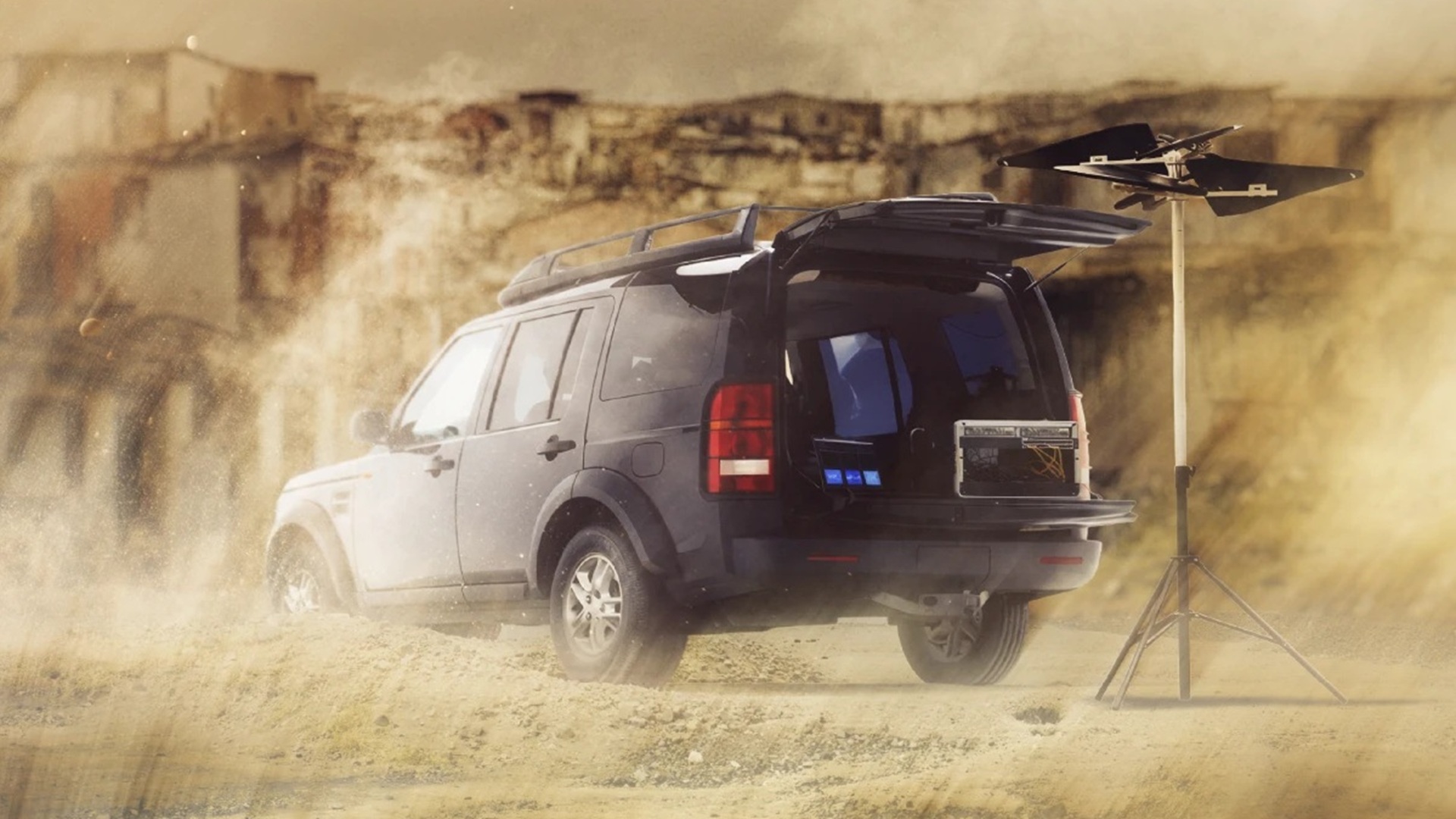
Key TakeawaysA UK defense giant developed a low-cost "ghost radar" that can detect and track hostile drones and aircraft without revealing its location.The system uses existing TV, radio and mobile network signals instead of transmitting its own.Small enough to be deployed from SUVs, the radar could protect military bases, airports and power stations. A UK defense company has developed a new cheap radar that can detect drones and track hostile aircraft from an SUV without revealing its location to the enemy. Dubbed a “ghost radar,” the novel technology was developed by BAE Systems, a London-based multinational aerospace, arms and information security company. It uses existing TV broadcasts, radio transmissions and mobile networks in order to monitor the skies rather than emitting its own signals. According to BAE Systems, the new passive radar costs up to 10 times less than many existing systems. It is also compact and can be deployed from SUVs. This makes it suitable for both military operations and urban environments. The system can detect targets ranging from small drones to larger aircraft. It also provides detailed data about their speed, direction, distance and altitude. “It also provides a boost for armed forces, allowing a soldier to monitor the battlefield undetected,” Chris Shepherd, BAE Systems’ Digital Intelligence & Land business Product Manager for CUxS, said. A radar (radio detection and ranging) system uses radio waves to determine the distance and velocity of the targets they strike. It is made up of a transmitter to send out radio signal and a receiver to catch reflected energy from the targets. Although this makes it possible to detect aircraft and other threats, the emitted signals can also reveal the radar’s position to enemies. To address this challenge, BAE Systems’ passive radar relies on existing sources, among which digital TV broadcasts and mobile networks. The cost-effective covert radar technology.Credit: BAE Systems / Richard Brown As per the company, the system analyzes how these signals interact with objects in the air. It then detects and tracks potential threats without actually revealing its own location through radar emissions. “While people are sat at home watching TV, our new radar technology can use transmissions from TV and radio broadcasts without disturbance to keep crucial infrastructure such as power stations and air force bases safe from drone attacks,” Shepherd explained. More than military use While initially designed for military use, the new radar could also be deployed to protect civilian infrastructure. BAE Systems identified airports, power stations and other critical sites as potential applications, particularly where conventional radar emissions may be restricted. On top of that, because the system does not transmit its own radar signals, it can run without adding to existing electromagnetic activity. Its portable design could also make it easier to deploy in urban areas. Members of the BAE Systems team behind the new passive radar technology.Credit: BAE Systems / Richard Brown Shepherd is certain that the radar system could be valuable for law enforcement agencies, military personnel, as well as operators of critical national infrastructure. “We’re harnessing the signals that all of us use already in our day to day lives to give police and armed forces the ability to protect us far more cheaply and safely than current passive radar systems,” he concluded in a press release. BAE Systems noted the technology is up to 10 times cheaper than existing passive radar systems. It will now undergo real-world tests, such as live trials with defense, law enforcement and critical infrastructure partners throughout 2027. Get the latest in engineering, tech, space & science - delivered daily to your inbox.Based in Skopje, North Macedonia. Her work has appeared in Daily Mail, Mirror, Daily Star, Yahoo, NationalWorld, Newsweek, Press Gazette and others. She covers stories on batteries, wind energy, sustainable shipping and new discoveries. When she's not chasing the next big science story, she's traveling, exploring new cultures, or enjoying good food with even better wine.
Ghost radar tracks enemy drones and aircraft from SUV without revealing location
Full Article
Original Source
Read the full article at Interestingengineering →KhanList aggregates and links to publicly available news content. We do not host full articles from third-party sources. Always verify important information with original sources.