
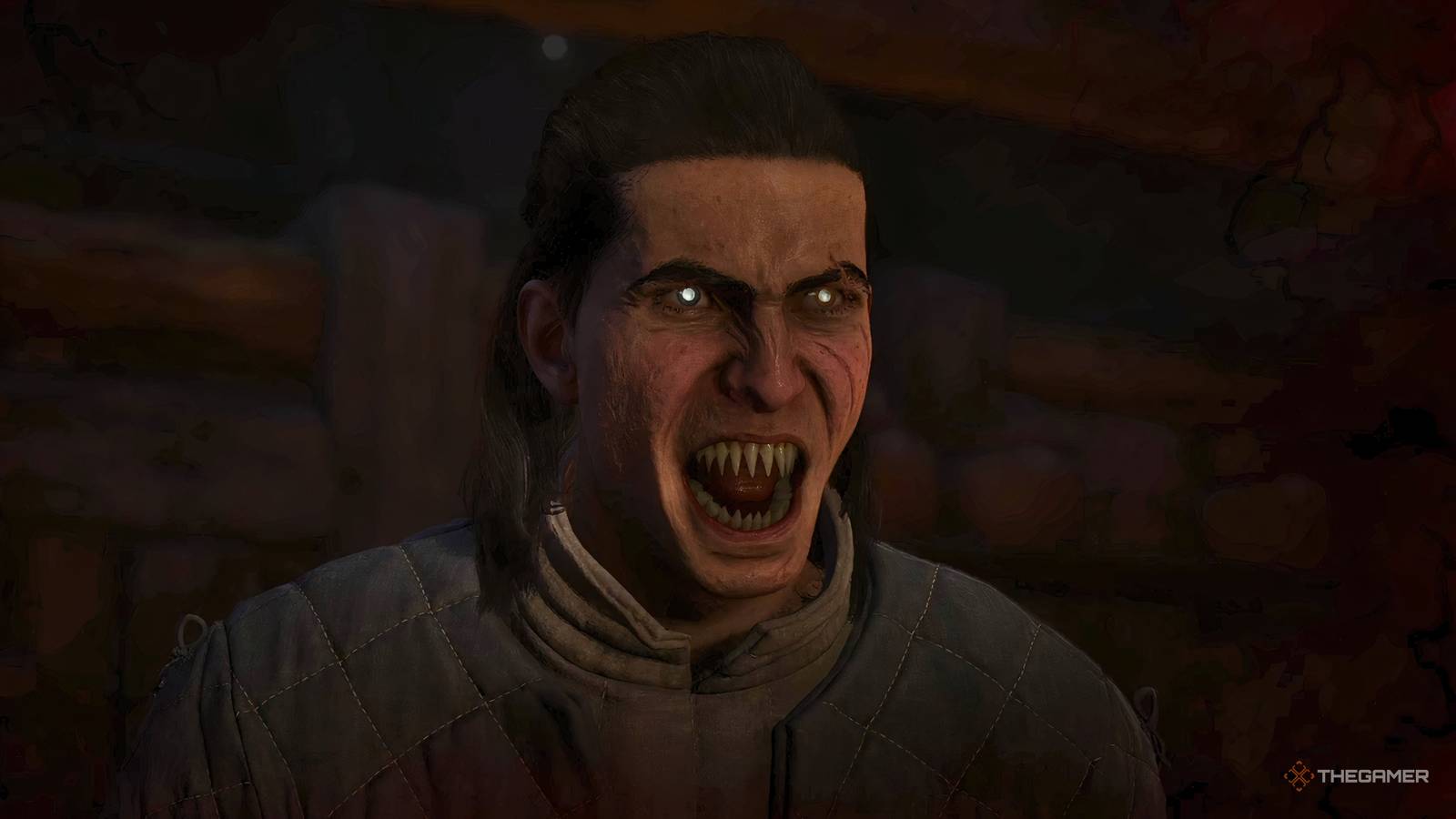
Published Aug 31, 2026, 11:27 AM EDT The Blood of Dawnwalker is a welcome addition to the lineup of phenomenal RPGs, as Coen's story is one that you'll want to revisit again and again. The Blood Of Dawnwalker Review: A Bloody Great Time Going into The Blood of Dawnwalker, I wasn’t entirely sure what to expect. Stylistically, an action RPG in a grungy medieval fantasy setting is right up my alley. However, with so many already drawing comparisons to The Witcher 3: Wild Hunt because they share the same game director, among other staff, The Blood of Dawnwalker already had a lot of expectations to live up to. Truth is though, aside from the similar settings and a brooding protagonist who hunts monsters, the two games don’t have all that much in common. There’s a sense of familiarity while playing, but The Blood of Dawnwalker is a unique story with intricate gameplay and a combat system that deserves to be enjoyed as a fresh new experience, regardless of who worked on it. A Thin Line Between Heroism And Vengeance You start as a normal human man named Coen, but before you know it, you’re stalking the night as a new type of monster known as a Dawnwalker. A Dawnwalker, as the game will eventually explain, is a creature that is human by day and Vrakhiri by night, so closer to what you’d expect from a traditional werewolf transition cycle than the vampire-like creatures they are. Not long after Coen’s change into a Dawnwalker, he learns that his family has been taken and is now being held by Brencis, a leader among the Vrakhiri, for a special ceremony scheduled 30 days from now. From that point on, Coen has until the end of the countdown to save his family and bring Brencis down, which is where the game really begins. When I first realized I would be facing a 30-day deadline for a key part of the game, doubts began to creep in. That amount of time didn’t seem long enough to encompass a fully fleshed-out RPG, and I worried the game would feel rushed. Thankfully, while I did feel a tad stretched for time, I’m pleased to say the game has excellent pacing, so that 30 days feels like plenty. Additionally, 30 days doesn’t end up being the hard deadline in the way you’d expect, especially if you don’t really plan to worry about your family, which is completely up to you. Since Coen is a Dawnwalker, he can take advantage of both day and night cycles without ever needing to sleep. These days and nights are broken down into eight time segments each that, once full, transition to the next day or night. So, while you only have 30 days to save them, the lack of sleep helps stretch the time significantly, especially since time only really passes when you complete a quest or learn a new skill. If you're running around exploring, you won't need to worry about time passing. To put it in perspective, it took me about 15 hours to get through the first ten days and cover about a third of the map. Speaking of the map, that is perhaps the first thing that took me entirely by surprise. After leaving Laslea, Coen’s home village, The Blood of Dawnwalker fully opens up, and you get your first glimpse at how big this world really is by scouting it from a tower. Now, it’s not the biggest map I’ve ever seen in a game, but it was much larger than I anticipated, and when you’re exploring, it not only feels big, it also feels alive. It’s been a common criticism of The Witcher series that the world was large but often felt empty, and that could not be further from the truth in The Blood of Dawnwalker. Nearly everywhere I went, even taking shortcuts through the woods or up mountains, I would run into citizens, soldiers, or bandits. There were camps, people taking a walk, and the towns themselves were filled to the brim with residents. Now, most NPCs just give you a standard line asking you to leave them alone if you interact with them, but I still appreciated how full the world felt, especially with the game placing such a heavy focus on how the people are suffering under the Vrakhiri. Everywhere I went, I saw the Vrakhiri’s influence, spoke with scared citizens, and could fully immerse myself in this horrific story. Even personal relationships play a large role in the story’s progression as you meet several people who can share things you didn’t know about the past, aid you in various dangerous adventures, or even offer you companionship. Of course, you can choose to encourage those you meet to stay close, or avoid them entirely and treat The Blood of Dawnwalker as a one-man show. Whether Coen paves his way to victory in the blood of anyone who gets in his way or becomes an honorable hero to the people of Vale Sangora is entirely up to you. Thirty Days And Thirty Nights Since Coen’s primary goal throughout the game is to save his family and stop the Vrakhiri, most of his tasks involve disrupting the Vrakhiri’s rule. This includes doing things like destroying transports, killing those who serve them, and freeing their prisoners. With each task he completes, Coen will continue to raise what I called the ‘Pissed Off Meter’ that displays how angry the Vrakhiri are about what he’s done. There’s a separate meter for each member of Brencis’ court, which includes Ambrus, Bakir, and Xanthe. Once Coen maxes out one of their meters, they will challenge him to duel, allowing him to take them out one by one and make Brencis an easier target. This all also contributes to Coen’s overall infamy level, which will force Brencis to make changes to the world as it increases, such as adding more patrol guards for you to deal with. On the surface, wreaking havoc across the region didn’t sound too difficult, but with the incredible number of side quests, monsters you’ll encounter, and relationships you need to maintain, it can honestly become difficult to find time to focus on disrupting the Vrakhiri at all. I thought that after playing Atlus games like Persona 5 Royal and Metaphor ReFantazio, I had learned how to manage a tight deadline in an RPG. However, it’s clearly intentional that you don’t complete everything here in a single playthrough, since there are too many side quests to complete in the allotted time. So, you are forced to evaluate where your time is best spent. And to make it clear, no, these aren’t just a bunch of fetch quests. I won’t lie, it was frustrating at times to realize I missed a quest deadline or had to sacrifice something I also wanted to finish, but I also became somewhat obsessed with it. Tracking which quests I could complete at specific times of day, which skills I was looking to upgrade next, and who I needed to visit next made me feel entirely in control of how Coen’s story was unfolding. Even when I missed a deadline or worried something could’ve been avoided if I had taken a different step hours ago, it just made me eager to play the game all over again. Customizable Combat With An Adjustment Period One thing I wasn’t expecting was how much adjustment it would take to get used to The Blood of Dawnwalker’s combat. To be entirely honest, I hated it, at least at first. To the point that I was concerned about how I would get through an entire game where this combat plays such an important role. The Blood of Dawnwalker uses both directional combat and an omniblock/omniattack system. You can’t really designate one option since both are used interchangeably in battle, but you can avoid the latter by inputting a directional command before attacking or blocking. I often opted for manual direction input for more control and lower stamina cost, but also struggled to get it to click. It wasn’t that it was difficult, per se, but something about it felt awkward. Thankfully, however, it was clearly just something that I needed to get used to. Once I was beyond tutorial phases and freely taking on enemies in the open world, combat immediately felt more natural, and the directional combat became fun and engaging, to the point that I’d dare say I want to see more games embrace this system. There has been some discourse over the game not reaching 60 fps on console, and while I can’t speak for other consoles or PC, I played on a standard PS5 and never encountered anything that felt like it inhibited my experience. The combat doesn’t necessarily require ultra-fine precision to feel seamless, and other than textures taking a moment to load after one or two cutscenes, I didn’t experience anything concerning on the technical side. The only major downside I noticed in combat was that fights with traditional guards and monsters became repetitive. Though more complex enemies were introduced later, and you can modify difficulty settings to make combat less predictable, I reached a point where I found myself wanting to avoid random human fights if I could help it. And don’t even get me started on the wolves. One thing that did eventually help shake things up, however, was the skill tree. The Blood of Dawnwalker actually has three unique skill trees for Coen. Two of them, Witchcraft and Vampiric, are exclusive to day and night, respectively, while the primary one, Swordmastery, overlaps both. The skills in the primary skill tree can be anything from increasing your inventory space to reducing the stamina required to dodge. The Witchcraft tree focuses on Hexes and passive abilities that can be used in human-form combat or to learn more information during quests. And the Vampiric tree is used to unlock skills related to your Vrakhiri form, such as reducing your hunger, increasing claw damage, or enhancing your ability to scale buildings. While there are some you’ll want to unlock in each tree to help move the story along, you’re mostly free to customize your build as you see fit between the three. I used several Witchcraft abilities for passive effects or quest purposes, but primarily focused on the other two skill trees when finalizing my build and progressed just fine. You can also customize your builds for both day and night, so each reaches its full potential. For example, some items or weapons you’ll pick up will have effects that specifically benefit Coen’s Vrakhiri form, and you can design a build that the game will automatically swap to each time the sun sets. This includes things like armor, accessories, and skill shortcuts, so no matter which version of Coen you are, you’re always ready to go. A Cozy, Bloodshed-Filled Adventure It’s difficult to wrap up a review for something this elaborate and extensive without feeling as though I’m leaving plenty out. So, the simplest way to wrap up how I feel about the game is that while I did experience issues here and there, it’s probably my favorite game I’ve played all year. I even started to view it as deceptively cozy. It may not be perfect, sure, but I can’t say I’ve ever seen a game that is. Coen was an intriguing protagonist with a moldable personality that made both a path of bloody vengeance and one of selfless heroism seem plausible depending on how you steered things. The relationships with important NPCs were interesting to develop, and I loved feeling as though I earned my fight with each Vrakhiri rather than being some unbeatable monster they viewed as a threat right from the start. There’s plenty to do in The Blood of Dawnwalker, and I’ve already spent a great deal of time wondering how different decisions might have shaped the outcomes, enough so that I will be playing through it again straight away. For a game I wasn’t entirely sure about at first, I’m happy to be walking away with a new addition to my lineup of favorite RPGs, and one that I’d love to see influence the genre. The Blood of Dawnwalker 4.0/5 Released September 3, 2026 ESRB Mature 17+ / Blood and Gore, Intense Violence, Nudity, Strong Language, Strong Sexual Content Developer(s) Rebel Wolves Publisher(s) Bandai Namco Studios Pros & Cons Large, lively open-world Customizable builds to accommodate your specific play style Interesting side-content that adds to the overall story A deadline with a proper pacing mechanic to ensure you don?t feel rushed Unique combat that takes some getting used to Standard enemy fights that become a bit repetitive over time
Get Ready To See The Blood Of Dawnwalker On Lists Of The Best RPGs
Full Article
Original Source
Read the full article at Thegamer →KhanList aggregates and links to publicly available news content. We do not host full articles from third-party sources. Always verify important information with original sources.