
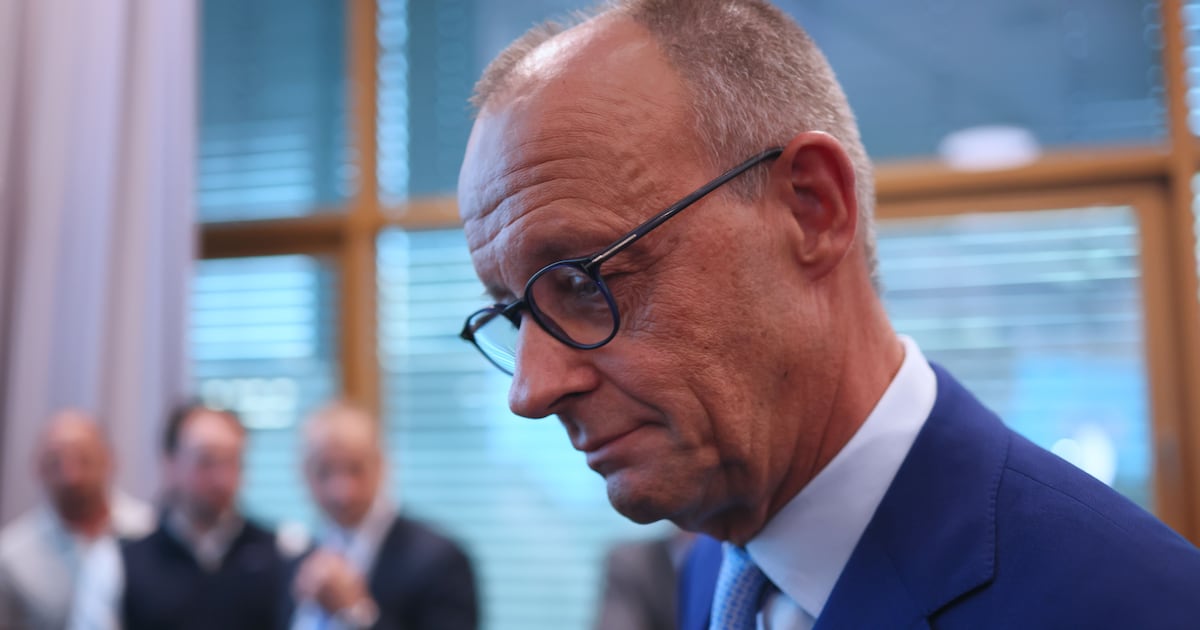
Friedrich Merz did not mince his words. Sunday’s regional election in Mecklenburg-Vorpommern was a “disaster” for his Christian Democratic Union, the German chancellor said.He was speaking as it seemed the CDU might scrape its way into the north-eastern state’s parliament with 5 per cent of the vote, by far its worst regional result since the Federal Republic was founded in 1949. Preliminary results later showed the party had fallen below 5 per cent and failed to secure parliamentary representation, turning disaster into catastrophe.It also says a lot about the dire straits the CDU is in that Merz described the estimated 19 per cent the party won in the regional election in Berlin as “respectable”. The CDU’s vote share in the German capital fell by nearly a third and it is almost certain to be ejected from the government it has led there since 2023, supplanted by the far-left.The two regional elections confirm the relentless advance of the far-right Alternative for Germany (AfD), after its stunning victory in the state of Saxony-Anhalt two weeks ago.READ MOREIn Mecklenburg-Vorpommern, the AfD notched up another win with 38 per cent, more than doubling its vote share, although it has no way of forming a parliamentary majority, unlike in Saxony-Anhalt. In Berlin, where its appeal is more limited, the AfD won 16 per cent, up seven percentage points compared with elections in 2023.Merz’s instant assessment, delivered moments after exit polls landed on Sunday evening, looked like an attempt to pre-empt a threat of CDU rebellion against him. He insisted he would stay on and pursue his planned welfare and economic reforms, which would require “backbone, steadfastness and patience”.The most unpopular German chancellor of the modern era is digging in. But how much patience will his party and the German public grant him? And what can a badly weakened chancellor, leading a fractious coalition with the centre-left Social Democrats, still achieve?The CDU’s crushing defeat against a triumphant far right in Saxony-Anhalt brought rumblings of revolt from the party’s grassroots, its youth wing and from some MPs. It sparked fevered speculation about a possible Kanzlertausch, or chancellor swap.In recent days, the party barons have circled the wagons. The CDU’s regional premiers pledged their support. Merz’s two most likely rivals are Hendrik Wüst and Markus Söder, the popular regional premiers of North Rhine-Westphalia and Bavaria respectively.The lack of consensus over who should take over might be Merz’s biggest saving grace. Wüst, a moderate, faces his own regional election in April 2027. Söder, a boisterous conservative, could take the fight to the AfD, but some Christian Democrats would be reluctant to hand the chancellorship to their smaller Bavarian sister party, the Christian Social Union that he leads. In any case, any Merz successor would face the same economic problems and political constraints.Hendrik Wüst speaking at an event last week. Photograph: Thomas Lohnes/Getty Images Bavarian state governor Markus Söder. Photograph: Alexander Hassenstein/Getty Images By vowing to concentrate on reforms, Merz is trying to buy some time from his party. Ditching him now could distract and destabilise the coalition and potentially derail a moderately ambitious set of changes to pensions, out-of-work benefits and employment rules due to be adopted in the coming months. The chancellor hopes these measures will boost business confidence and help raise growth after years of economic stagnation. Whether they are enough to transform his political fortunes is another matter.The government has only a slender majority in the Bundestag. CDU parliamentarians are in restive mood. Some accuse Merz of making too many concessions to their Social Democrat coalition partners, and the chancellor cannot count on their support.The plunge in Merz’s popularity, after only 16 months in office, has been unusually steep especially for a leader who has taken some bold and decisive steps on infrastructure investment, defence spending and support for Ukraine. An emergency (and ill-targeted) cut in fuel taxes, rushed out by the government on Friday evening, is a reminder that Germany still has some fiscal room for manoeuvre that neighbouring governments lack.But the lesson from elsewhere in Europe is that in today’s politics once you become deeply unpopular — like French President Emmanuel Macron or Britain’s former prime minister Sir Keir Starmer — it is near impossible to recover. All the more so when the public disaffection is linked to perceived character: arrogance in Macron’s case, dithering in Starmer’s. Merz is haughty and clumsy. He will need better political skills to survive long.Europe was already facing a tumultuous 12 months with elections in France, Italy, Spain, Poland and Greece. Now upheaval in Germany’s political leadership will be added to the mix.- Copyright The Financial Times Limited 2026
Germany’s most unpopular leader in modern times digs in, but for how long?
Full Article
Original Source
Read the full article at Irishtimes →KhanList aggregates and links to publicly available news content. We do not host full articles from third-party sources. Always verify important information with original sources.