
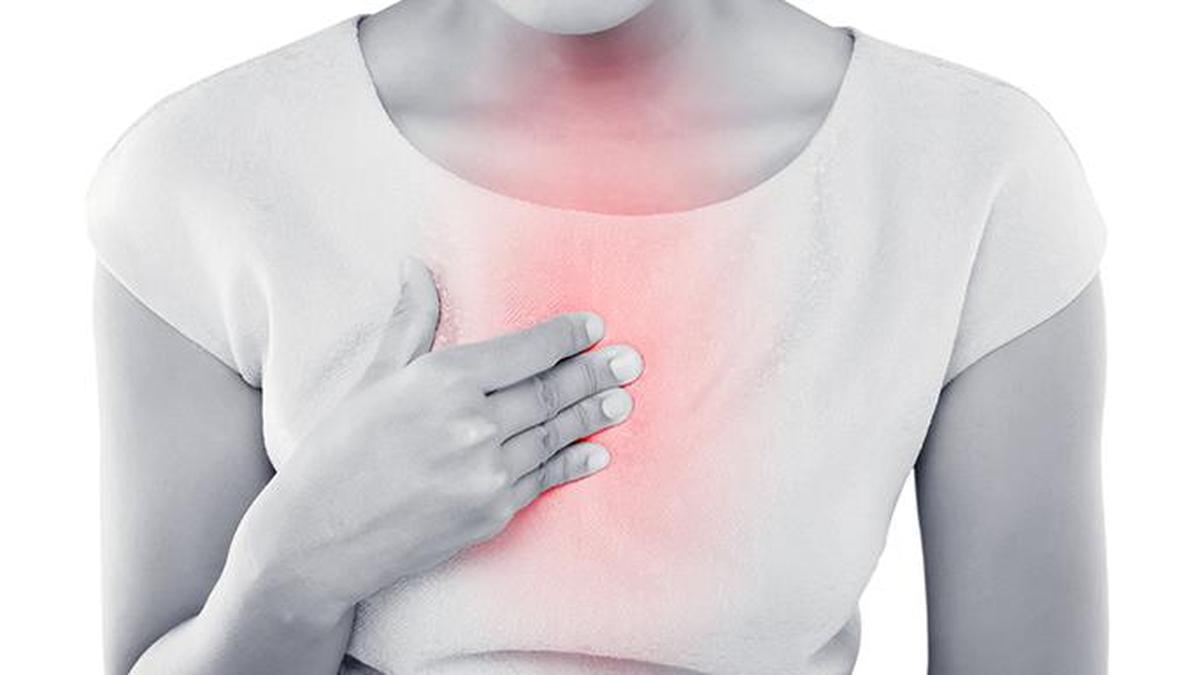
Heartburn is commonly described as acidity and treated with antacids. But gastro-oesophageal reflux disease (GERD) is not simply acidity. It occurs when the stomach contents repeatedly move into the oesophagus because the normal anti-reflux barrier does not function effectively.“GERD is not simply a problem of producing too much acid,” said Vishnu Abishek Raju, senior consultant, medical gastroenterology, Apollo Hospitals, Greams Road, Chennai. Heartburn, therefore, is a symptom, rather than a diagnosis. Some people living with reflux have visible inflammation of the oesophagus, while others have symptoms without any visible injury.GERD is common in India. A 2021 analysis of nine Indian studies involving 20,614 people estimated its pooled prevalence at 15.6%.How reflux occursThe lower oesophageal sphincter acts as a valve between the oesophagus and stomach. It can undergo brief, inappropriate relaxations, allowing stomach contents to move upwards.A hiatal hernia can weaken the anti-reflux barrier by allowing part of the stomach to move above the diaphragm. Obesity, particularly excess abdominal fat, increases pressure within the abdomen, while delayed gastric emptying can increase the volume and pressure inside the stomach.The oesophagus also has protective mechanisms. Saliva helps clear refluxed material, while alkaline mucus helps limit acid-related injury.“People may have acid reflux within a stipulated period. But if that goes beyond the protective mechanisms of the body, those defensive mechanisms fail and the food pipe can ger damaged, a condition called oesophagitis,” said Arul Prakash, clinical lead and senior consultant in medical gastroenterology, SRM Prime Hospital, Chennai.Why symptoms can be misleadingThe amount of reflux does not always correspond to the severity of symptoms. “Some people have increased sensitivity of the oesophagus, so even normal amounts of reflux can produce significant burning or chest discomfort,” Dr. Abishek Raju said. This includes reflux hypersensitivity and functional heartburn. In reflux hypersensitivity, symptoms are linked to reflux events despite normal overall reflux exposure. In functional heartburn, symptoms occur without evidence that reflux is responsible.“These are people who may feel a burning sensation with almost anything they eat because the nerves in the food pipe are very sensitive,” Dr. Arul Prakash said.This is one reason why simply increasing acid-suppressing medicines does not necessarily resolve persistent symptoms.Establishing the diagnosisA response to a proton pump inhibitor (PPI) can support a diagnosis of GERD, but it does not prove that reflux is the cause.When symptoms continue despite appropriately used treatment, doctors may need to investigate other causes, including oesophageal motility disorders and disorders of oesophageal sensitivity.Endoscopy is particularly important when there are alarm symptoms such as difficulty or pain while swallowing, bleeding, unexplained weight loss, persistent vomiting or anaemia. It can detect oesophagitis, ulcers, strictures and Barrett’s oesophagus.A normal endoscopy, however, does not exclude reflux. In such cases, 24-hour pH-impedance monitoring can measure reflux episodes, distinguish acid from non-acid reflux and assess whether symptoms occur in association with reflux. Manometry assesses pressure and movement within the oesophagus and can identify motility disorders. It is also used in selected patients before anti-reflux procedures.Chest discomfort should not automatically be attributed to GERD because cardiac pain can have a similar presentation. Even discomfort after a heavy meal cannot by itself establish reflux. In people with cardiovascular risk factors, cardiac causes may need to be assessed first.Lifestyle measuresWeight loss can reduce reflux symptoms in people who are overweight or obese. Avoiding food for about three hours before lying down can help, particularly with night-time symptoms.Food triggers vary. Rather than eliminating multiple foods routinely, patients should identify those that consistently worsen their symptoms. Coffee, spicy and high-fat foods, chocolate, mint and acidic foods can trigger symptoms in some people.For night-time reflux, raising the head end of the bed and, for some people, sleeping on the left side may help.Complications and treatmentPersistent GERD can cause erosive oesophagitis, ulcers and strictures. It can also lead to Barrett’s oesophagus, in which the lining of the lower oesophagus changes. Barrett’s is associated with an increased risk of oesophageal adenocarcinoma. New difficulty in swallowing, painful swallowing, unexplained weight loss, vomiting blood, black stools or persistent vomiting require medical evaluation.For patients with objectively confirmed reflux who remain significantly symptomatic, endoscopic or surgical treatment may be considered in selected cases. Laparoscopic fundoplication is one surgical option, while endoscopic anti-reflux procedures are available for some patients.
GERD is more than just heartburn: why it’s important to understand the difference
Full Article
Original Source
Read the full article at Thehindu →KhanList aggregates and links to publicly available news content. We do not host full articles from third-party sources. Always verify important information with original sources.