
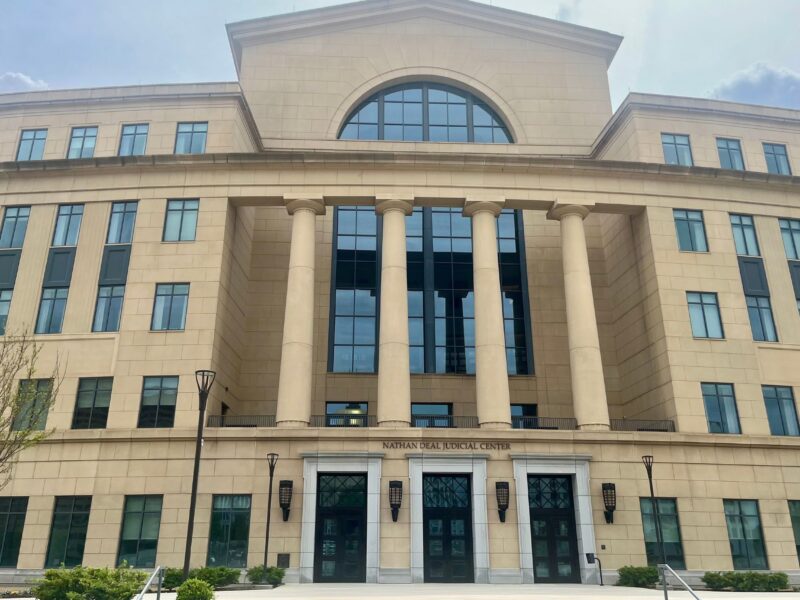
A group of attorneys argue illegal solicitation methods have corrupted fair competition for clients.ATLANTA (CN) — The Georgia Supreme Court appeared likely Tuesday to revive racketeering claims against a law firm accused of illegally soliciting car crash victims as clients.R. Shane Lazenby, along with other Georgia attorneys, accuse a rival personal injury firm, Cambre & Associates, of stealing prospective clients from them and infringing on their ability to fairly compete for business. The lawyers claim the firm monitors vehicle crashes, collects victim data from reports and other sources, and then directly contacts them to solicit them as clients.Georgia’s Court of Appeals dismissed the class action in November 2025, finding the lawyers failed to show they were the intended victims and that their injury was the direct result of a predicate act targeted toward them.But some of the justices expressed concerns with whether such a heightened standard is required under Georgia law.Lazenby argued state law does not require a plaintiff to be the “intended victim” or “direct target” of a predicate act and instead relies on proximate cause and foreseeability. Proximate cause is a legal requirement used in personal injury cases to decide if someone’s actions caused harm that was a reasonably foreseeable result of the person’s actions.“General proximate cause just requires it to be reasonably foreseeable, right?” Chief Justice Nels S. D. Peterson said.The Georgia Court of Appeals concluded that accessing personal data about car accident victims in violation of Georgia computer privacy laws harms only the car accident victims whose information was illegally obtained. Any possible financial loss suffered by the attorneys, the appeals court determined, was an indirect result of such violations.Representing Cambre & Associates, attorney Kim Jackson said the plaintiffs failed to sufficiently claim any actual damages suffered and should have included the names of prospective clients lost as a result of the firm’s actions.Attorney Matthew Cook said that Lazenby and the lawyers do not have that information because Cambre & Associates got to the car collision victims before anyone else could.Justice Charles Bethel noted that the group of lawyers may encounter issues with providing such proof later down the line, but said that was not for them to decide at this early stage of the case.“Why does the intended victim matter when we say, ‘any person who is injured by reason of a violation’? If I can make the case that somebody’s intent was to create chaos in the economic system, then anyone who has money would be a victim,” Bethel said.Justice Verda Colvin questioned how the attorneys would be the victims of the scheme and not the clients who were illegally solicited.Other personal injury lawyers also want to be able to sue competitors accused of illegally soliciting clients.In an amicus brief, the Georgia Trial Lawyers Association said the issue of protecting citizens from predatory, exploitive and manipulative solicitation practices is of serious concern.In Georgia, soliciting an injured person to be a litigant is illegal and a violation of professional conduct rules for lawyers. But the practice has become pervasive and left unchecked, according to the Georgia Trial Lawyers Association.Reported violations usually go uninvestigated or are given a minimal and cursory review that results in no violation or no discipline from the State Bar of Georgia, the legal group added.The justices did not signal when they intend to release a ruling.Subscribe to our free newslettersOur weekly newsletter Closing Arguments offers the latest about ongoing trials, major litigation and rulings in courthouses around the U.S. and the world, while the monthly Under the Lights dishes the legal dirt from Hollywood, sports, Big Tech and the arts.Additional Reads
Georgia Supreme Court intervenes in lawyers’ solicitation fight
Full Article
Original Source
Read the full article at Courthousenews →KhanList aggregates and links to publicly available news content. We do not host full articles from third-party sources. Always verify important information with original sources.