
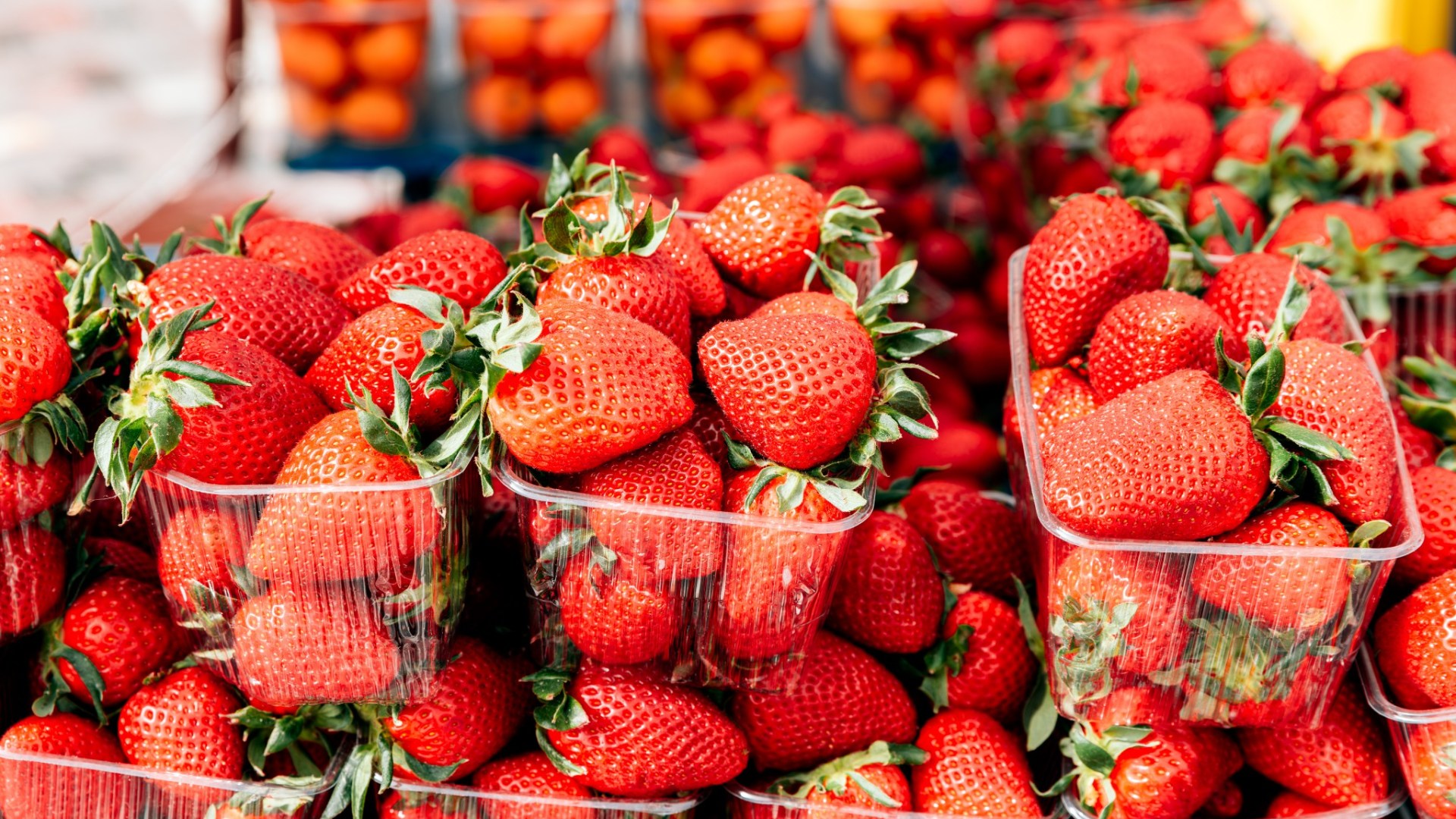
GENE-EDITED fruit may soon come to British supermarkets for the first time ever – and it lasts weeks longer than normal varieties. The DNA-altered produce is still awaiting final approval. The FSA will provide the final seal of approval before the fruit can be sold in Britain Credit: Alexander Spatari Gene-edited strawberries and tomatoes have now reached the final stage of approval before they can be made available to the British public. If granted permission by the Food Standards Agency, the DNA-altered products may soon become a staple on supermarket shelves. Sign up for the Money newsletter Thank you! Among the precision-bred fruit are “sunshine” tomatoes, created by John Innes Institute in Norfolk. Purported to have as much vitamin D as two eggs or 28g of tuna, the specialty fruit were designed to help fight against “endemic vitamin D deficiency”, according to the Department for Environment, Food & Rural Affairs (Defra). Eight varieties of longer-lasting strawberries, created by US agricultural company Simplot, have also been put forward for approval. These plants have been gene-edited to produce fruit over a longer period of time – a process which involves either making small, targeted changes to a plant’s DNA or removing a section of DNA entirely. This differs from genetic modification, which usually involves introducing foreign genes from entirely different species. In the case of the strawberries, targeted genes were turned off to keep the plant producing fruit. Most read in Money Dr Penny Hundleby, from the John Innes Centre, said: “By extending the fruiting period, they could help increase the availability of British strawberries and reduce reliance on imports, all without changing the taste, flavour or nutritional profile of the fruit.” Once the fruit reaches supermarket shelves, a label identifying them as being gene-edited will not be required. Professor Cathie Martin, who leads the lab where the tomatoes were developed, added that the produce may “one day be a low-cost, simple, plant-based solution that can improve diets across the world”. She said: “All new plant varieties go through testing. These crops will be held to the same standards, if not more so.” Other gene-edited crops include disease-resistant potatoes and wheat containing lower levels of a cancer-linked chemical. However, the future of gene-editing in Britain may be at risk, following increased talks with Brussels and Labour’s EU-reset deal. If British and European food product standards are brought into closer alignment, gene-altered fruit and crops may face being banned as a result of stricter EU regulations. Comment now
Gene-edited fruit that lasts for weeks is coming to British supermarket shelves for first time under plans
Full Article
Original Source
Read the full article at Thesun →KhanList aggregates and links to publicly available news content. We do not host full articles from third-party sources. Always verify important information with original sources.