
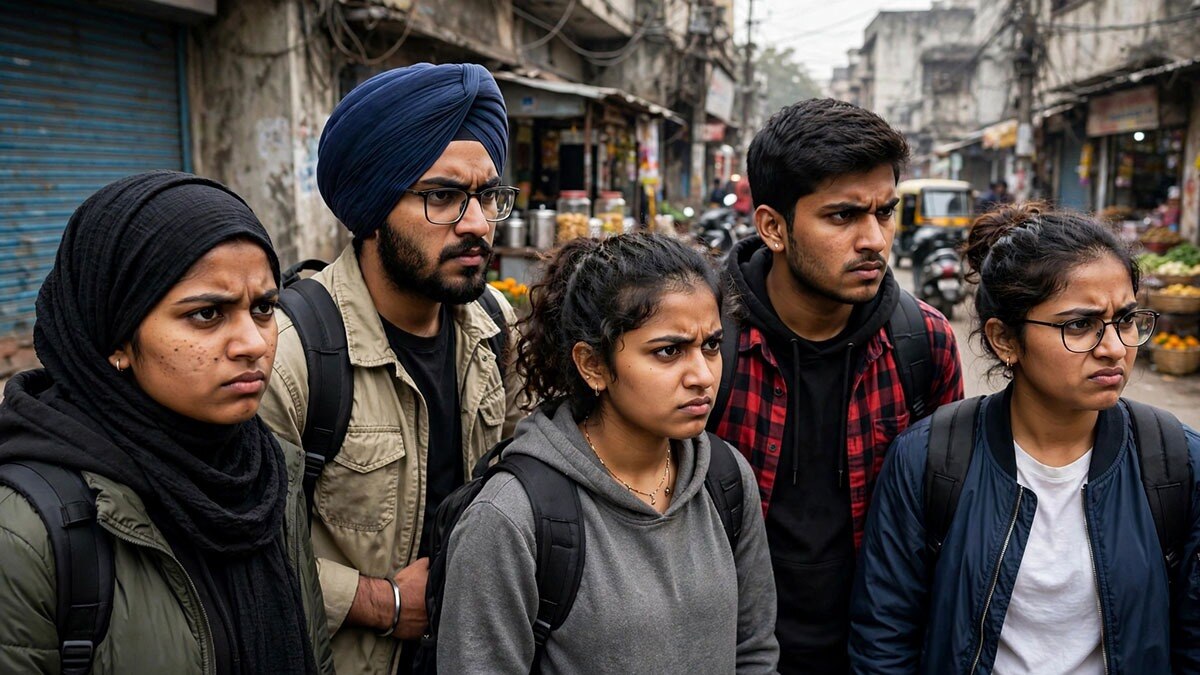
Experts say behind the activism and outspoken nature is a generation navigating career uncertainties, social flux, information overload and systemic collapseCall Gen Z angry and you may be missing the real emotion. For a generation growing up amidst exam pressure, uncertain careers, rising living costs, climate anxiety and an endless stream of information, what looks like anger is often something else. Perhaps frustration, anxiety and a strong desire to be heard?“Anger is not the defining emotion of Gen Z,” says youth and parenting coach Rajat Soni. According to him, young people are looking for fairness and a sense of control over their lives. When years of hard work do not guarantee a clear path to college, a job or a secure future, disappointment can turn into frustration.One of Soni’s students, who spent years preparing for an entrance exam at the cost of her mental health, summed up that uncertainty simply, saying: “I don't know if whatever I'm doing will be enough.” That sentence perhaps captures the Gen Z experience better than the “angry generation” label ever could.Gen Z is the first generation to come of age in an always-connected world. News, opinions, crisis and causes arrive on their phones throughout the day. They are exposed to conversations on mental health, climate change, gender equality, inequality and social justice not as occasional headlines but as part of everyday life. Soni believes this constant exposure has also shaped their sense of identity. Seema Rekha, founder and managing director of Antarmanh, an organisation working on workplace wellbeing, mental health and leadership, sees a similar shift. She says Gen Z is less willing to accept “that's just how things are” and is more likely to ask “why can't this be better”. What may look like anger, she argues, is often a demand for transparency, fairness and meaningful progress.For earlier generations, youth movements were often built around campuses, organisations and physical communities. Gen Z can mobilise with a post, reel, hashtag or online campaign. Social media has made participation easier and faster. They can find others who share their concerns, exchange ideas and amplify issues without waiting for an organisation or institution to give them a platform.But there is a catch. The same platforms that create connection can also create exhaustion. Emotions travel quickly online. Hope, outrage and fear can spread across communities within minutes. Soni describes this as emotional contagion: the ability of social media to amplify feelings, sometimes inspiring collective action but also increasing polarisation when context disappears.Rekha points to another problem—information overload. Constant digital advocacy can leave the young feeling that they must always react, comment, share or take a stand. The result can be emotional fatigue.The “easily offended” tag is another easy description of Gen Z. Both experts question it. Gen Z has grown up placing greater emphasis on inclusion, dignity, respect and accountability. They are more likely to question language, workplace behaviour and power dynamics that earlier generations may have accepted without discussion.That does not mean every reaction is proportionate. Soni acknowledges that young people can sometimes respond quickly or view complicated issues in black-and-white terms. But dismissing them as oversensitive misses the larger cultural shift. For Rekha, this questioning is already influencing workplaces, particularly around psychological safety, empathy and responsible leadership.The paradox of Gen Z is that the generation that appears most vocal can also be deeply exhausted. They are expected to prepare for competitive exams, build careers, stay employable in an AI-driven economy, become financially independent, maintain social lives and constantly improve themselves. At the same time, their phones bring them daily reminders of wars, climate disasters, economic uncertainty and social injustice.Rekha warns that continuous exposure to emotionally charged news can lead to compassion fatigue and burnout. So, will Gen Z's activism remain largely online? Not necessarily. Both experts see the potential for a much larger impact as this generation enters leadership roles across business, education, healthcare, entrepreneurship and civil society.But awareness alone will not be enough. The real test will be whether online conversations turn into community participation, constructive dialogue and sustained action. For Soni, the question is whether digital awareness can evolve into meaningful leadership and long-term engagement. Rekha believes Gen Z could leave a lasting legacy if its values of empathy, inclusion and wellbeing are matched by collaboration, resilience and consistent action.Perhaps, then, the better way to understand Gen Z is not as an angry generation but as a generation unwilling to stay silent. The challenge is to ensure that their frustration does not consume them, and that their voices become the starting point for building the change they are demanding.Subscribe to India Today Magazine- EndsPublished By: Shyam BalasubramanianPublished On: Sep 9, 2026 19:53 IST
Gen Z: Angry or just anxious for change?
Full Article
Original Source
Read the full article at Indiatoday →KhanList aggregates and links to publicly available news content. We do not host full articles from third-party sources. Always verify important information with original sources.