
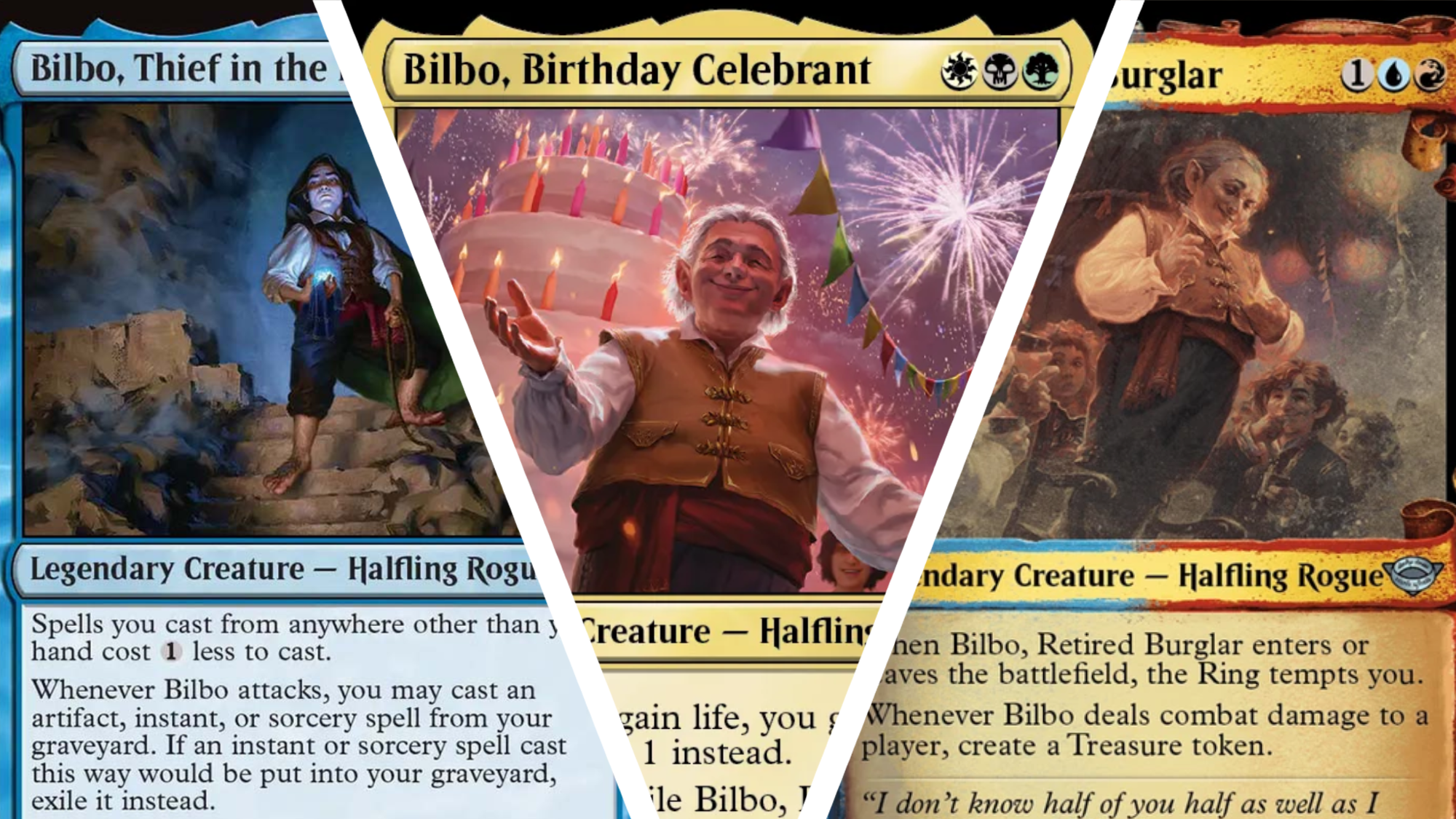
(Image credit: Wizards of the Coast / MEE) For the past couple of weeks we’ve been seeing how Reality Fracture will conclude the multiverse-tearing Omenpath saga of Magic: The Gathering’s story. Jace’s domination of his Echoverse rings through his presence on seemingly every other card as the Empower Jace mechanic — which brings forth a Planeswalker token of himself, as a sort of simulacrum of the popular Amass mechanic.But before Jace attempted to break the multiverse, Wizards of the Coast was already dabbling in powers beyond their control with Universes Beyond. This sees non-native IP break into the Magic: The Gathering game, and it has proven itself both incredibly popular and divisive.One setting that has managed to unite both sides of the aisle, however, is Middle Earth: the land of hobbits, elves, dwarves, and dark forces attempting to enact Sauron’s corrupting plans on the world.We recently returned to this setting through The Hobbit set, a return which felt much more like a return to a classic Magic world such as Ravnica, Lorwyn, or Dominaria rather than a return to a UB world like… New York City, which we experienced through both Marvel Super Heroes and Teenage Mutant Ninja Turtles after first swinging through with Spider-Man.Through his YouTube channel Good Morning Magic, Gavin Verhey (Principal Magic Designer at Wizards of the Coast) details the design philosophy and origins of cards from throughout Magic’s history, including its most recent releases. At Gamescom, I got some time to chat with him, deep diving into Wizards’ approach for The Hobbit — and its approach to Universes Beyond more generally. (Image credit: Wizards of the Coast)A return to a Magic plane normally means the return of mechanics associated with that world. Case in point, after debuting a variant of Amass with Amass Orcs in its Lord of the Rings: Tales from Middle Earth set, another variation appeared with Amass Goblins in The Hobbit — enabling players to assemble a Goblin Army, one of the five armies that battled in the book’s climax.However we didn’t see the return of The Ring Tempts You, not even as a cameo on a Bilbo or Gollum game piece (a term designers use to denote a mechanic we see on only a couple of cards rather than as a core feature).Sign up for breaking news, reviews, opinion, top tech deals, and more.Verhey explained the team did look into including it, but ultimately decided against it. (Image credit: Wizards of the Coast / MEE)“The Ring Tempts You was a mechanic that did not play out super great, and was quite complicated, and doesn’t make a lot of sense because the Ring is such a small part of The Hobbit,” says Verhey.He explained that it could have fit as a one-off cameo, but “There’s no reminder text on the card for what The Ring Tempts You does, that’s on an entirely different card you have to track. Maybe it could have worked as a Jumpstart card, but we decided it would be a lot of work for a little gain so we didn’t bring it back.”At least my Food and Fellowship precon deck got a couple of food token and lifegain support pieces in the set.There, and back again?Now that we have returned to Middle Earth, a question I’ve had rattling through my brain is which UB plane could we planeswalk back to next? Gavin Verhey wasn’t about to spoil anything, but I did ask if the possibility of returning meant Wizards of the Coast was more cautious about what it did or didn’t use from a partner’s IP.The Lord of the Rings set only included one The Hobbit reference through the card There and Back Again, meanwhile The Last Airbender didn’t include any ties to The Legend of Korra — not even as a Secret Lair.“In general we want our designers to use everything they can, because there’s no guarantee we’ll ever make another set in that world. So you should make as much as you can, and what makes sense. But we’re often making them based on very specific properties.“So with Avatar: The Last Airbender the set was Avatar: The Last Airbender not Avatar: The Legend of Korra. So Korra was off the table for that set. The same for The Lord of the Rings set, The Hobbit was off the table.“It’s a bit of preservation for the future, but also just a bit of what we have access to.”Verhey adds this is contrasted by sets like Final Fantasy or Doctor Who where the designers knew they had access to the whole franchise’s history for one set.The Marvel collab is also a bit different as Wizards of the Coast knew there would be multiple sets from the get go: “So we actually figured out, before we did anything else, how we were going to divvy all of those sets up to make sure cards ended up in the right place.” (Image credit: Wizards of the Coast / Marvel)Riddles in the darkGavin Verhey explained there are plenty of positives that come from working in a Universes Beyond set — chiefly the distinct characters the worlds are filled with are a delightful design puzzle to bring to life in MtG. But what are the challenges?“The place that you get into the most trouble is figuring out how the characters translate into colors — because a well-written character is usually many different colors over the course of their lifecycle.”Verhey explained players have different expectations of the characters. Someone will reasonably see Bilbo as Blue for his riddles expertise, another person sees him as Black as he embraces thievery, another as Green for hobbits’ embrace of food and nature in the Shire — we’ve seen him represented across all five colors in fact across both Middle Earth-based sets.We’ve seen how the designers solve this: make multiple versions of the same character at different points throughout their story. This prevents every legend becoming five-color soup, and keeps things simple and accessible for newcomers — who are more likely to open a card belonging to a popular character if there’s multiple of them, and cards with fewer colors are usually less complex as they don’t need to mechanically justify why they’re multi-disciplined. (Image credit: Wizards of the Coast / MEE)That said, Verhey said there do need to be multi-color legends to encompass other similar legends so folks can play them all in the same deck more easily if they want — “For example, we make sure there’s a Red-White Dwarf lord that all other Dwarves can go into a deck for.” (Note: A lord is a term for a card which offers a static benefit to all cards of a certain creature type).This doesn’t just account for creatures in The Hobbit. The designers also try to make sure the cards pair well with the Dwarves, Elves, Goblins, and Hobbits they’ve released before.Universes Beyond can also create almost the reverse challenge for the designers: not having enough characters in each color.Verhey explained. “You know, this is not the case for The Hobbit but a funny Universes Beyond problem is usually most worlds have heroes — that makes for easy White characters — and they have villains which tend to want to be Black characters. Then there’s usually someone who’s a little aggressive or impulsive, so our Red characters. And there’s always the smart people so that’s the Blue. But Green?”For The Hobbit Elves, Bears and other nature-aligned figures fill this slot, but that’s not always the case.“Figuring out what Green means in a world without Elves, growth, or lots of nature is really challenging — that’s what many Universes Beyond can live or die on.” (Image credit: Wizards of the Coast / MEE)A Warm Welcome Universes Beyond has been a standout success for Magic: The Gathering. It makes perfect sense, therefore, that Wizards of the Coast would want to apply this to its other world-famous brand: Dungeons and Dragons.So far it has announced collaboration plans with World of Warcraft and Star Wars — partnerships which will bring iconic characters, worlds, items and archetypes (as classes and subclasses) into the tabletop roleplaying game.However no Universes Beyond property has yet to feature in both games, so I asked Verhey if any rivalry or jealousy has developed between the teams — Star Wars fans on the Magic side or The Last Airbender lovers on D&D wishing they could be building inside those worlds. (Image credit: Wizards of the Coast / Blizzard Entertainment)Unsurprisingly Verhey said there’s nothing but excitement around the office, “It’s honestly very cool to see D&D be like ‘Hey this thing’s been great for Magic, Let’s have us give that a try as well’. I’m stoked to see what they do with it.”The Last Stage There’s only a few months left of 2026, but we have a lot more Magic: The Gathering to enjoy. Verhey says reality is “huge. It’s the capstone event of the current story arc, and like nothing we’ve made before.”Previews have showcased dozens of alternate reality pairings — showing original and Echoverse versions of characters from across Magic’s worlds — and in Verhey’s words the team has done “a heck of a lot better a job than we did with Planar Chaos” in terms of warping Magic characters and mechanics without warping the color pie in ways designers regret later. (Image credit: Wizards of the Coast)We also have Star Trek, another Universes Beyond property. This may seem like an odd inclusion for a fantasy focused game, however space has featured in several sets now — Unfinity, Doctor Who, and Edge of Eternities — and Star Trek actually featured all the way back when MtG was still in early testing. Spock performing a Vulcan salute was placeholder art for a card called Blessing.Verhey also said we can expect a set filled with the new Dilemmas — a new mechanic for the set related to mimic the tough choices characters face — and for us to “try an experience that’s a little different than normal”. Verhey mentioned combat isn’t a massive part of the Star Trek shows, so perhaps we’ll see Limited games play out very differently when this set rolls around. Making Jandor from Arabian Nights! #magicthegathering - YouTube Watch On Finally, there’s Mystery Booster Commander Edition. This event-exclusive set has been filled with exciting Commander cards, including several brand new game pieces that break the rules of the format, and harken back to Magic’s past in creative ways — Verhey is currently explaining these callbacks on his YouTube channel.“I cannot wait for folks to start playing it at MagicCon Atlanta, it’s a blast.” As a Commander lover, I can’t wait either. Follow TechRadar on Google News and add us as a preferred source to get our expert news, reviews, and opinion in your feeds. Hamish is a Senior Staff Writer for TechRadar and you’ll see his name appearing on articles across nearly every topic on the site from smart home deals to speaker reviews to graphics card news and everything in between. He uses his broad range of knowledge to help explain the latest gadgets and if they’re a must-buy or a fad fueled by hype. Though his specialty is writing about everything going on in the world of virtual reality and augmented reality.
Gavin Verhey explains the biggest difficulties of adapting Universes Beyond into Magic: The Gathering — from avoiding five-color soup, to ‘Figuring out what Green means’
Full Article
Original Source
Read the full article at Techradar →KhanList aggregates and links to publicly available news content. We do not host full articles from third-party sources. Always verify important information with original sources.