
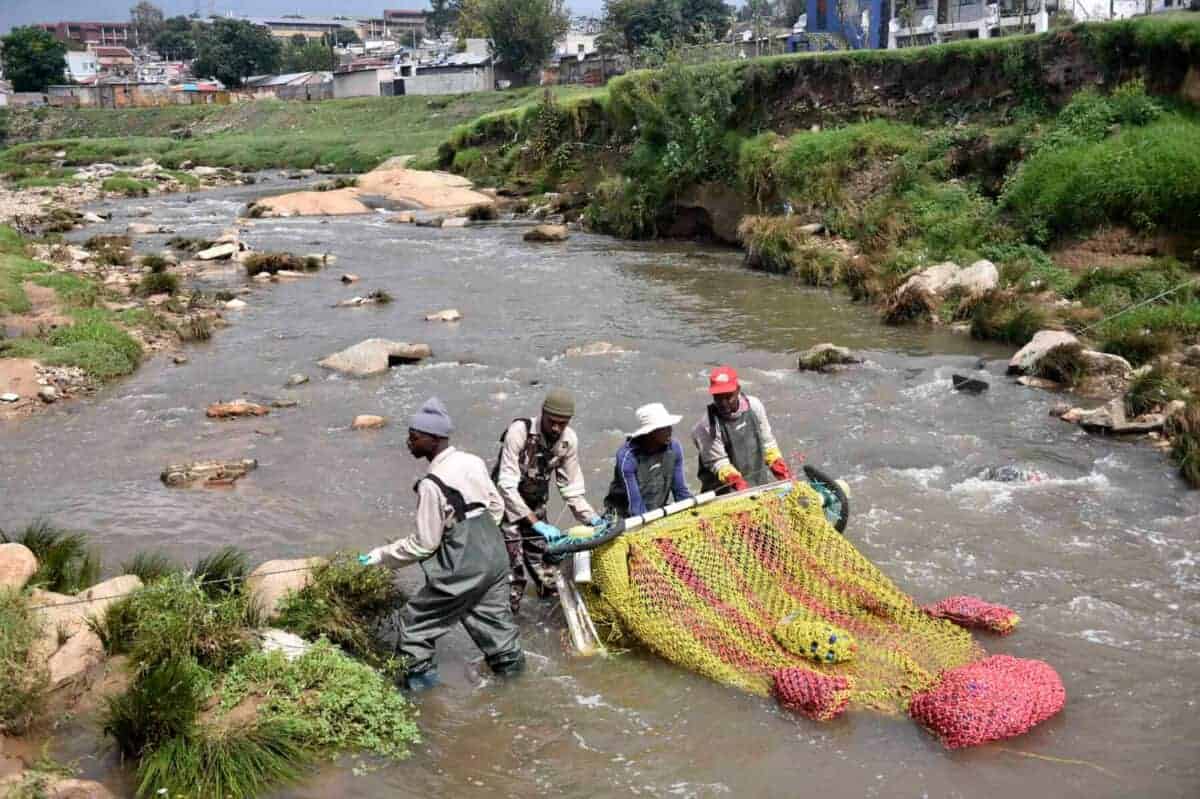
Broken sewage pipes, illegal dumping and struggling wastewater treatment plants are contributing to a growing environmental crisis. Urgent intervention is needed at various dams and rivers across Gauteng, with a decline in water quality due to sewage and pollution. South Africa will keep seeing polluted rivers as long as it operates reactively, not proactively, said Tarryn Johnston, founder of the Hennops River Revival and now Living Wisdom Strategic Solutions’ head of global architecture. Johnston and her former team cleaned up hundreds of bags of rubbish from the riverbanks over the years. “The tools exist – lasting change depends on empowering leaders to execute their legal and human rights duties and reminding citizens of their vital role in the recovery of our rivers and water,” she said. Jukskei River plagued by sewage spills and illegal dumping Following an oversight visit last weekend, Deputy Minister of Water and Sanitation Jack Bloom said the Jukskei River in Alexandra, outside Johannesburg, was grossly polluted by sewage spills. It is further threatened by an illegal mountain of dumped rubble that could collapse into the river, causing a blockage and flooding she said. Bloom also met members of Alexandra Water Warriors, a community group that cleans the river and its banks. “I was appalled by a four-year sewage flow into the river from a broken pipe in densely populated houses,” said Bloom. “Another sewage spill rushes down a channel from Linbro Park. A further outrage is the thousands of litres of clean drinking water from a leaking pipe near the cemetery that also flows into the Jukskei.” Alexandra Water Warriors’ Paul Maluleke has repeatedly reported it to the Joburg council, but it has been gushing for more than eight months, Bloom added. “The massive mound of building rubble and other debris sits next to a City Power substation on council-owned land in Lombardy East, with no access control. I saw vehicles openly dumping rubble and noxious fires polluting the air. “I suspect this is an organised racket with payoffs to council officials to turn a blind eye.” Calls for proactive action to save polluted rivers The council must also urgently stop the immense waste of potable water in this area. “My office is also requesting the council to take firm action against the illegal dumping and protect the banks of the Jukskei. “If this does not happen, a directive can be considered under the National Water Act, which places a duty on landowners to take reasonable measures to prevent pollution and restricts alterations to a river’s bed, banks, or course without authorisation.” The polluted Jukskei travels downstream, threatening not only Alexandra, but other communities, rivers, and ecosystems, including the hyacinth-choked Hartbeespoort Dam. Roodeplaat Dam faces sewage contamination In Pretoria, urgent intervention was needed at the Zeekoegat and Baviaanspoort wastewater treatment works that flow into the Roodeplaat Dam. DA Gauteng spokesperson for environment Leanne de Jager said partially treated sewage flows into the dam. “The dam is hypertrophic, with black water, a strong sewage stench, algal blooms and water hyacinth. E. coli and faecal coliform levels have risen sharply,” she said. “These treatment plants are affected by power outages, shortages of chemicals, and overload. “To resolve the issue, sufficient backup generators must be provided immediately at both plants to ensure they can operate during a power outage. A dedicated budget must be allocated for the maintenance of these plants. “Repairs must begin at the bypass points to stop raw sewage entering the river. Tests must be performed weekly and the results published,” De Jager said. The DA has written to the Gauteng MEC for environment, Ewan Botha, asking him to conduct an unannounced inspection of the wastewater treatment works and issue a notice of compliance.
Gauteng rivers and dams choked by sewage and illegal dumping
Full Article
Original Source
Read the full article at Citizen →KhanList aggregates and links to publicly available news content. We do not host full articles from third-party sources. Always verify important information with original sources.