
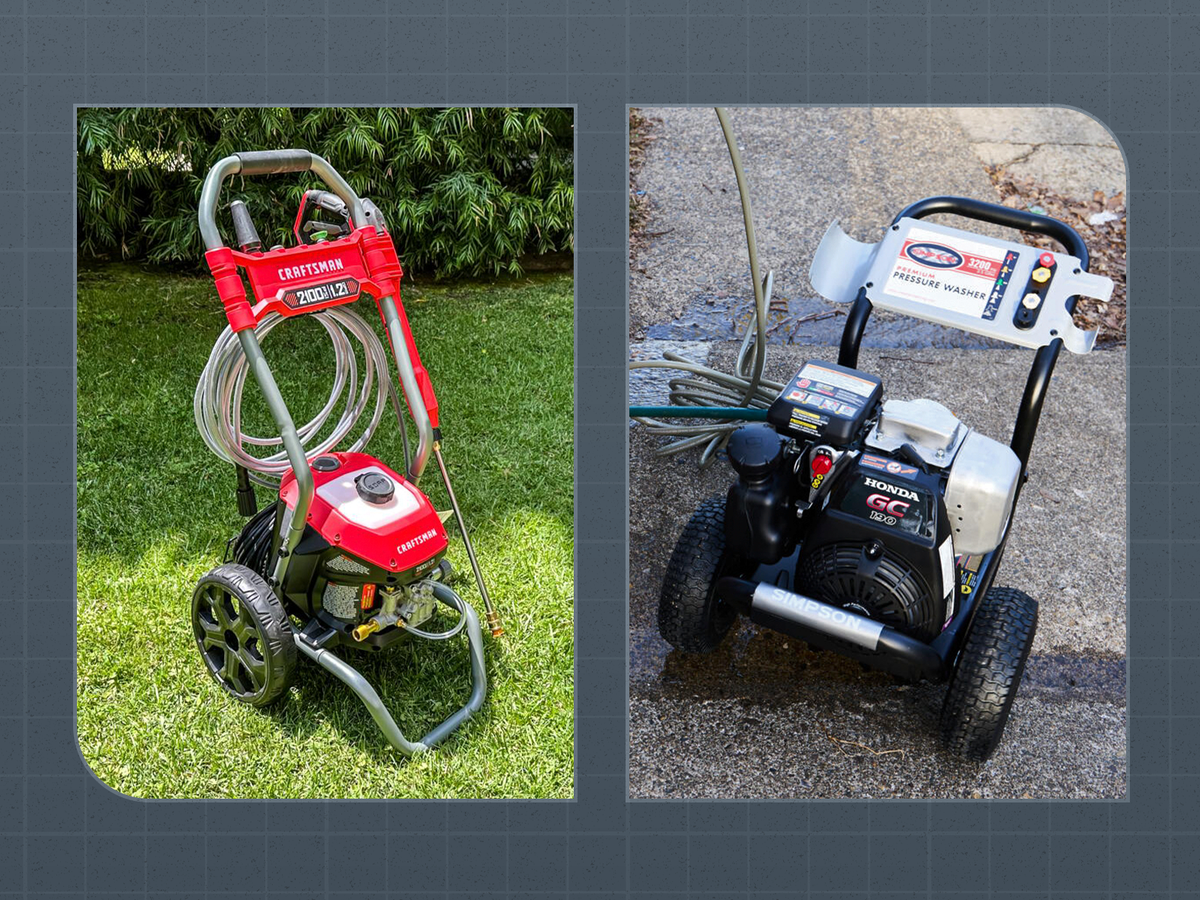
6 min readFor most of my adult life, I’ve operated under a fairly simple assumption when it comes to most tools and power equipment: Louder, stronger, and sturdier usually means “better.” So, naturally, when it came to pressure washers, I gravitated toward gas machines.The idea of plugging a pressure washer into an electrical outlet just seemed weak—damn near sacrilegious–to me. I wanted an engine. I wanted a substantial frame. I wanted a machine that I had to yank on to fire up—and made a ton of noise to let me know that it was there. And when it came to time to clean something, I wanted the kind of pressure from the wand that had the recoil of a 460 Weatherby Magnum. Nuance has rarely played a particularly large role in my life’s pursuits.That said, after years of cleaning surfaces around my own house and others—and testing various pressure washers in my time here at Popular Mechanics–I’ve come to realize that brute force isn’t always the answer. In fact, depending on what you’re cleaning, it can be exactly the wrong one. Choosing between a gas and electric pressure washer isn’t simply about which machine produces more psi. It’s about what your property looks like, how much of it you need to clean, and what those various surfaces are made from.That’s the nuance I’d been missing.Don’t Start With the Pressure Washer. Start With Your HouseI think it’s solid advice to take a walk around your property before you start comparing machines and ask yourself a few questions. Is the driveway long and made from concrete? Are there a few hundred square feet of stone or concrete walkways? Do you have retaining walls made from timbers or stone? Is a large part of your home clad in brick or faced in stone? Is there a sizable patio?These are substantial cleaning jobs, and they’re where the additional pressure and, particularly, the water flow of a good gas-powered machine can make a big difference in terms of both job quality and time spent on any particular task. You can certainly clean concrete with an electric pressure washer or roll the grime off all of that brickwork, but when there’s enough square footage involved, the question becomes how much of your Saturday you want to spend doing it.Now keep walking.Maybe your home is clad in vinyl siding. Painted wood? Fiber cement? Do you have a wood fence or is your once pristine white vinyl privacy barrier looking like something from “The Swamp Thing”? Do you have a cedar deck or is it composite? Lots of patio furniture? Vehicles you might occasionally want to wash?Trevor RaabYou don’t need a gas pressure washer to clean your car. Many electric models will do the job just fine and be easier on your vehicle’s finish in the long run.Suddenly, all of that maximum pressure doesn’t seem quite as important. Most of those surfaces don’t need enormous cleaning power. In fact, some can actually be damaged by it. Hit wood too aggressively, for example, and you can raise the grain, gouge the surface, or leave wand marks behind. Use too much pressure or poor technique on siding and you can damage the finish or drive water into places it doesn’t belong. In those situations, control matters more than brute force. I’ve actually blown cedar shakes that I didn’t know were compromised right off the house a few times with a gas machine, creating a whole new job in itself.PSI Isn’t the Entire StoryPressure washer marketing puts a lot of emphasis on pounds per square inch, or psi, but pressure is only part of what determines the speed at which you clean something. Gallons per minute, or GPM, matter as well. Pressure helps break grime loose; water flow helps carry it away. That combination becomes important when you’re cleaning large areas like driveways and patios. We’ve broken down the differences between psi and GPM in greater detail here.Trevor RaabUsing too much pressure on siding can damage its finish if you aren’t careful.There’s another number worth considering, though: the flow rate of your home’s water supply. If you’re using a machine like the 2.5-GPM Simpson PS3228 PowerShot, but your home’s hose bib can only supply 3 GPM, you’re left without a lot of headroom there. That can become especially important with a well system that struggles to keep up during extended cleaning sessions, causing some machines to shut down.Generally speaking, gas pressure washers tend to combine higher psi with higher GPM than electric models, which is one reason they’re simply better for large cleaning jobs. But just because a machine can deliver that type of capability doesn’t necessarily mean that your specific property needs it.When Gas Makes SenseIf my home had a large concrete driveway, roaming sidewalks, a paver patio, pressure-treated timber retaining walls, and fiber cement siding, I’d opt for a gas pressure washer. That’s a lot of surface area to clean, and a lot of it can benefit from the greater cleaning capacity. Higher flow becomes really valuable because–in addition to loosening dirt—you’re trying to move more of it from all of that surface area.Trevor RaabA gas pressure washer is great for getting stubborn mildew and grime off of an expansive patio or walkway.Gas also gives you the freedom from electrical outlets and extension cords, which can be an annoyance at best and a hazard at worst. Hook up your hose and you can pretty much work wherever you want to. The tradeoff is all of the nuisance that comes with a small gas engine: fuel, oil, maintenance, exhaust, weight, exhaust, and storage issues as gas machines tend to take up more room. For a four-hour cleaning job, all of that is hardly a deal breaker—but for a 20-minute job it starts to feel like a lot of effort.When Electric Makes More SenseI probably wouldn’t have admitted this a few years ago, but for a lot of homeowners, electric pressure washing may actually provide a better cleaning experience. If you’ve got a smaller driveway, some vinyl siding, a wood or composite deck, patio furniture, limited walkways, and maybe a car or two, you don’t necessarily need a small internal combustion engine sitting in the garage waiting for spring. Instead, you need just enough cleaning power to mitigate the inherent hassles of gas.Alex RennieFor cleaning patio furniture, an electric pressure washer is enough for moA good electric pressure washer–like Greenworks 2,700 psi model, our choice for Best Overall–gives you that without gasoline, oil changes, carburetor issues, and yearly cleaning, exhaust, and enough noise to annoy the neighbors. Connect your water supply, plug it in, and get to work.On that note, there’s also a lot to be said for owning a pressure washer you’re more likely to use on a regular basis simply for the sake of convenience. Dragging out a gas machine, fueling it up, connecting everything, and hoping it fires up is enough to make me wait until enough dirt and grime have built up that it makes all of the effort worthwhile.An electric machine lowers that pain threshold quite a bit. My patio furniture is looking dingy? Plug it in. Garbage cans stink? Plug it in. I need to give the deck a good wash down before the company shows up? Same deal. As I get older, I realize that convenience is a kind of performance characteristic, too. They just don’t have a number for it that they can print on a box.Your Property Should Have the Deciding VoteI’ve honestly stopped thinking about this ongoing comparison as “gas versus electric” and started looking at it through the lens of “hardscape versus everything else.” I’m admittedly oversimplifying things with that, but it’s a useful place to start.Most homes obviously contain some combination of both. I get that. So it’s important to identify the toughest regular cleaning you expect to do and choose accordingly. If you’ve got 2,000 square feet of concrete and stone walks to clean every spring, buy the gas machine. If you’ve got a 20-foot driveway and a small deck, maybe you don’t need to rattle your neighbors every time the grill or patio chairs need a good once-over. An electric model will suffice.The Bottom LineI don’t want to get carried away here and make claims that I’m ready to surrender my gas machines. I’m absolutely not. But I’ve learned that the best pressure washer isn’t necessarily the strongest one. It’s the machine that delivers enough pressure and water flow to clean the largest and toughest surfaces on your property, while still giving you the control you need for everything else that wins the day.For large properties with lots of concrete, masonry, and hardscape, that will probably mean gas. For smaller properties, more delicate surfaces, and the kinds of everyday cleaning jobs most homeowners typically encounter, electric makes a really strong case for itself. Unlike my bowling technique, there’s more to choosing a pressure washer than finding the biggest machine available and throwing everything you’ve got at the job at hand.Pressure Washers We RecommendPaul Russell Smith is a former NYC ironworker turned screenwriter (Grace Point) and home renovation specialist. He lives in a crooked old farmhouse in Stockton, NJ, where he’s just as likely to be clearing a clogged pipe as rewriting a third act. When he’s not working, he enjoys hiking, pedestrian beer, and cooking over a live fire. His self-proclaimed spirit animal is the English Bulldog.
Gas vs. Electric Pressure Washers: Which Type Makes Sense for Your Property?
Full Article
Original Source
Read the full article at Popularmechanics →KhanList aggregates and links to publicly available news content. We do not host full articles from third-party sources. Always verify important information with original sources.